Artist Study 1 and Response 1
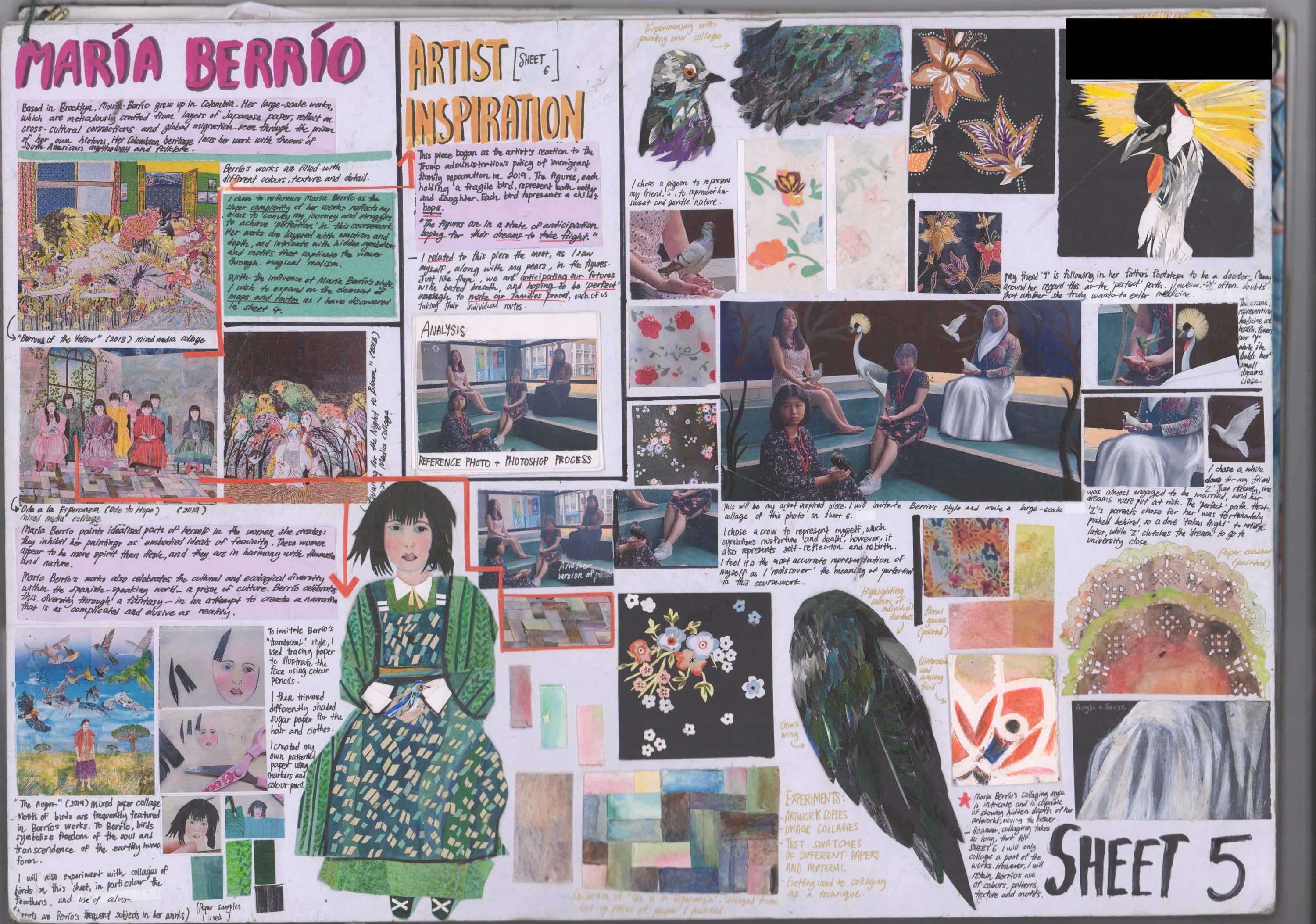
Related ideas: Artist Study · Artistic Intention · Composition.
Lesson slides: Download the deck (PowerPoint, 13.4 MB) · image credits
At a glance
| Sessions | 6 periods over 5 days (W7 into W8). Unit 3 opens; cycle 1 of the chain. The artist-study writing was done over Mid-Autumn and comes back with Doğan’s notes on Thu 8 Oct, so the first two sessions build the page from it, the page is checked Thursday, and Response 1 runs from Thursday to the following Monday |
| Dates | Mon 12 Oct · Tue 13 Oct · Thu 15 Oct · Fri 16 Oct (double; Foreign Culture Day, lessons run) · Mon 19 Oct |
| AO focus | AO3 Develop (the artist page), then AO1 Record (Response 1, the own object from life under the artist’s problem) |
| Deliverable | You make your Artist 1 page on 1 screen: 3 works with captions, a short biography, your analysis, a small copy, a swatch, the problem sentence and what you will try. Then you make Response 1: one long drawing of your own object from life, on the artist’s problem, in the medium I give you, without starting again. It ends with 1 line that says what Artist 2 has to answer. |
| Feeds | The Artist Study 1 Page Check on Thursday 15 October, at the start of the session. A1 comes back on Monday 12 October. A2 on Friday 13 November reads this page and Response 1 finished. |
| Homework | Monday night: the 3 works captioned and the biography written. Tuesday night: the page finished for Thursday. Every night: the 10-minute study of your own object. Between Friday and Monday: your object photographed in 2 lights, 4 photographs saved for the Response 1 page. |
| Materials | The artist-study writing with Doğan’s notes, back on the desks Monday; Impressions’ artist screens (Example 10 of the 2025 set, in the C1 sample portfolios) on the projector; the chain drawn on the board and left up; three works per named artist (Morandi, Hopper) printed small in reserve; caption strips; the screen template; A3 or A2 paper by prescription and each student’s prescribed medium in quantity; the object and its lamp, taped in place from Thursday and left where it stands |
Guide: Artist-study page guide: optional schematic and confirmed examples (PDF, four pages)
Slides
Artist studies: visual examples brings together Morandi, Hopper and the confirmed Cambridge portfolios Impressions and Perfection. The 36 slides include complete paintings, enlarged details, small studies, color swatches, model analysis and vocabulary. Slides 25–29 show the optional page schematic, exact quantities, analysis moves, practical study and completion checklist. Sources and teaching notes accompany each slide.
The illustrated artist-study guide provides an optional page schematic, exact quantities, sentence starters and a checklist. Its four pages use the confirmed portfolios Perfection and Impressions to connect method, meaning and the student’s own response.
Objectives
By the end of this lesson, students can, observably:
- Draw the chain in the portfolio’s screen order and place everything they have made so far on it, saying which step each piece is
- Build an artist page that ends in the sentence that matters: the problem this artist solves that their own object also has, and the medium they will try it in
- Carry one observed study of their own object across four sessions without restarting it, under that problem, and end it with one line that names what it leaves open
Goal
Students turn reviewed writing into an artist page, then test the artist’s approach to a problem shared by their own object. The C1 exemplar lessons connect each artist to the response on the next sheet. Response 1 sustains a drawing from life, described in the original plan as “stamina is the content”. Its closing line guides the Artist 2 choice.
How it runs
- Mon 12 Oct, P9 (45 min): Fifteen minutes: A1 back one to one on the rota (the band, what the pages lacked, the three actions written before leaving).
Meanwhile the chain goes on the board as the portfolio’s screen order, final first, then the journey: first page, recording page, Artist 1, Response 1, Artist 2, Response 2, Artist 3, Response 3, direction page, tests, plan, process, bibliography. Each student places what they have made so far on it.
Thirty minutes: the Artist 1 page begins from the reviewed writing. The three works chosen and captioned (title, date, medium, source) with the works reproduced small; the analysis typed with Doğan’s notes acted on; the strike test in pairs, every sentence that could describe any artist struck.
Homework: the biography, 50 words or fewer, the last sentence saying why this artist is useful to you.
- Tue 13 Oct, P3 (45 min): The page finished. The small copy of one part of one work, by hand, next to the original; the swatch of 5 or 6 colors from the artist’s work; the problem sentence read aloud one by one, in the form the chain uses (“Morandi: objects that are almost the same value, separated only by their edges and the spaces between them.” “Hopper: one light, hard shadow edges, and the form shown by light and dark.”).
Then “what I will try”: the medium and the object. The medium is prescribed here, per student, from the L04 diagnostic and the artist’s problem, not from preference; it goes on the page.
Homework: the page assembled on its screen for Thursday.
- Thu 15 Oct, P6 (45 min): First ten minutes: Artist Study 1 Page Check, the page complete and on the desk, walked and banded on the rota sheet. A page without a problem sentence is not complete, whatever else it carries.
Thirty-five minutes: Response 1 begins.
Five minutes with the source before any mark, the object set at arm’s length and taped in place, the lamp where it stays for the run. The problem line copied from the Artist 1 page to the top of the sheet, medium and size under where the study will sit.
Then light structural drawing, commit to placement, the largest shapes first.
Five rules of a response on the board:
-
own object from life,
-
a medium not used before in a response,
-
the artist’s problem not the artist’s style,
-
a closing line,
-
medium and size under every piece and sources cited.
Cover, do not erase. No restarts, no second sheets.
- Fri 16 Oct, P3 (09:50 to 10:35): The run’s middle stretch, forty-five minutes: the tonal structure built, edges found by value rather than outline.
Foreign Culture Day: lessons run, confirmed.
- Fri 16 Oct, P4 (10:35 to 11:20): The study continues.
Midpoint checkpoint at the desk in the last ten minutes: proportion checked against the source, tone mapped, the problem still visible in the drawing and not just at the top of the sheet.
Between now and Monday: the object photographed under two lights, four photographs saved.
- Mon 19 Oct, P9 (45 min): Thirty minutes: the study resolved: edges by value, surface, depth. The no-restarts rule is not suspended by the weekend.
Ten minutes: the closing line under it: what this study leaves open, one sentence, the seed of the choice note.
Five minutes: the Response 1 page previewed from the Portfolio Guide, Screen 6: the two-light photographs, 4 thumbnails with 1 circled, 3 media tests, the study largest, an evaluation of 50 to 100 words, the last line.
The evaluation is homework for Tuesday, when Artist 2 is chosen from the line.
Assessment
Artist Study 1 Page Check sits Thu 15 Oct, walked at the desk and banded on the rota sheet: the Artist 1 page complete on one screen, 3 works captioned, the biography, the analysis in 3 moves, the copy, the swatch, the problem sentence, “what I will try”. Brief on its page; register on the S1 page. Moved from Tue 29 Sep on Sat 26 Sep; same ManageBac task.
A1 returns Mon 12 Oct one to one, banded, with the three actions. A2 on Fri 13 Nov reads this page and Response 1 finished, with Artist 2, Response 2 and the Artist 3 page (brief).
Practice
Try each question before you open its answer.
1. What is the problem sentence, and what happens to a page without one?
Answer: One sentence naming the problem this artist solves that your object also has. Not a style, not a subject. For Hopper it is one light, hard shadow edges, and the form shown by light and dark. Without it the page is research and not development, and Response 1 has nothing to test. It does not pass the check.
2. Your analysis gets the strike test from a partner. What gets struck?
Answer: Every sentence that could describe any artist. “She uses light and shadow to create mood” does not identify what this artist does in these particular works. What survives the strike is specific to these 3 works and your object, and specific is what earns the AO3 mark.
3. Who decides which medium Response 1 is made in, and from what?
Answer: It is prescribed on Tuesday, per student, from your diagnostic sheet and the artist’s problem. The choice depends on what the artist’s problem requires and what your diagnostic shows you need to practice. It goes on the page under “what I will try”, and it is the medium you start in on Thursday.
4. State the two rules that govern the sustained study, and explain what they help you practice.
Answer: No restarts, and cover, do not erase. The sheet that starts Thursday finishes Monday. Carrying one study across four sessions helps you sustain observation and correct the work as you learn more about the object. Keep working on the same sheet so those corrections remain visible.
5. What is the closing line for, and what makes a good one?
Answer: It decides what Artist 2 has to answer. It is the seed of the choice note you will write in L08. A good one names something the study left open: the hard shadow edge flattened the form, or the value range was too narrow to hold the surface. “I am happy with it” leaves nothing open and chooses no artist. Naming an unresolved problem gives you a clear reason for the next artist choice.