Photography History and Composition
Related ideas: Vivian Maier · Composition · Framing · Artistic Intention.
Lesson slides: Download the deck (PowerPoint, 9.7 MB) · image credits
At a glance
| Session | Two 45-minute periods, with the normal 10-minute break |
| Dates | Sat 10 Oct |
| Time and place | P3 09:50–10:35 and P4 10:45–11:30; begin in room 710; outdoor photography is the likely second-period route, with the shared object studio as a fallback |
| Focus | Recording light, photographic judgment, composition and introductory exposure controls |
| Bring | Your sketchbook and a pencil; you can bring a camera, phone or another device that takes photographs. Charge it before class. Partners can share a device. |
| Deliverable | Individual photograph choices, a paired Maier analysis, your own before/after photograph pair and an individual exit response |
| Assessment | Formative six-point paired analysis and six-point individual exit check; no new gradebook task |
| Homework | No new homework is assigned by this lesson |
| Materials | Student record |
Objectives
By the end of the lesson, you can:
- Explain the difference between projecting an image and recording it, using an example from photography’s history.
- Support a judgment about a photograph with visible evidence about composition, focus or light.
- Identify the basic effects of aperture, shutter speed and ISO under stated conditions.
- Make and evaluate a deliberate composition change in your own photographs.
Concepts
Lesson question: How can a photographer turn an ordinary scene into a deliberate image?
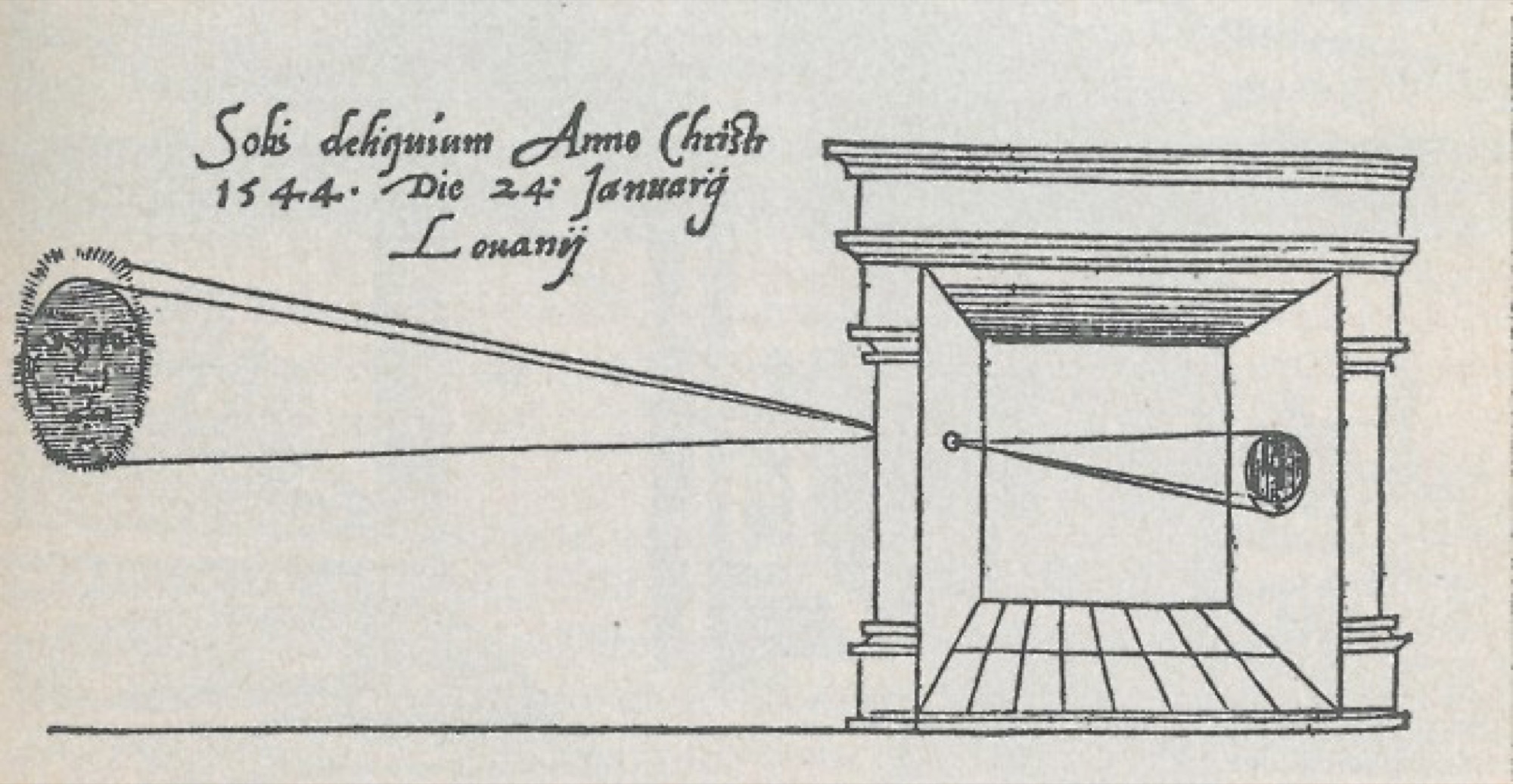
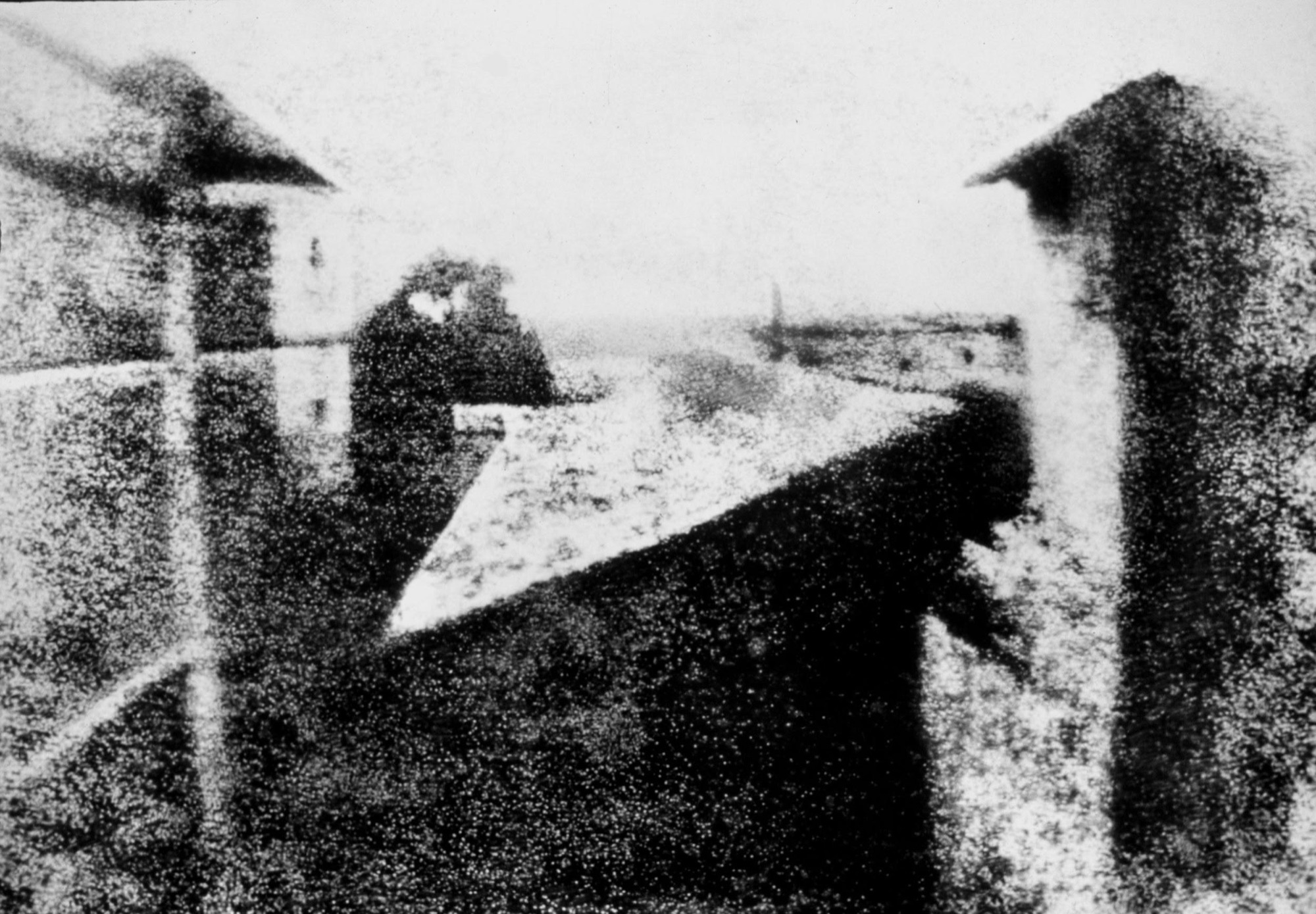
A camera obscura projects an image onto a surface. Making a photograph also requires a way to record that image. Compare the camera obscura diagram with Niépce’s View from the Window at Le Gras (1827), an early surviving camera photograph. The enhanced reproduction makes the buildings easier to distinguish; it is not the original plate’s appearance.
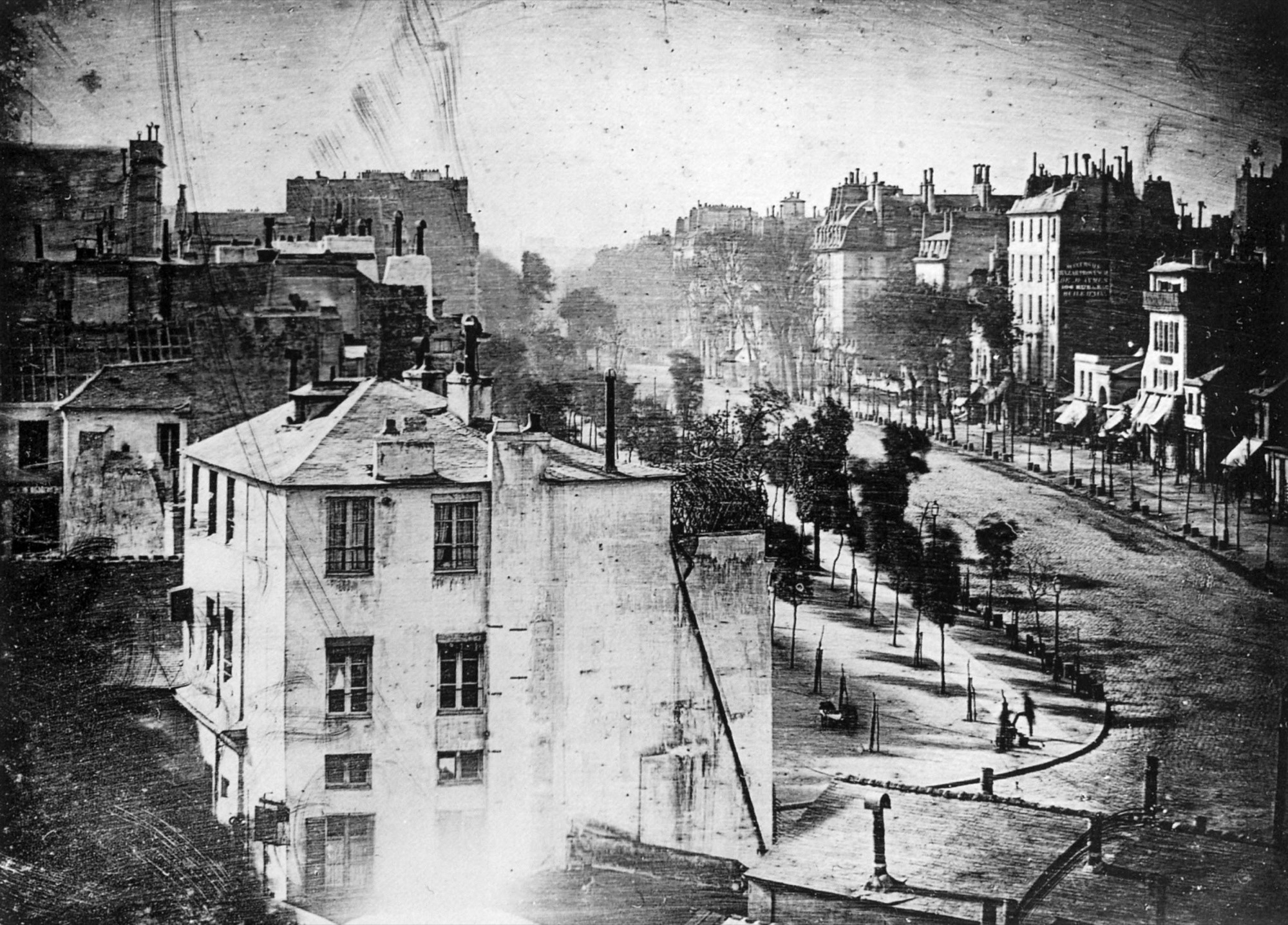
In Daguerre’s Boulevard du Temple (1838), examine the street and the small figures near the lower left. Discuss how a long exposure might record a person who stays still differently from people moving through the scene.
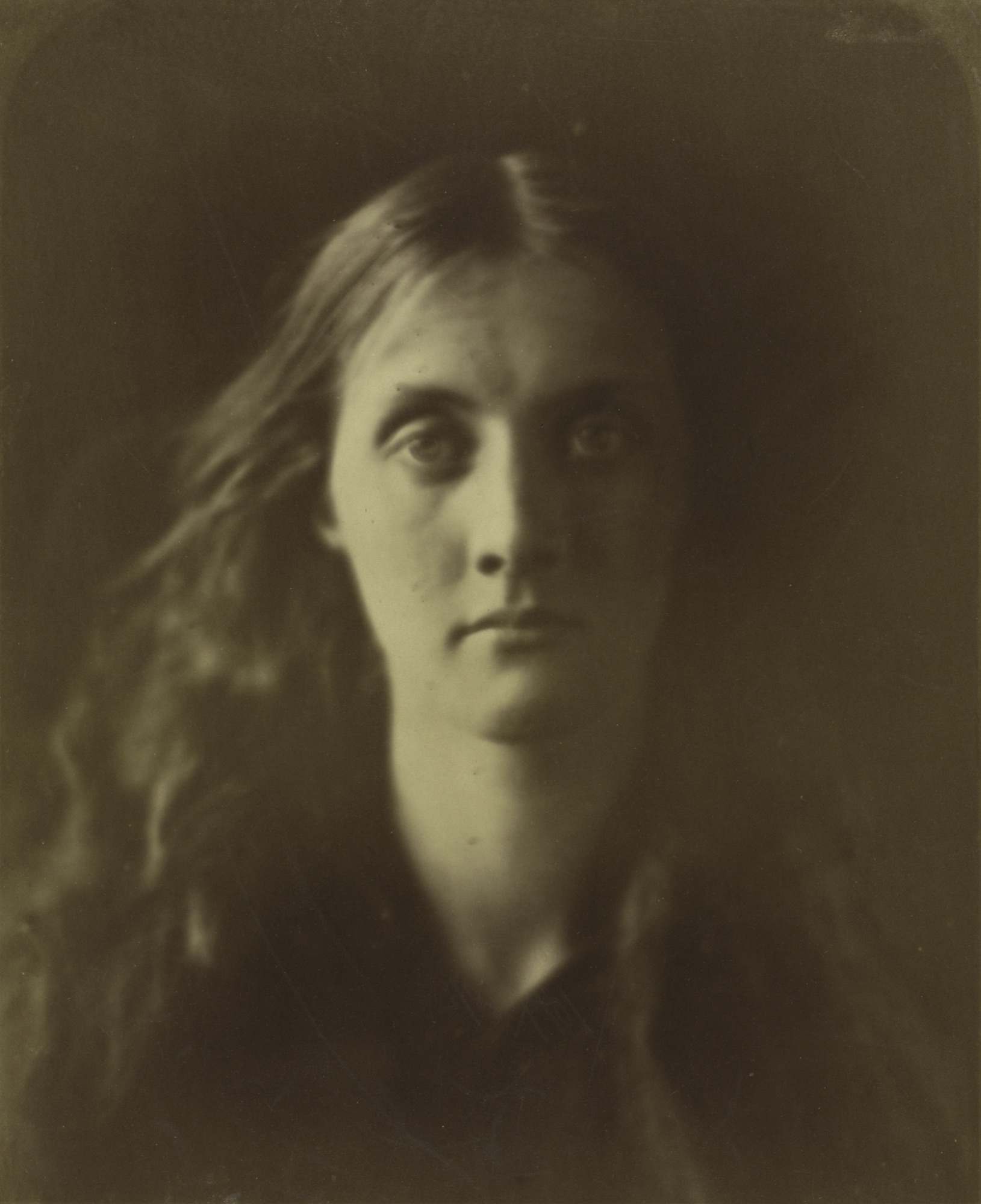
Compare Julia Margaret Cameron’s portrait of Julia Jackson (1867) with William Henry Fox Talbot’s Articles of Glass (1844). Locate the light and shadow across the face, then the spacing and repeated shapes of the glassware. These examples introduce two photographic choices: lighting and arrangement.
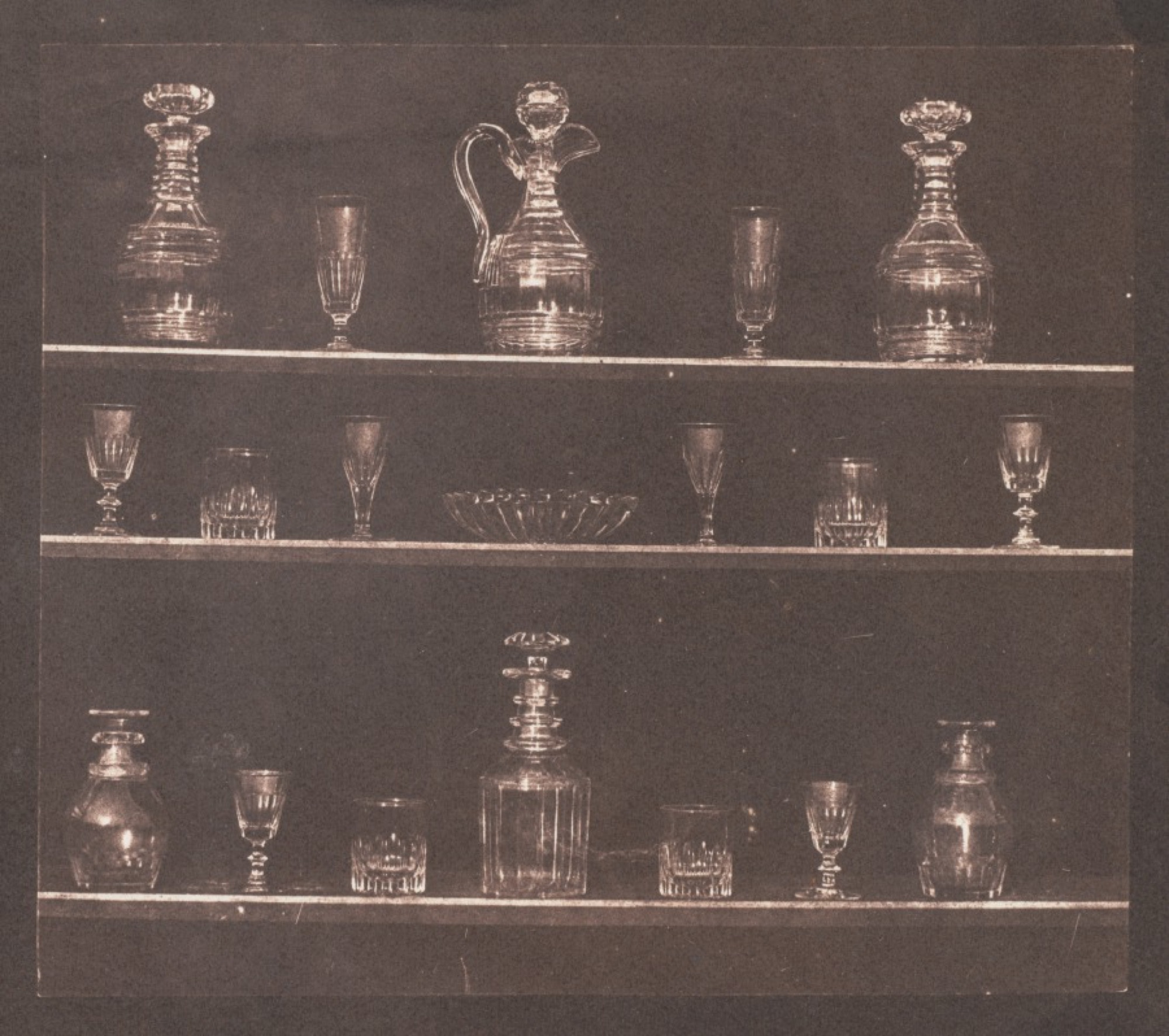
Composition is the arrangement of elements within an image. When you judge a photograph, identify a particular feature and explain its effect. Consider where your attention goes, what appears sharp, and how foreground and background relate to the subject.
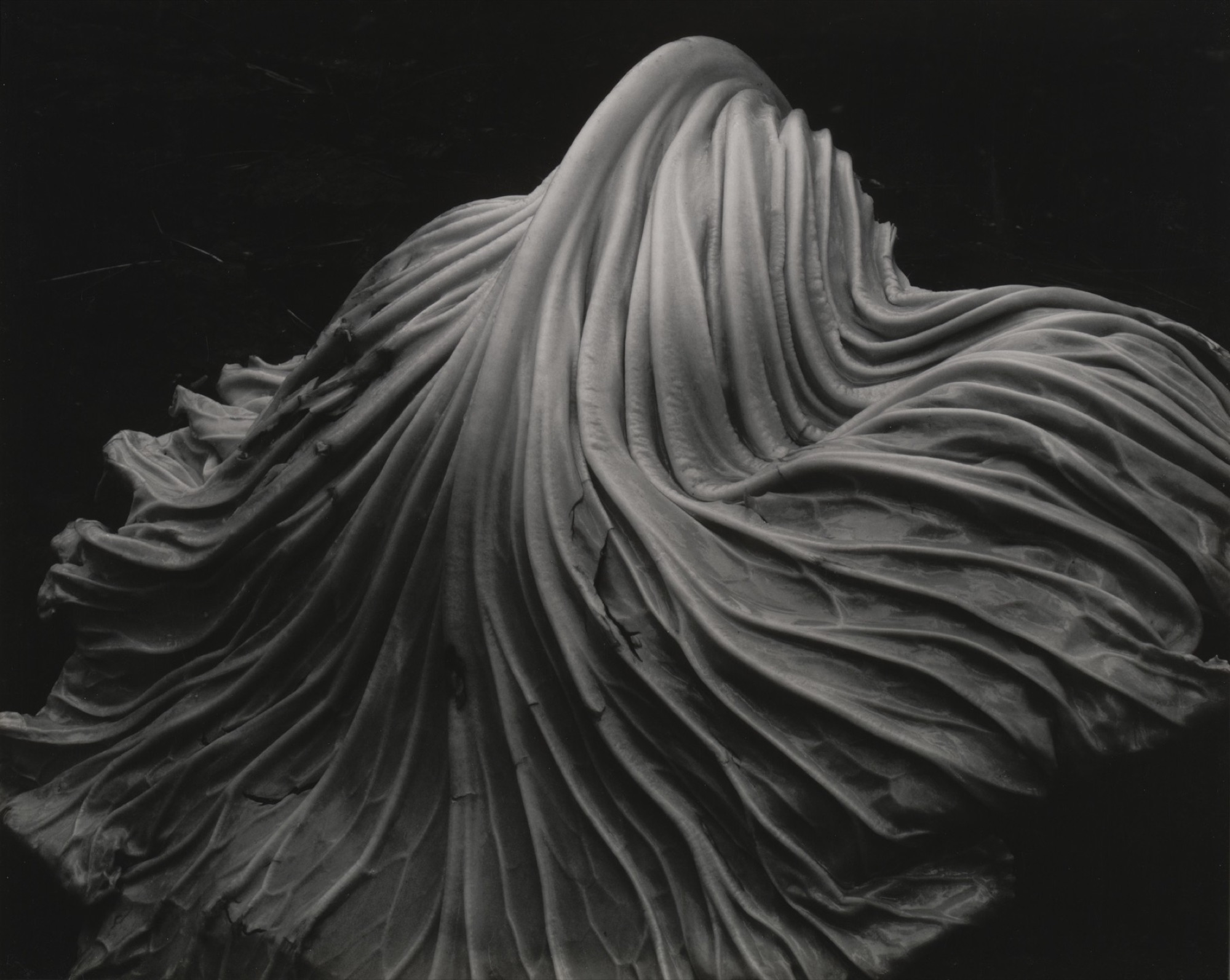
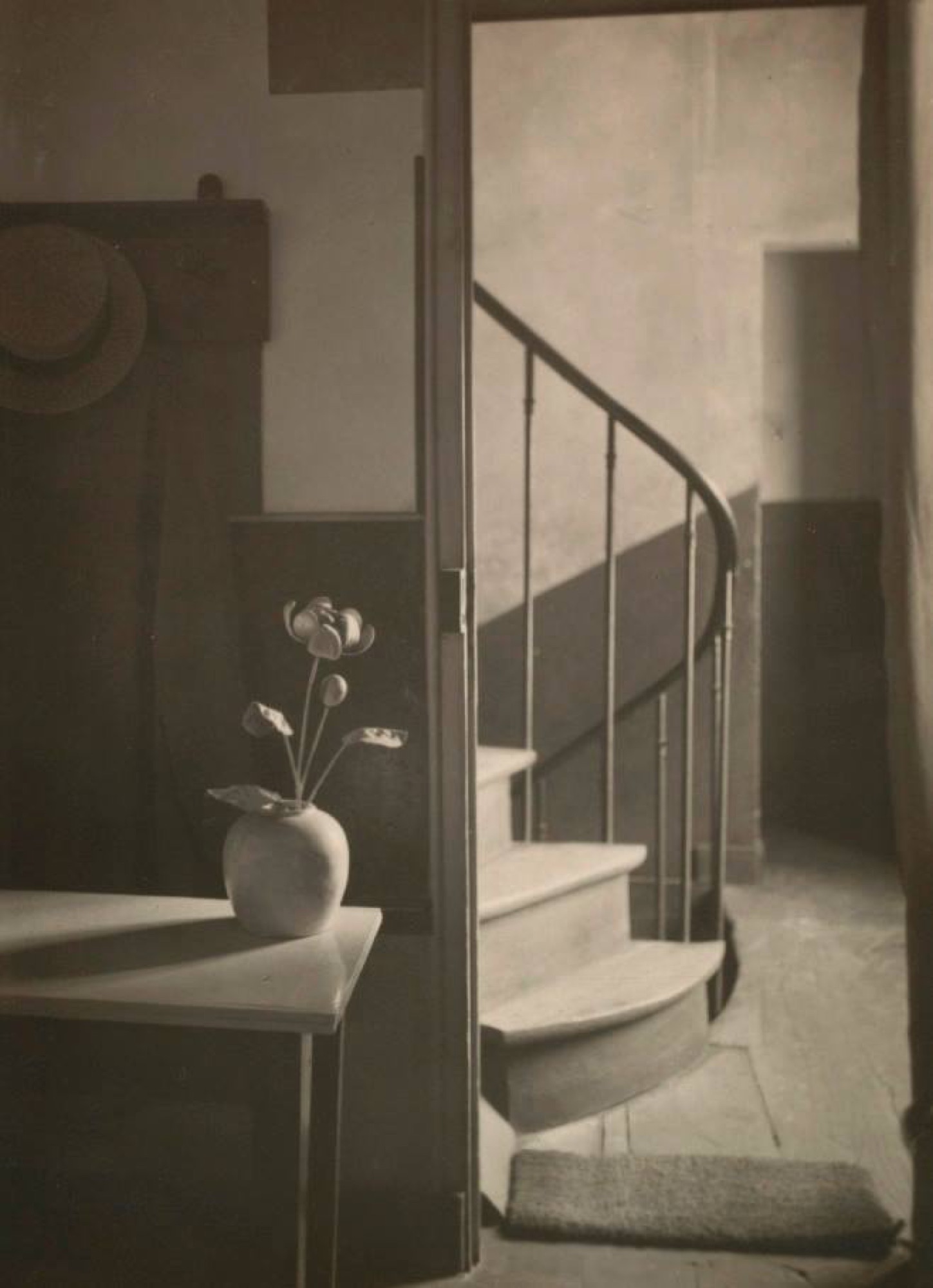
Compare Edward Weston’s Cabbage Leaf (1931) and André Kertész’s Chez Mondrian (1926). Follow a curve or a straight line in each photograph. Explain how the frame, light or placement of the subject affects where you look. Different arrangements can both be effective; support your preference with evidence.
| Camera control | What it changes |
|---|---|
| Aperture | The lens opening. A wider opening admits more light per unit time and gives a shallower depth of field at the same focus and distance. A smaller f-number means a wider opening. |
| Shutter speed | The time the camera collects light. A shorter exposure collects light for less time and can reduce motion blur. |
| ISO | A setting affecting recorded brightness. With light, aperture and shutter fixed, raising ISO can brighten the result without admitting more light. Image quality can change. |
These controls are related. A change to aperture or shutter can affect brightness as well as depth of field or motion. Today’s practical uses prepared settings so you can concentrate on composition.
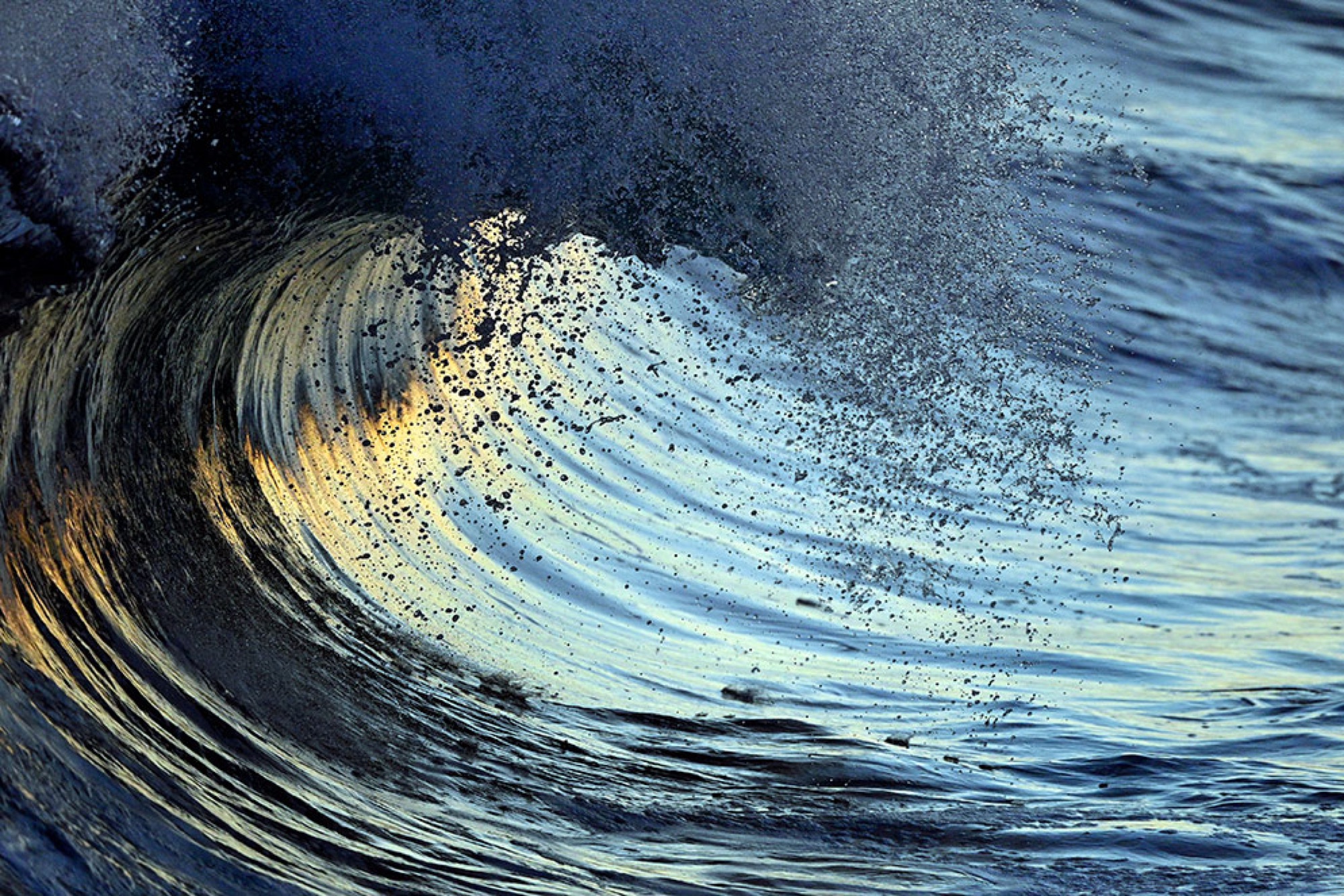
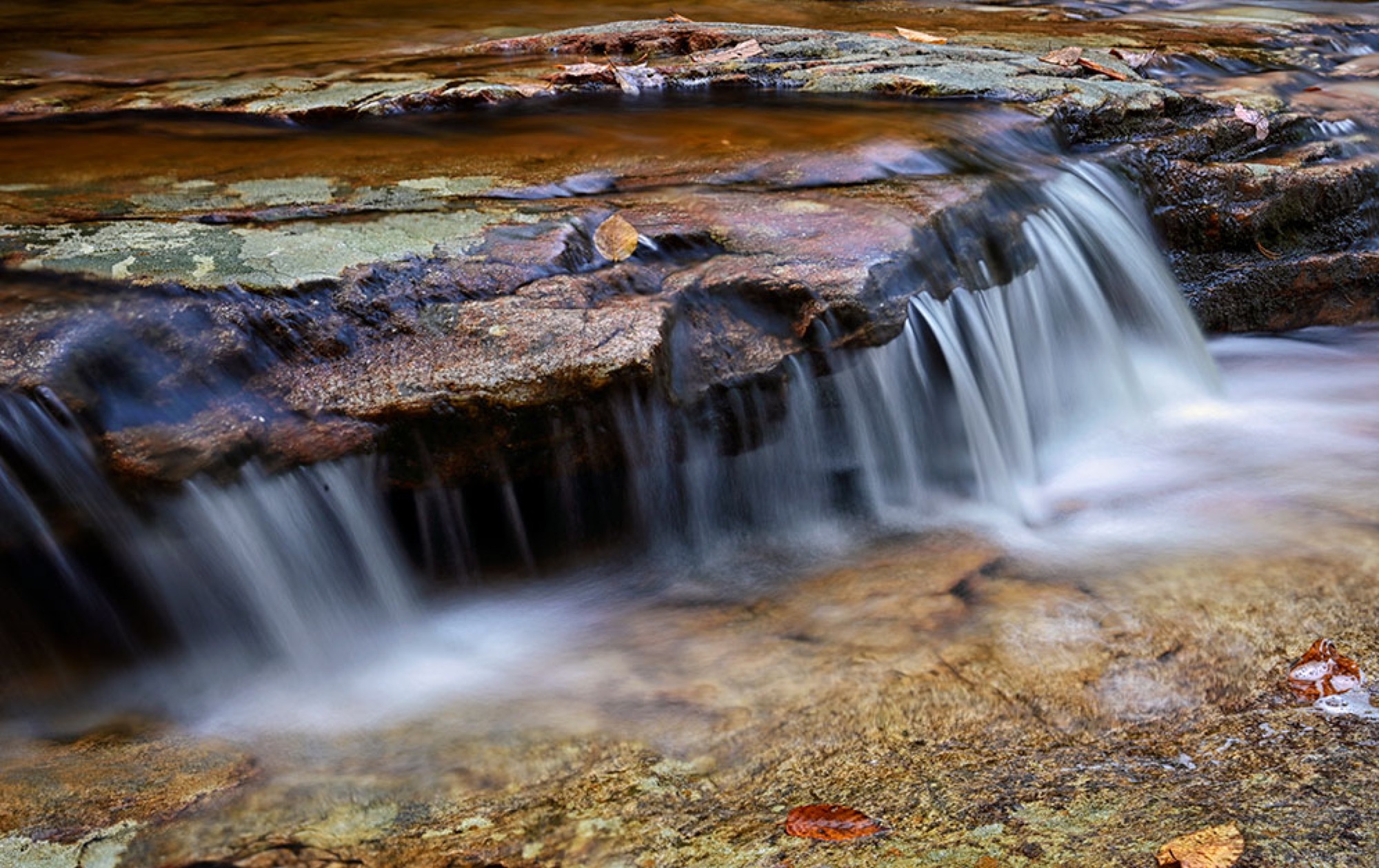
Compare Paul Van Allen’s wave at 1/4000 second with his waterfall at 2.5 seconds. Locate separate droplets in the wave and blurred movement in the falling water. These are different scenes, so the pair illustrates two effects of shutter time rather than a controlled test of one changing setting.
How it runs
In P3 on Sat 10 Oct, begin in the classroom by comparing a projected image with a recorded photograph. Look at early photographs, cameras and large film. Then choose one strongest and one weakest photograph from the cards individually, then compare your reasons with a partner. Point to evidence; you do not have to agree or give a presentation.
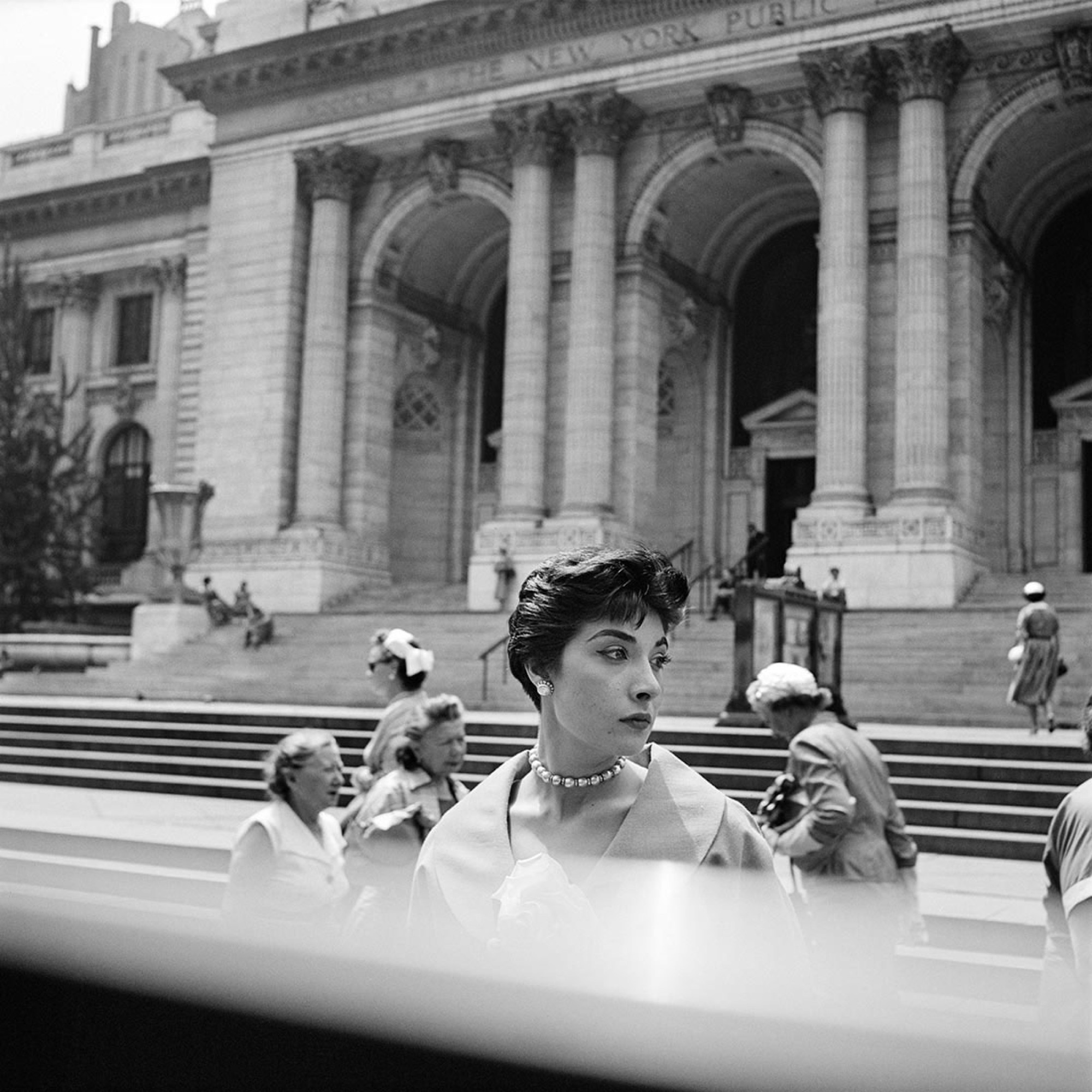
Study Vivian Maier’s New York Public Library, New York. With a partner, locate three features and explain their possible effects: foreground, a gaze or relationship between figures, and an architectural line or layer. You can use arrows and short phrases. Each feature earns one point for an accurate location and one for a supported explanation, for six points. Check your answers and add corrections in another color. Try a crop and explain what it preserves and loses.
After a short exposure introduction, return to one card choice and make your reason more precise. Set an intention: “I will change ___ so that ___.”
If conditions require the studio fallback, the class moves to the shared object studio after the break. Each student takes a first photograph, changes one composition decision and takes a second. Your partner helps and records the image numbers, then you swap. While another student photographs, predict the effect with your partner, indicate your choice and inspect the result on the display. Change viewpoint, framing or one foreground/background element; keep the first image for comparison.
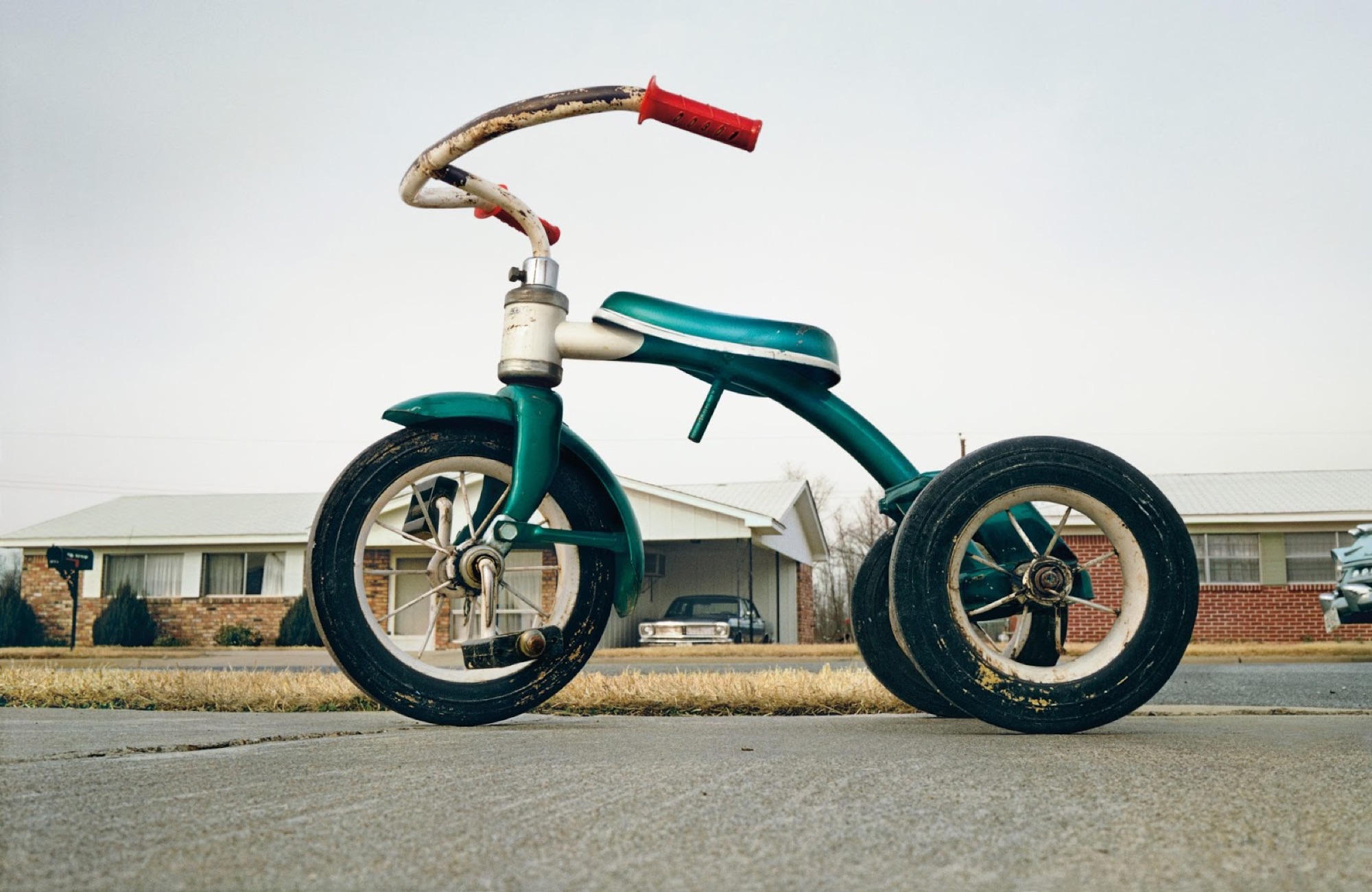
The likely route after the break is outdoor photography. The teacher leads the class to different stops in selected areas. Work in pairs within the permitted area at each stop, then regroup and move together at the teacher’s signal. Each student makes a first photograph, a deliberate change and a refinement after partner feedback. Keep each comparison at the same stop so you can judge the effect of your change. Photograph an ordinary object or architectural feature. The same comparison and exit check follow.
Assessment and reflection
Choose the stronger of your two photographs and explain the visible effect of your change. A change that did not work can still be explained accurately. Complete the individual exit check on recording an image, the three camera controls and your practical decision. The paired score and individual score remain separate and identify what needs more practice. They are not a new gradebook mark.
A quotation
William Henry Fox Talbot, The Pencil of Nature (1844), Plate VI, “The Open Door.” Complete paragraph, retained verbatim:
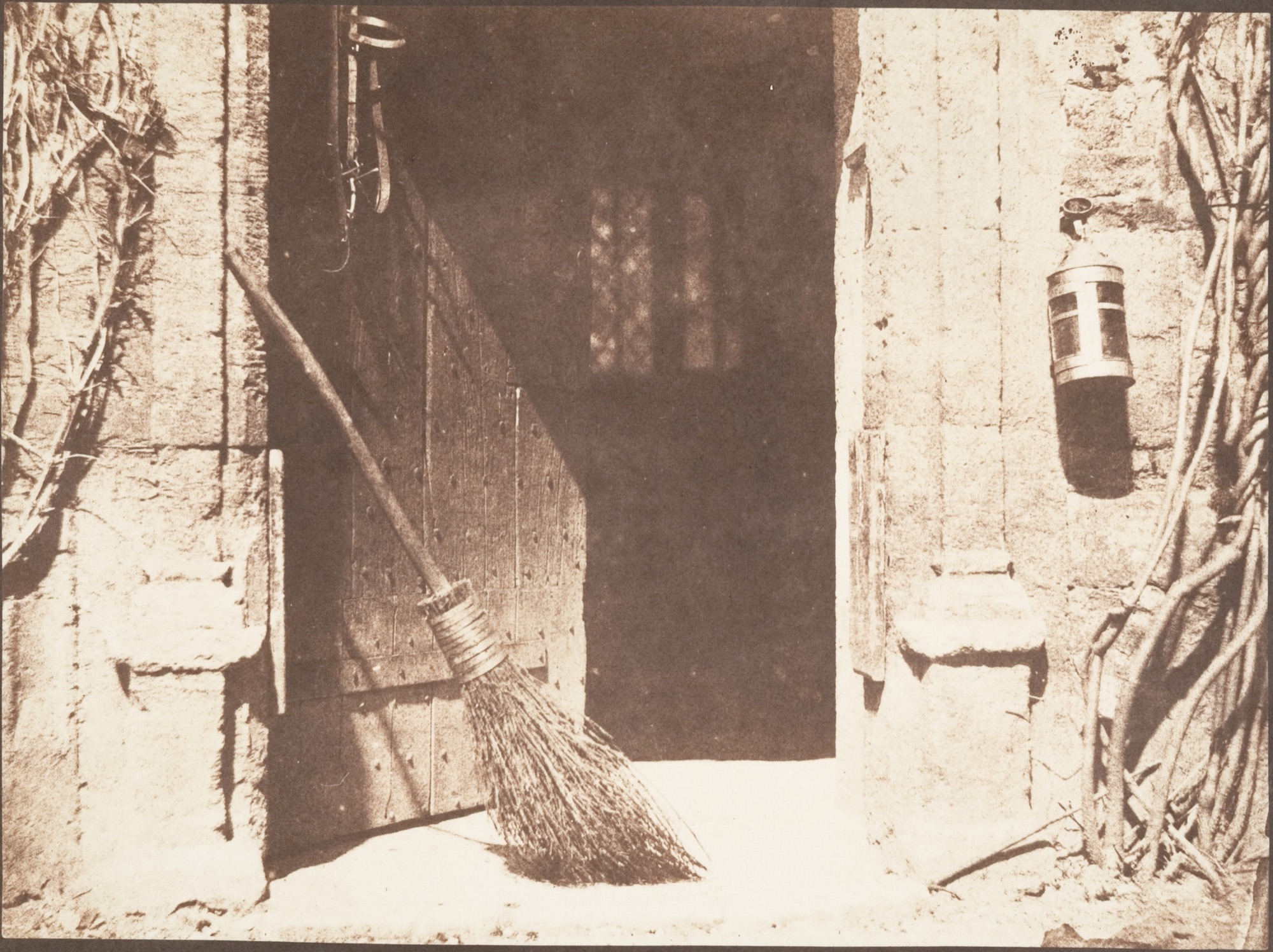
We have sufficient authority in the Dutch school of art, for taking as subjects of representation scenes of daily and familiar occurrence. A painter’s eye will often be arrested where ordinary people see nothing remarkable. A casual gleam of sunshine, or a shadow thrown across his path, a time-withered oak, or a moss-covered stone may awaken a train of thoughts and feelings, and picturesque imaginings.
Source: Project Gutenberg, The Pencil of Nature. This passage connects the historical introduction to the practical’s ordinary subject. It is optional reading, not another timed lecture segment.
Suggested reading
William Henry Fox Talbot, The Pencil of Nature (1844), Plate VI, “The Open Door.” The paragraph connects familiar subjects to deliberate observation. This is optional further reading. You can also revisit the unannotated Maier photograph and find a detail you did not notice at first.
Practice
- What makes a recorded photograph different from a projected image?
- Point to a feature in one card and explain how it affects the photograph.
- Locate a foreground, a figure relationship and an architectural line in Maier’s photograph. Explain one possible effect of each.
- Which camera control would you investigate to soften the background, freeze a moving hand, or raise recorded brightness with aperture and shutter fixed?
- Compare your first and changed photographs. What did you change, what happened, and did it serve your intention?