← Return to the Velázquez–Sargent lesson
Sargent’s brushwork, 1878–1916
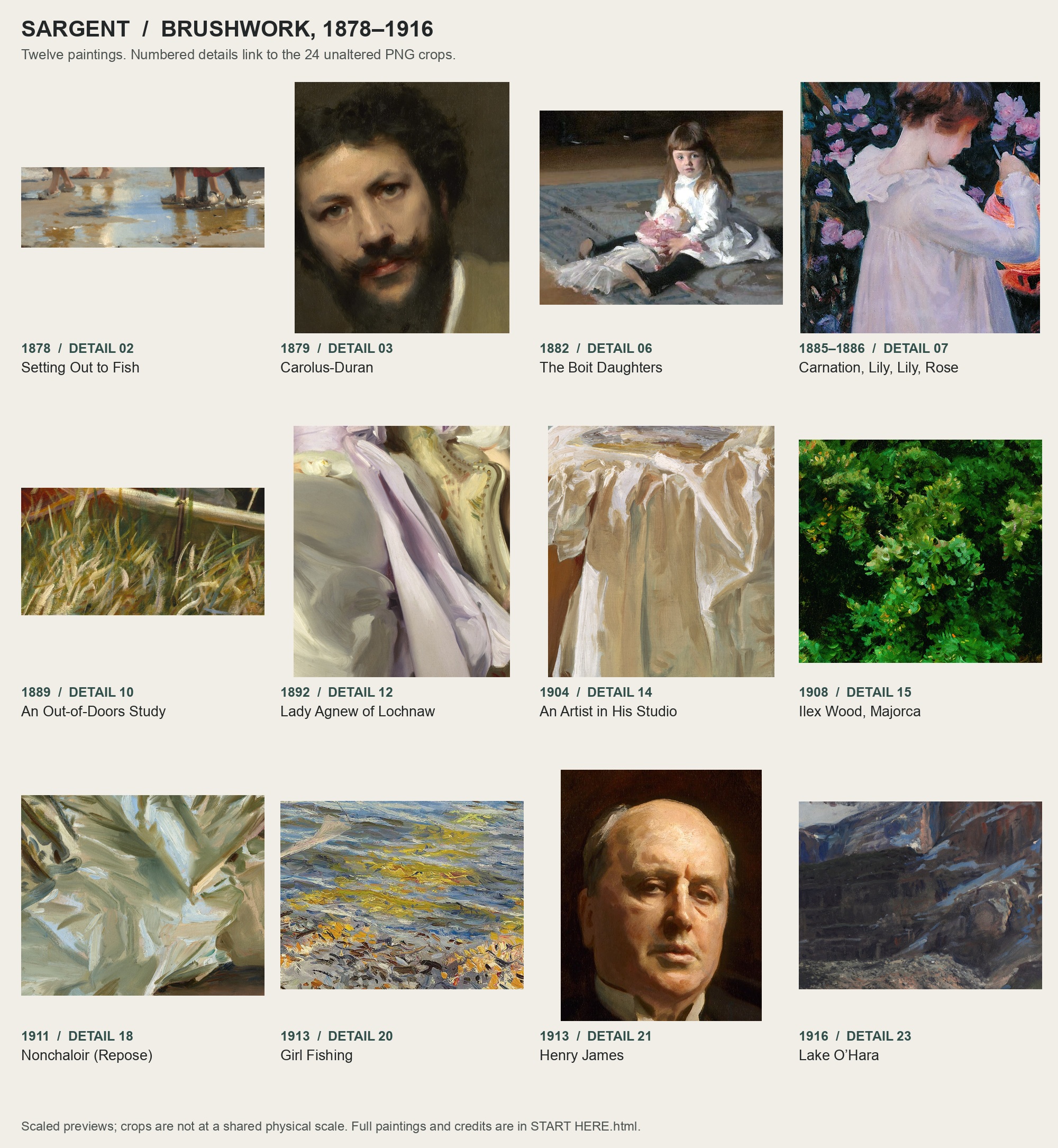
Compare the marks that build a face, a fold of fabric, a patch of foliage or moving water. These 24 details come from twelve paintings used in this lesson.
All twelve works are oils on canvas. The sequence follows a growing emphasis on broken color and conspicuous strokes in the selected outdoor and informal paintings. Early passages already show bold handling, and later portraits retain careful modeling. Treat the dates as a framework for comparison, not a rule that every later work must be looser.
The captions describe visible evidence and suggest effects. They do not establish the speed of painting, the artist’s mood or the thickness of the paint. Historical sources and method.
Then compare 04 with 03, and 21 with 20, to test the idea of a simple progression.
Name a visible mark first. Explain its effect next. Open the notes after looking.
Open the chronological overview
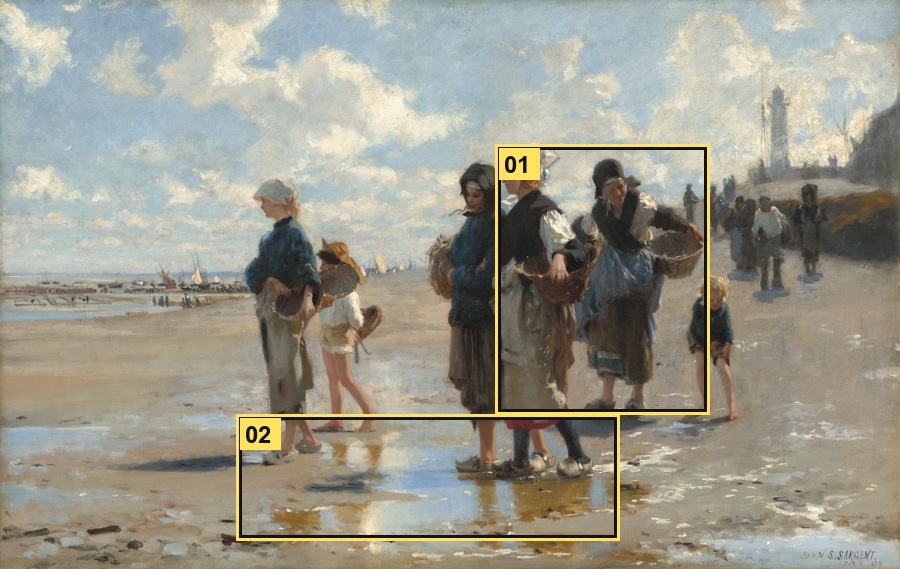
En route pour la pêche (Setting Out to Fish)
John Singer Sargent · Oil on canvas
National Gallery of Art, Washington
Artwork / collection reference · Reproduction source
The numbered rectangles locate the two details.

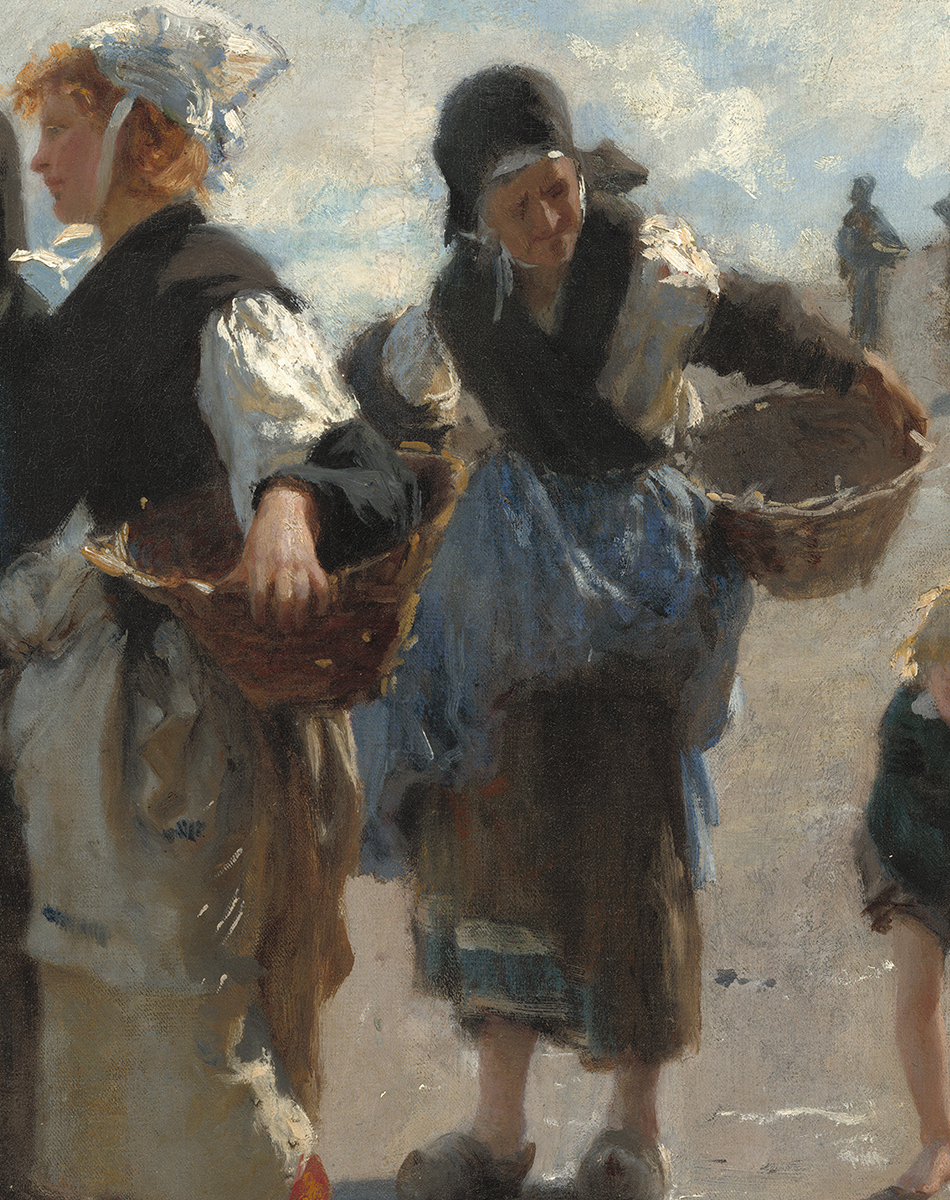
01 · Faces and clothing
Looking notes
Visible marks. Small light and dark changes distinguish the faces. Broader areas of blue and gray establish the clothing.
Suggested effect. The heads receive concentrated attention while the clothing is described with larger shapes.
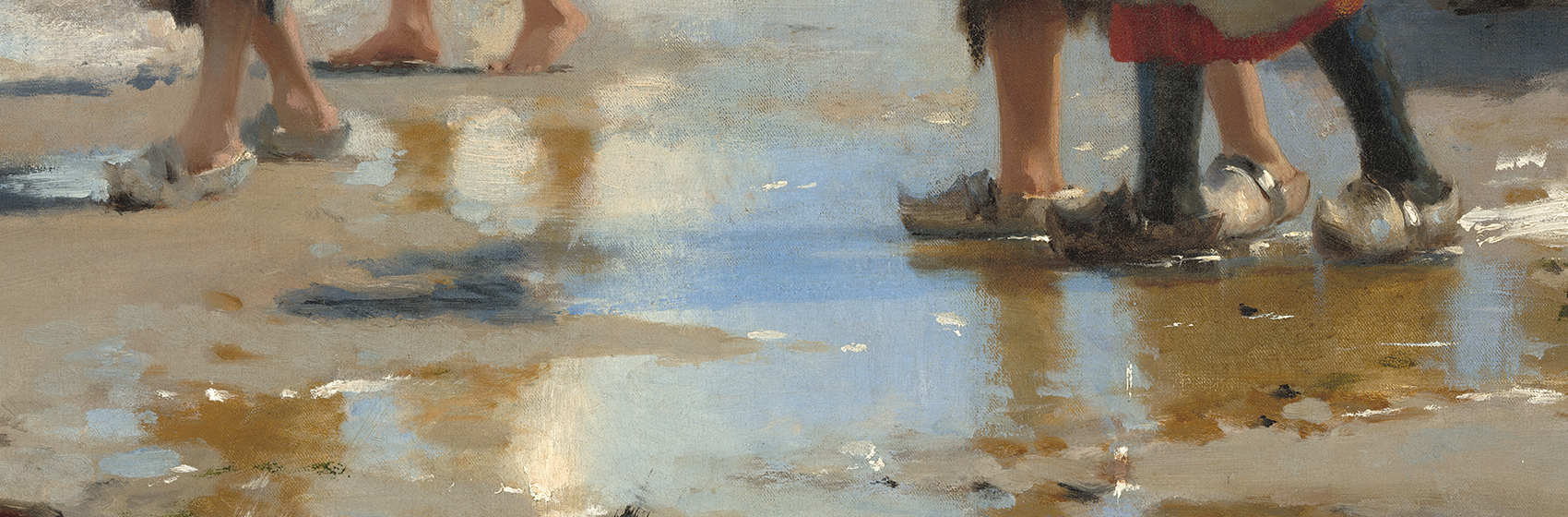
02 · Water and reflections
Looking notes
Visible marks. Horizontal blue strokes cross the pale sand. Broken brown and cream marks sit beneath the figures.
Suggested effect. The marks suggest shallow water and interrupted reflections. Visible, economical strokes already occur in this early painting.
Carolus-Duran
John Singer Sargent · Oil on canvas
Clark Art Institute
Artwork / collection reference · Reproduction source
The numbered rectangles locate the two details.

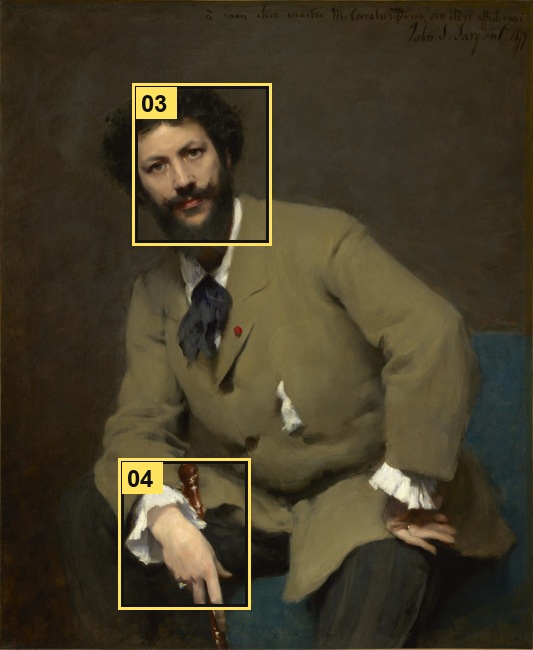
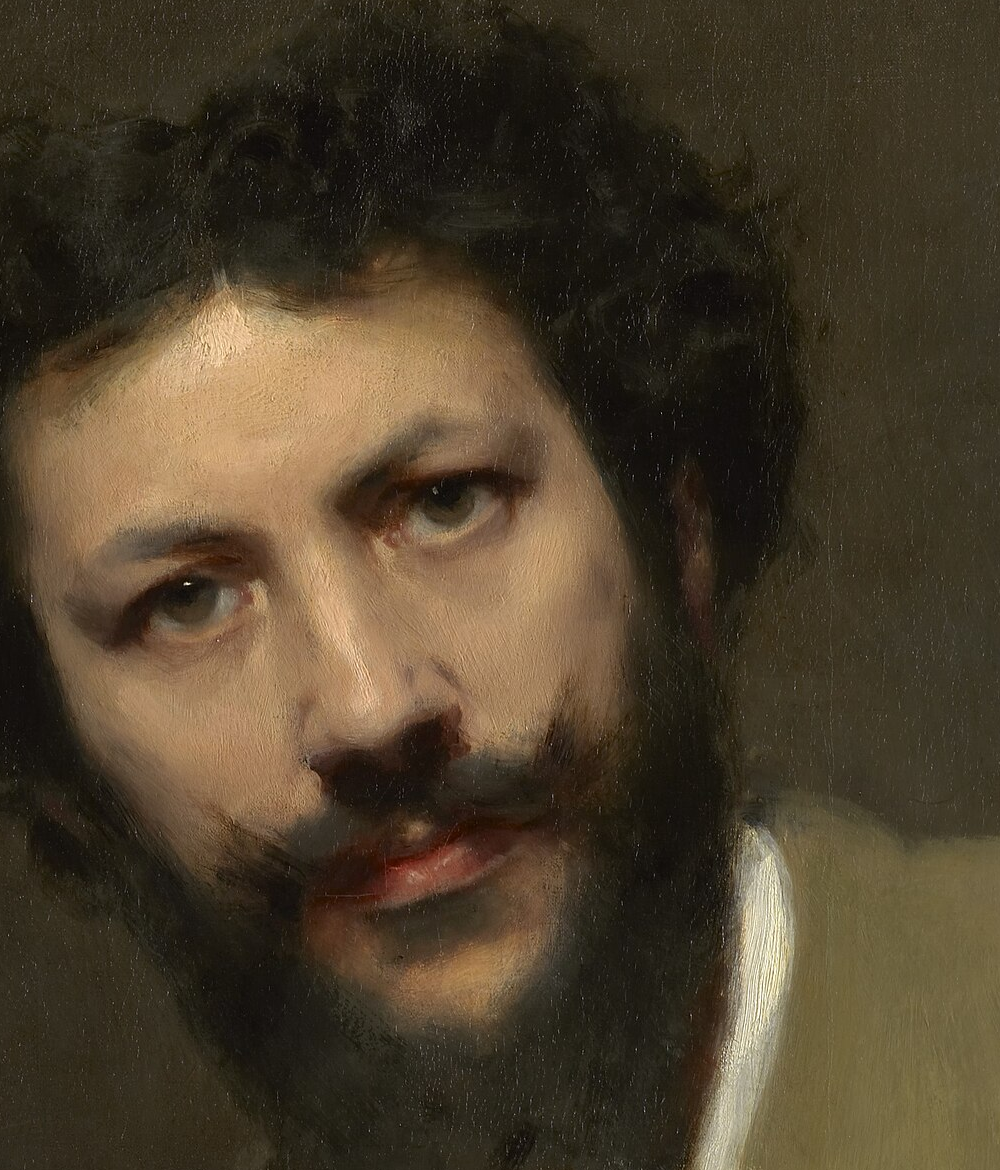
03 · Face and beardFOCUSED SEQUENCE
Looking notes
Visible marks. Light and dark planes meet across the forehead, nose and cheek. Dark strokes merge in the beard.
Suggested effect. The face looks solid without every transition being blended to the same degree.
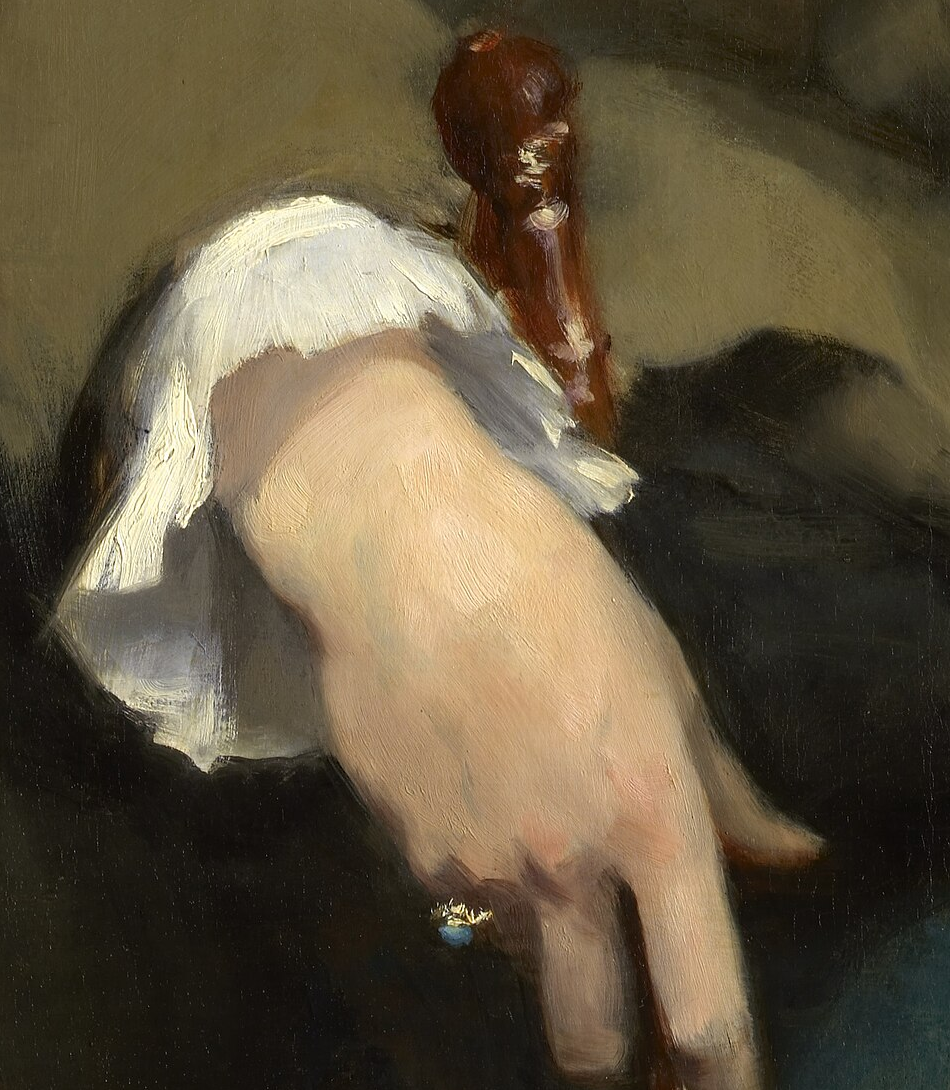
04 · Hand and white cuff
Looking notes
Visible marks. Broad white shapes meet dark gaps at the cuff. A few changes of value describe the hand and fingers.
Suggested effect. The cuff looks crisp from a distance even though its separate strokes remain visible close up.
The Daughters of Edward Darley Boit
John Singer Sargent · Oil on canvas
Museum of Fine Arts, Boston
Artwork / collection reference · Reproduction source
The numbered rectangles locate the two details.
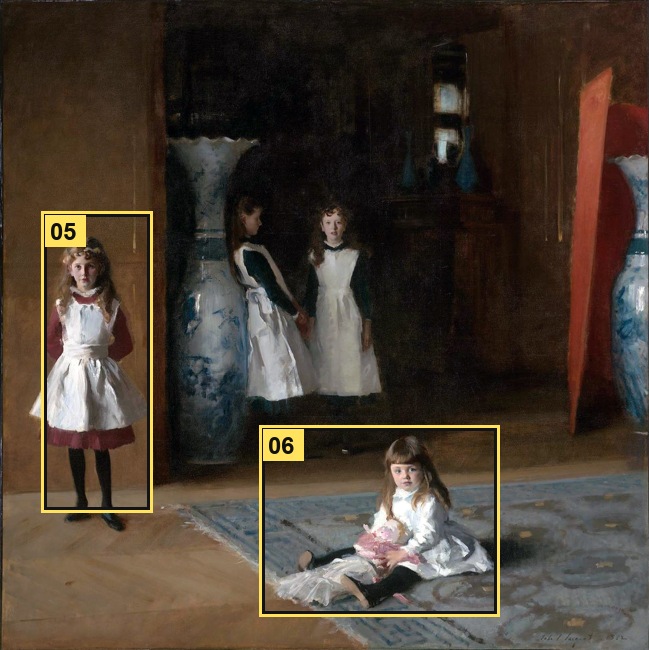
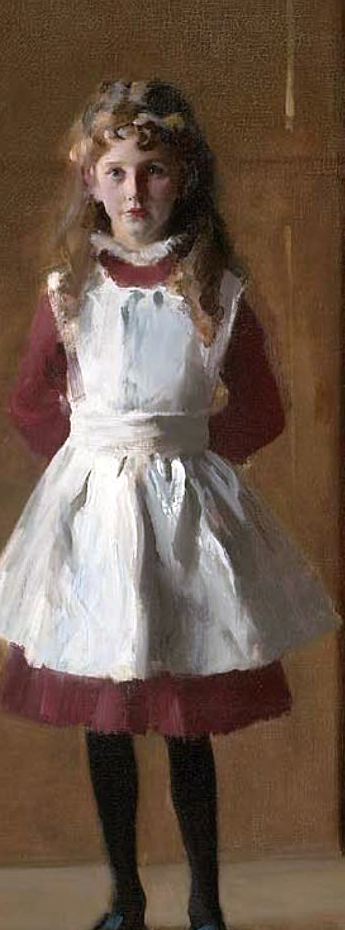
05 · Left daughter and pinafore
The supplied Boit reproduction has limited fine detail. This narrow crop is 345 pixels wide; use it for the distribution of marks rather than minute paint texture.
Looking notes
Visible marks. Pale strokes make the pinafore against the darker dress. The lit head and hands are small, distinct accents.
Suggested effect. The bright clothing makes this daughter stand out against the wall. Relate the handling of paint to her placement in the room.
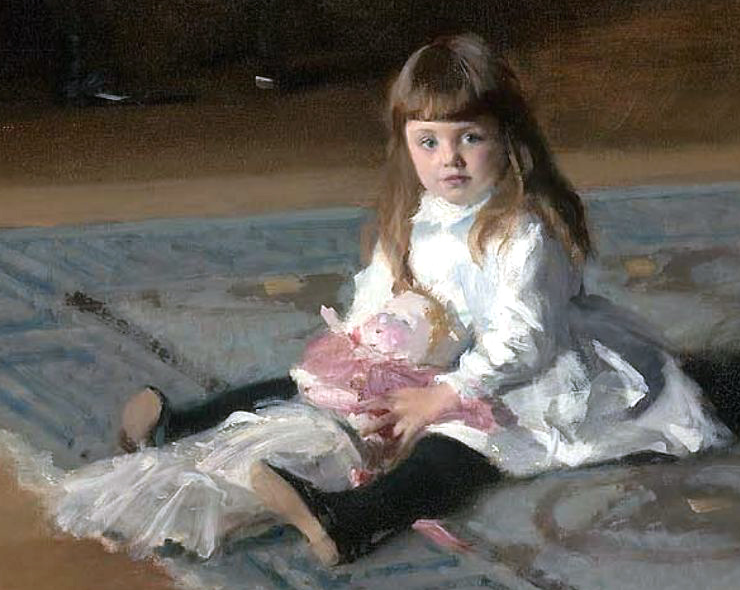
06 · Seated daughter and skirtFOCUSED SEQUENCE
Looking notes
Visible marks. White, gray and blue strokes turn in different directions across the skirt. Several edges soften into the rug.
Suggested effect. The dress becomes legible through groups of light and dark marks, linking this class painting to the later fabric details.
Carnation, Lily, Lily, Rose
John Singer Sargent · Oil on canvas
Tate
Artwork / collection reference · Reproduction source
The numbered rectangles locate the two details.

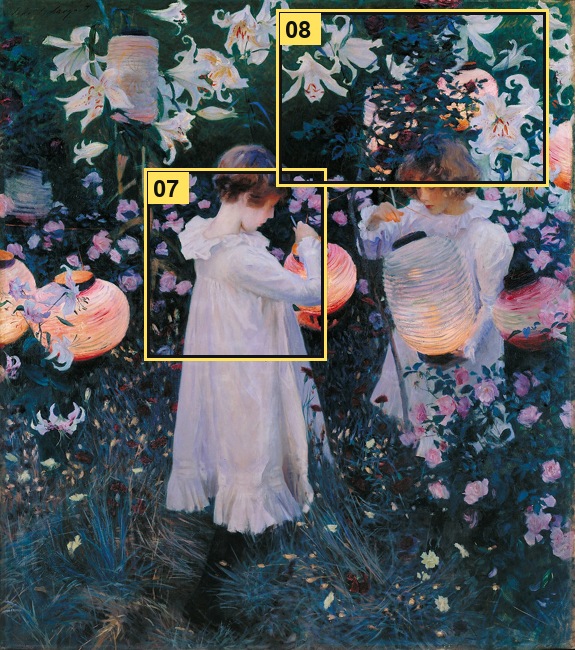
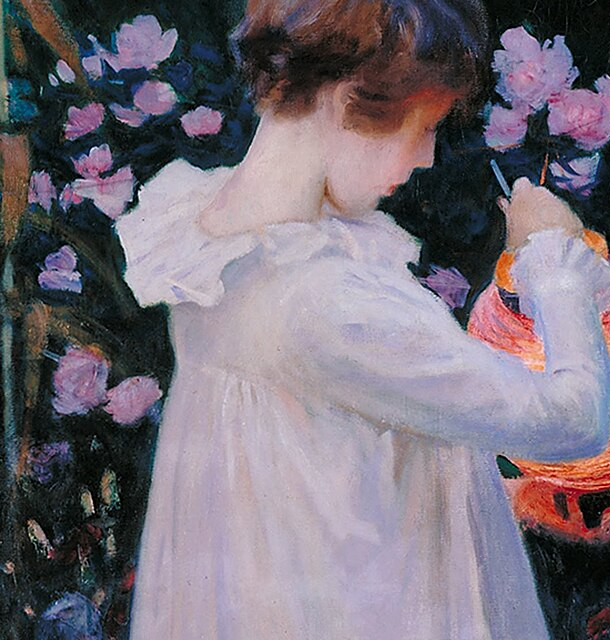
07 · Lantern light on sleeveFOCUSED SEQUENCE
Looking notes
Visible marks. Pink and orange sit beside pale violet and blue on the sleeve and lantern. The marks remain distinct.
Suggested effect. Colored changes suggest light falling on white fabric. Describe the colors before calling the sleeve white.
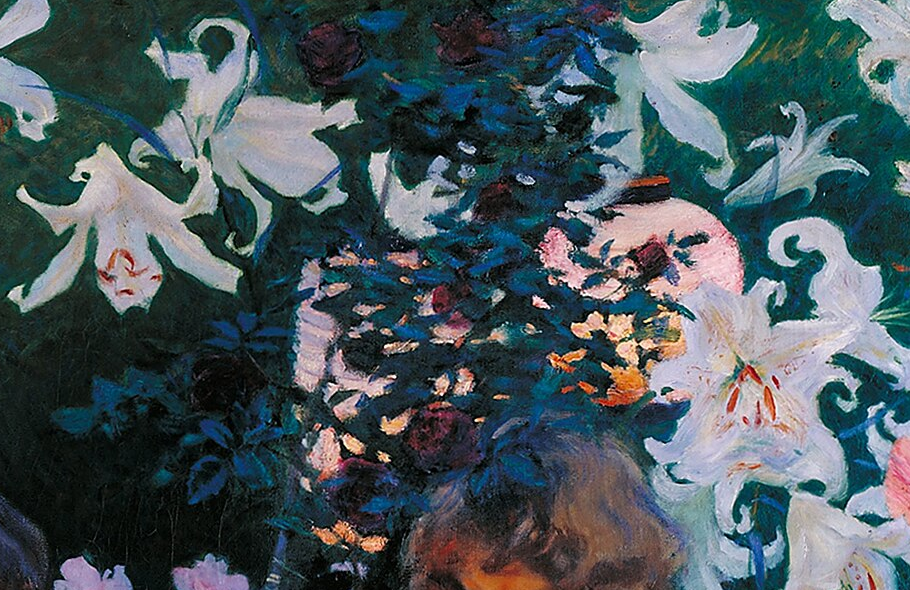
08 · Lilies and dark foliage
Looking notes
Visible marks. Pale petals interrupt the dark greens. Pink, blue and green touches separate nearby flowers and leaves.
Suggested effect. The flowers become a pattern of colored marks as well as recognizable plants.
An Out-of-Doors Study (Paul Helleu Sketching with His Wife)
John Singer Sargent · Oil on canvas
Brooklyn Museum
Artwork / collection reference · Reproduction source
The numbered rectangles locate the two details.

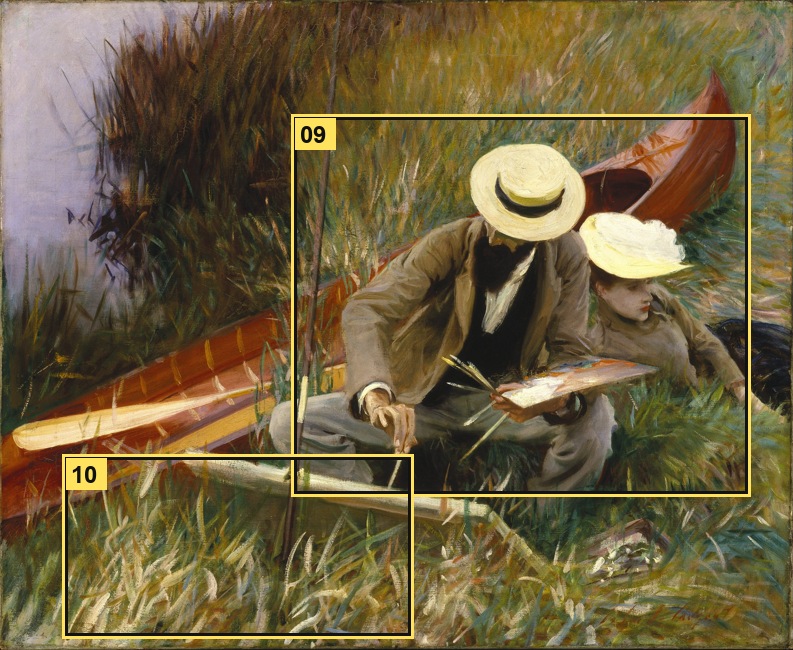
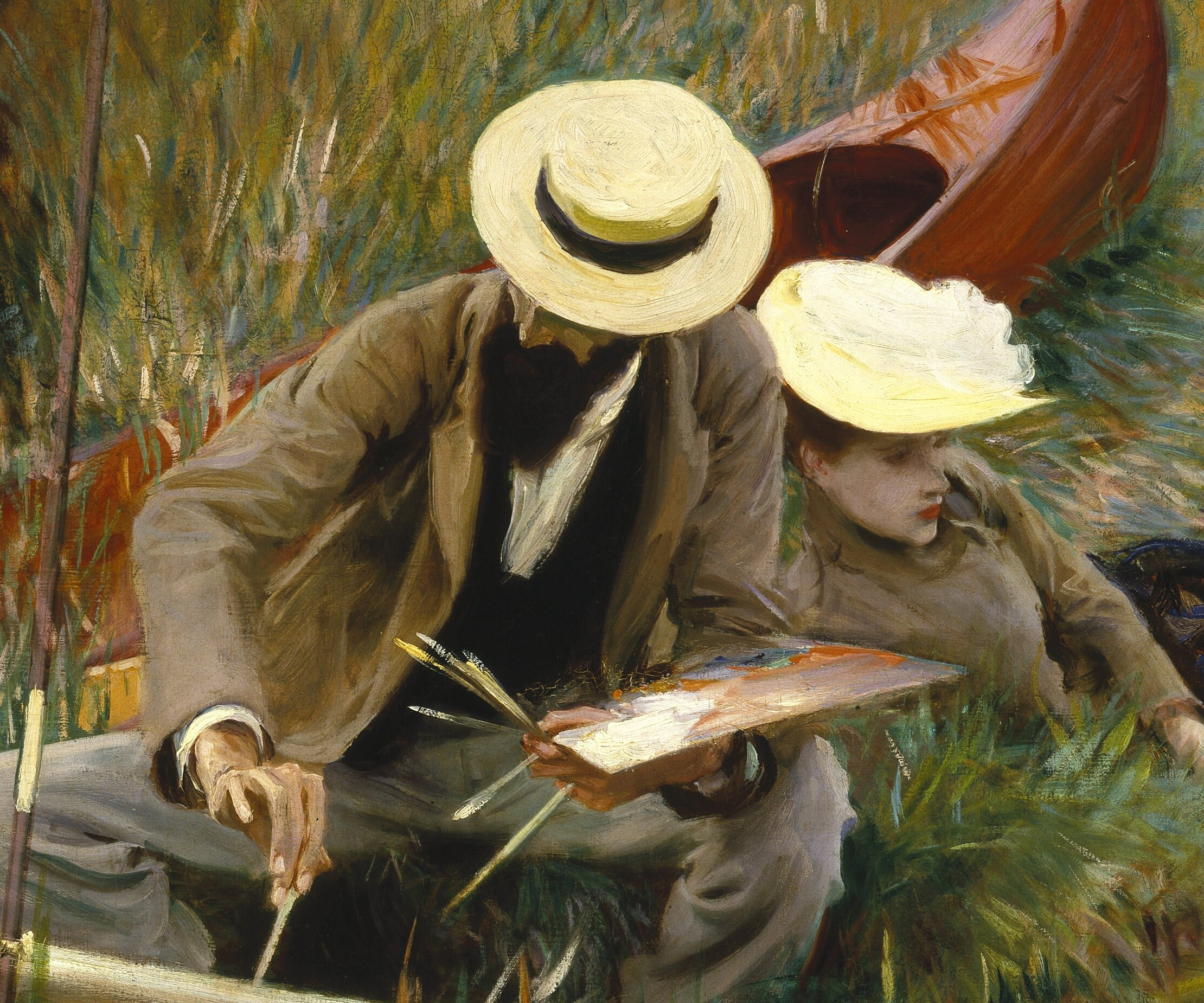
09 · Hats, heads and painting hand
Looking notes
Visible marks. Broad pale arcs describe the hats. Dark areas suppress facial detail, while small light accents pick out the hand.
Suggested effect. The strongest contrasts guide attention through a sunlit scene without giving every feature equal detail.
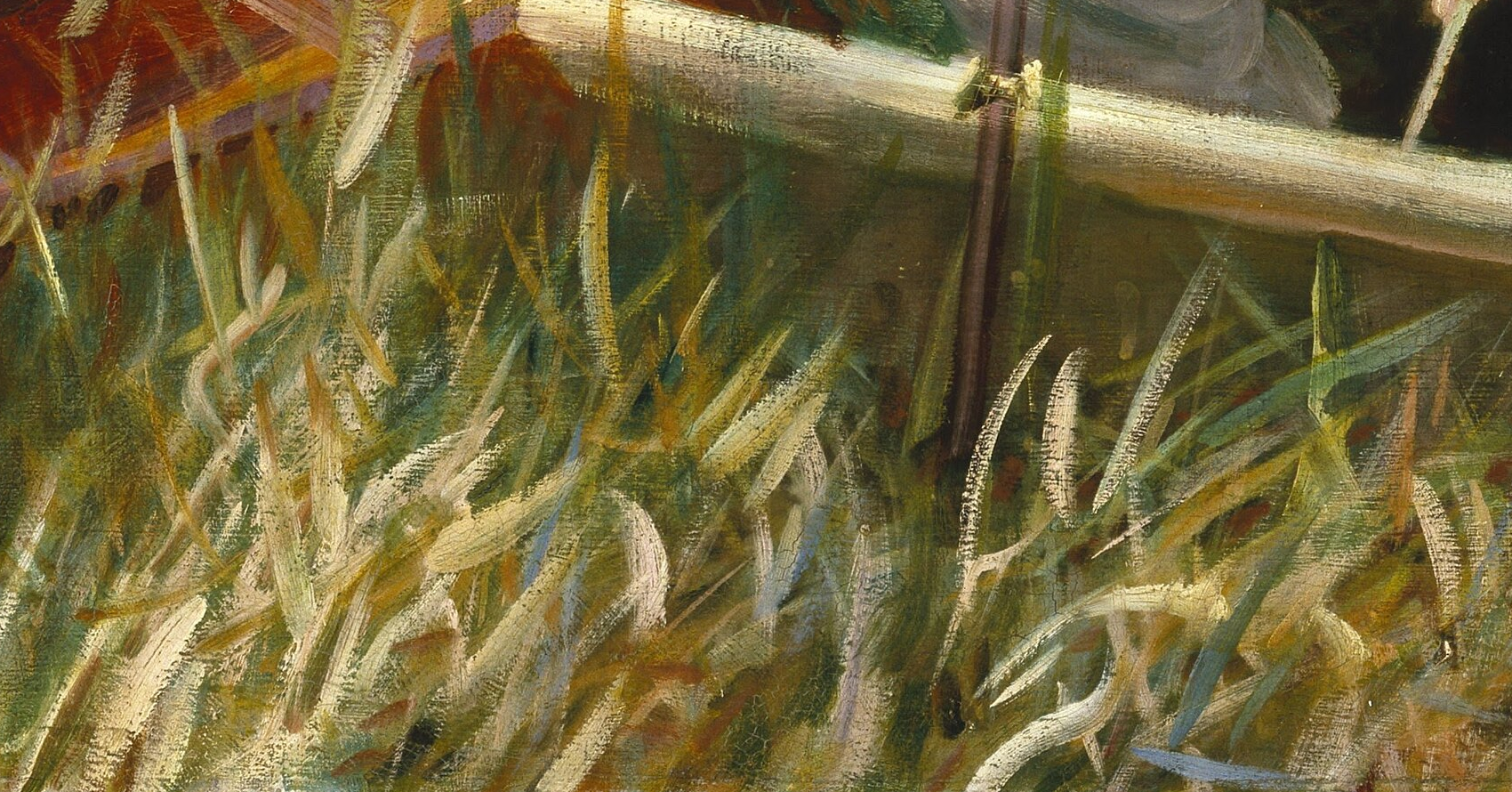
10 · Grass and water at the bankFOCUSED SEQUENCE
Looking notes
Visible marks. Long diagonal green and cream strokes cross darker blue and brown passages.
Suggested effect. Changes of direction distinguish grass from water and create an active surface.
Lady Agnew of Lochnaw
John Singer Sargent · Oil on canvas
National Galleries of Scotland
Artwork / collection reference · Reproduction source
The numbered rectangles locate the two details.

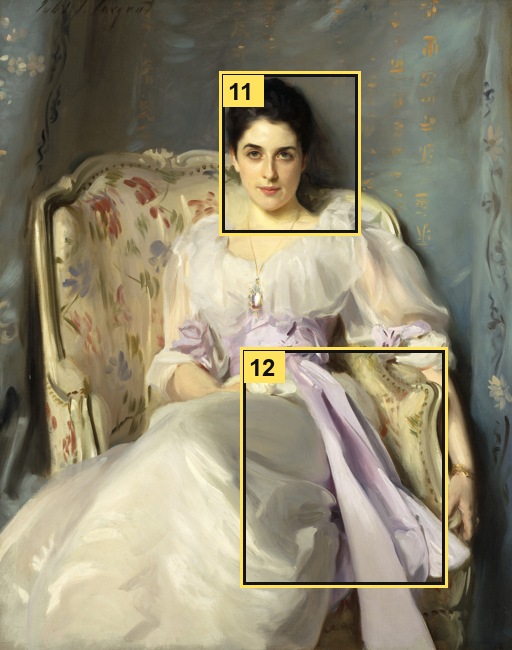
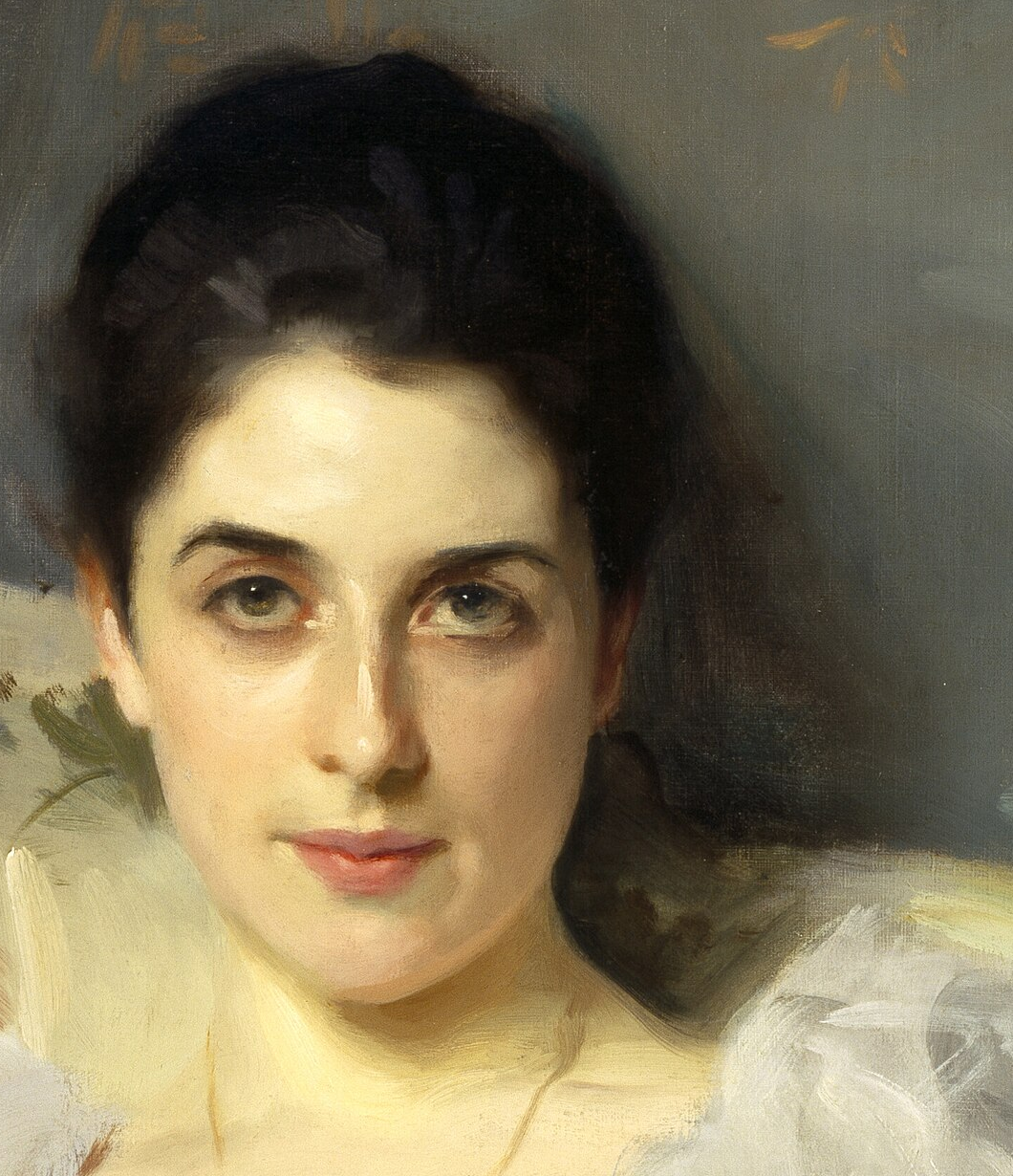
11 · Face and hair
Looking notes
Visible marks. Close changes of tone model the face. Darker marks collect around the eyes and hair.
Suggested effect. The face holds attention through concentrated detail and controlled transitions.
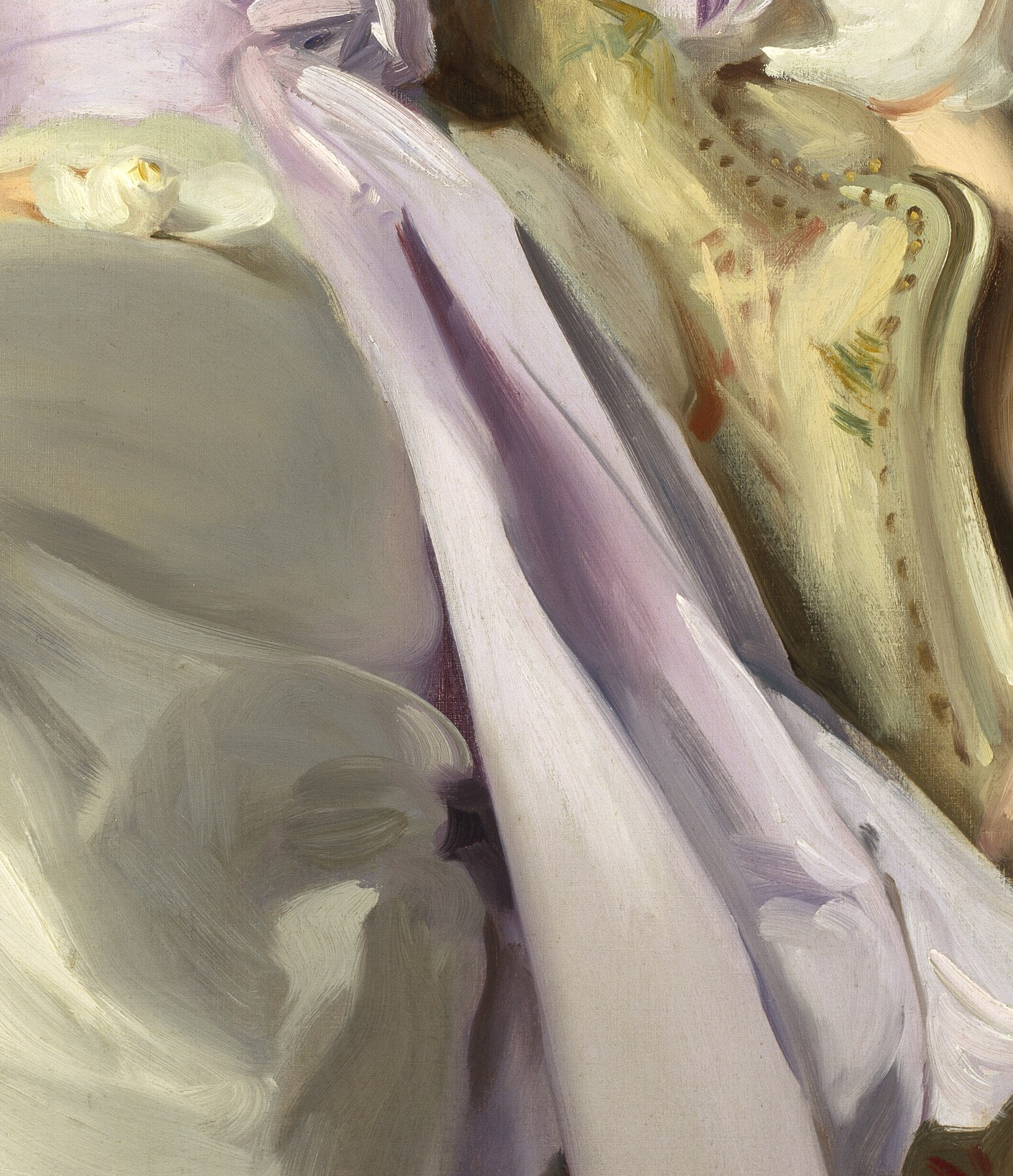
12 · White skirt and violet sash
Looking notes
Visible marks. Wide cream and gray strokes bend across the skirt. Violet strokes in the sash change direction at the folds.
Suggested effect. The fabric is described more broadly than the face. Compare two kinds of finish within the same portrait.
An Artist in His Studio
John Singer Sargent · Oil on canvas
Museum of Fine Arts, Boston
Artwork / collection reference · Reproduction source
The numbered rectangles locate the two details.

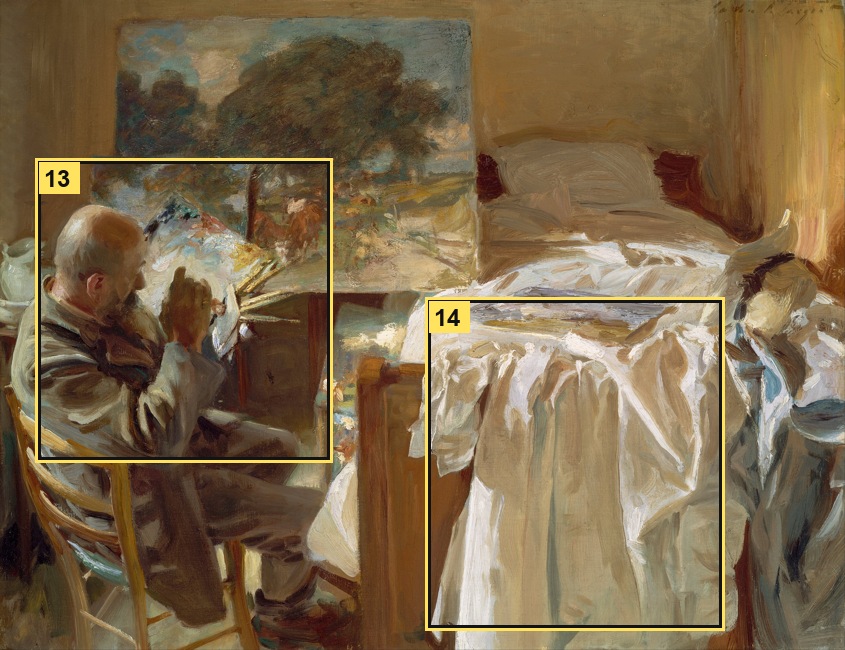
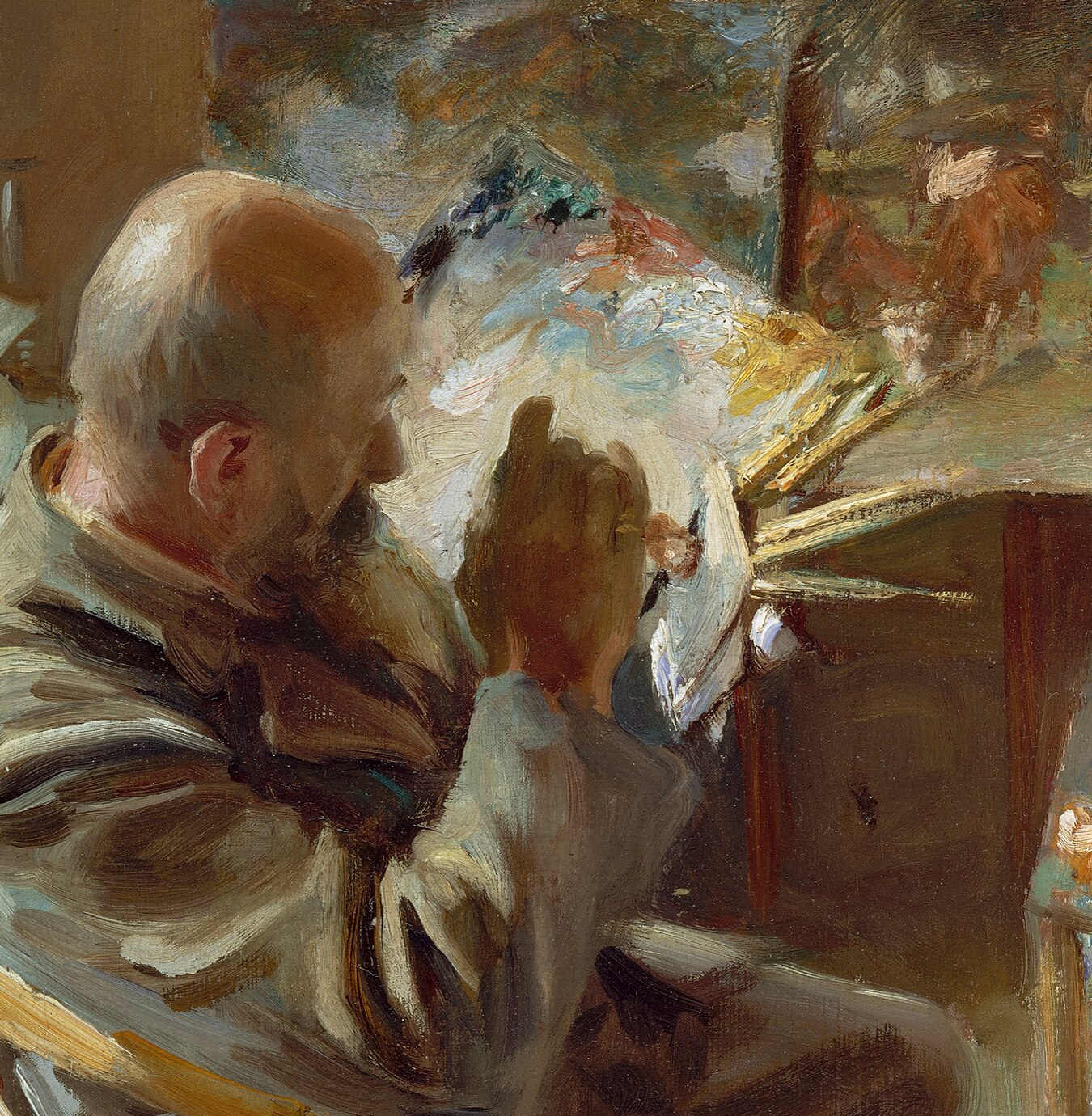
13 · Head and working hand
Looking notes
Visible marks. Small light strokes pick out the head and hand among broad brown and gray passages.
Suggested effect. Selective accents make the working figure readable without describing every part equally.
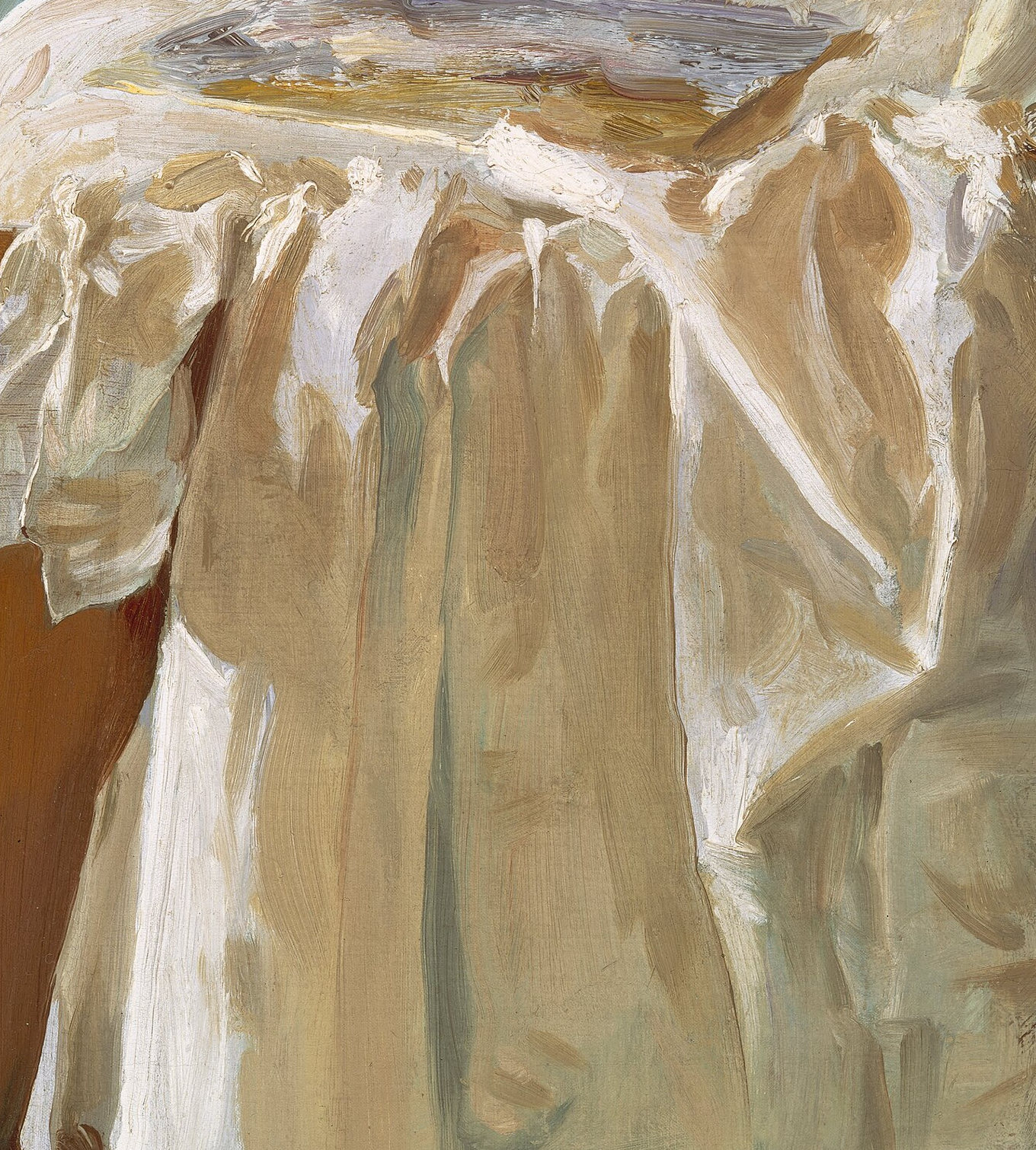
14 · Hanging white fabricFOCUSED SEQUENCE
Looking notes
Visible marks. Long cream strokes lie beside gray, ocher and blue shadows. Sharp and softened edges alternate.
Suggested effect. The direction and value of the marks suggest folds and hanging weight.
Ilex Wood, Majorca
John Singer Sargent · Oil on canvas
Carmen Thyssen Collection
Artwork / collection reference · Reproduction source
The numbered rectangles locate the two details.

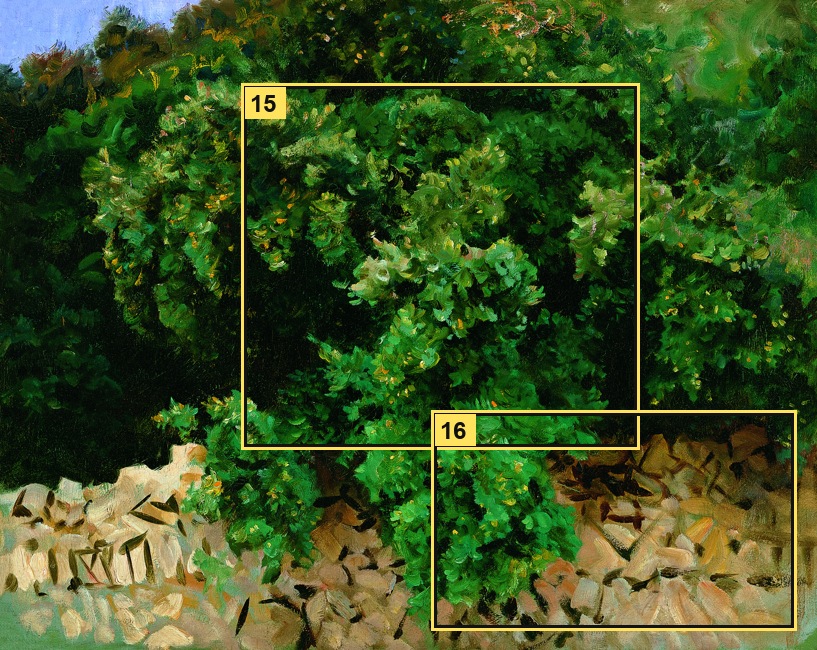
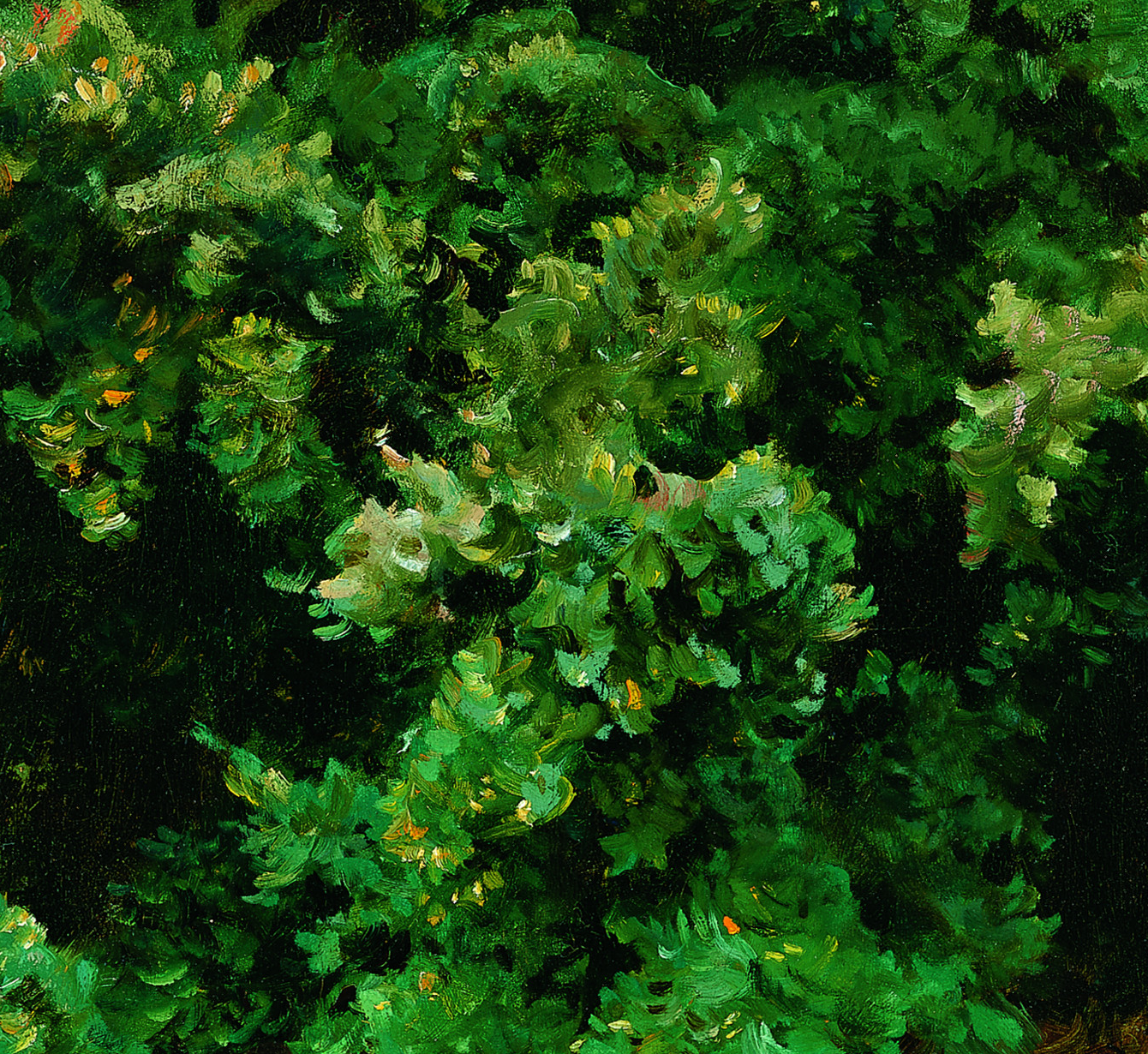
15 · Foliage in light and shadow
Looking notes
Visible marks. Small angled green, yellow and blue marks interrupt much darker patches. Leaf shapes repeatedly merge into clusters.
Suggested effect. The broken color suggests dense foliage and scattered light without outlining every leaf.
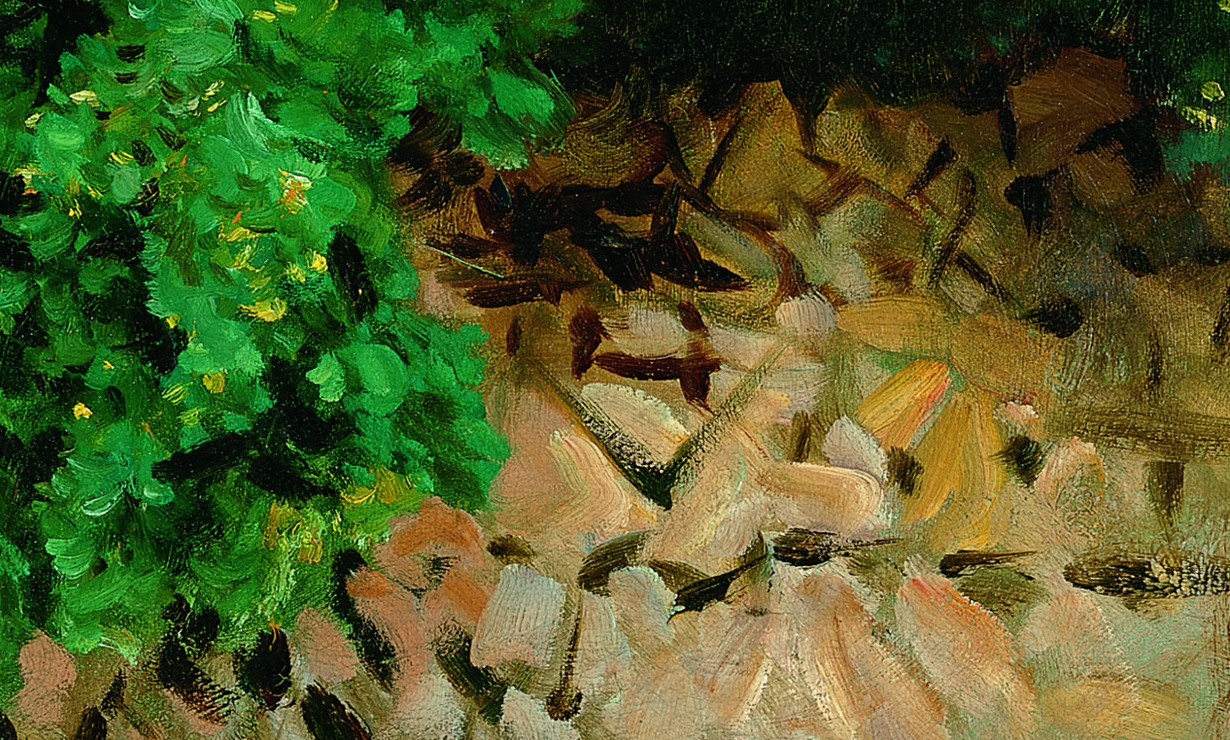
16 · Stone wall and leaves
Looking notes
Visible marks. Flat ocher, cream and gray marks meet at different angles. Green strokes overlap the lighter stone shapes.
Suggested effect. The wall reads as a structure from farther away, while close looking reveals a patchwork of directional marks.
Nonchaloir (Repose)
John Singer Sargent · Oil on canvas
National Gallery of Art, Washington
Artwork / collection reference · Reproduction source
The numbered rectangles locate the two details.

 - crop locations.jpg)
 - Head and pale wrap.png)
17 · Head and pale wrap
Looking notes
Visible marks. The head has relatively close tonal changes. Longer pale strokes and dark gaps build the wrap beneath it.
Suggested effect. The shift in handling separates face, cloth and surrounding shadow within one informal figure study.
 - Skirt folds and reflected color.png)
18 · Skirt folds and reflected colorFOCUSED SEQUENCE
Looking notes
Visible marks. Angular cream, blue and olive strokes sit side by side. Some boundaries are sharp and others disappear.
Suggested effect. Separate colored shapes resolve into shining, folded fabric when the image is seen from farther away.
Girl Fishing
John Singer Sargent · Oil on canvas
Private collection; Christie’s sale record
Artwork / collection reference · Reproduction source
The numbered rectangles locate the two details.

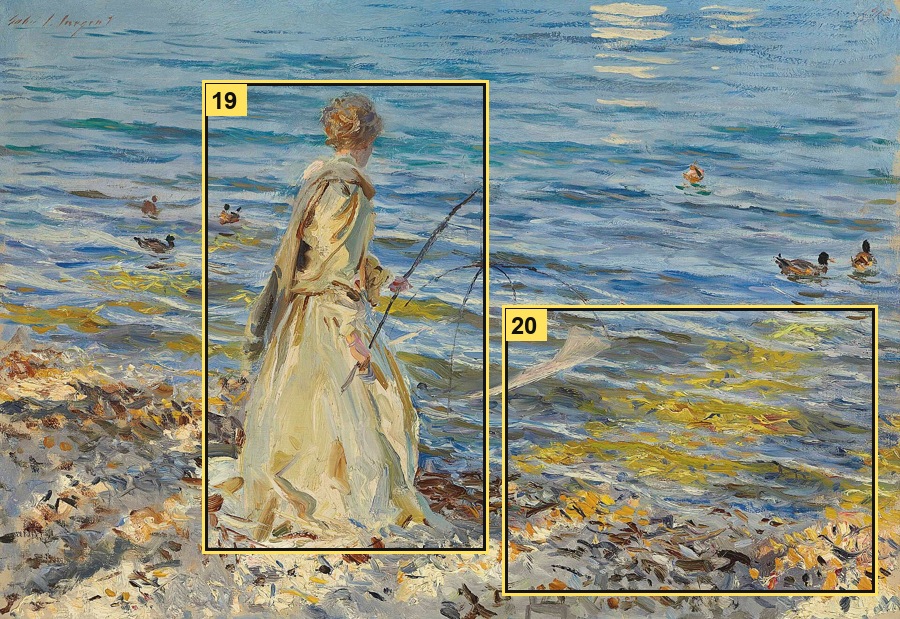
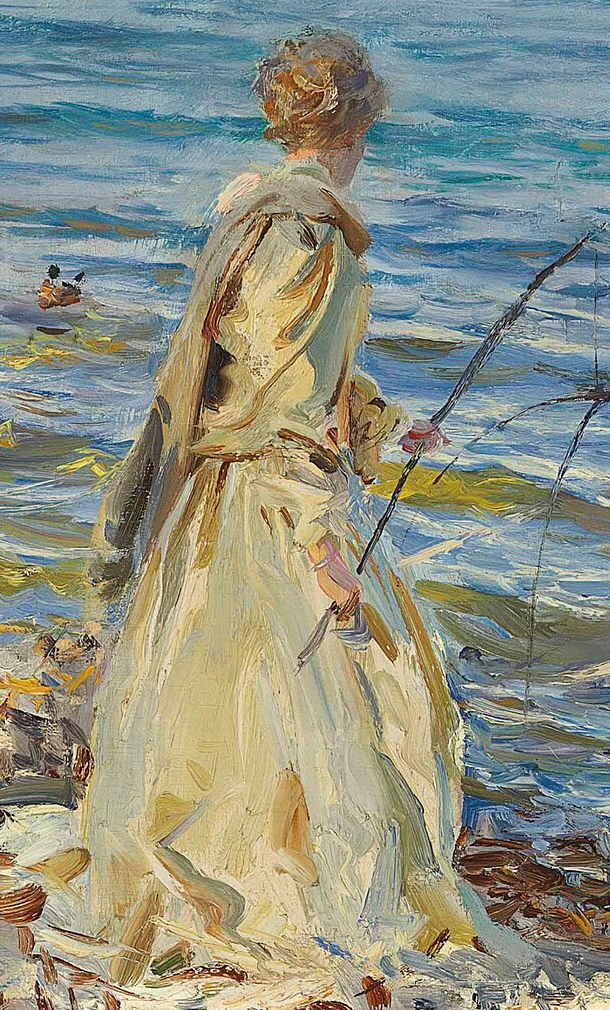
19 · Dress against moving water
Looking notes
Visible marks. Long cream and ocher strokes follow the dress. Shorter blue strokes cross the water behind it.
Suggested effect. Different stroke directions distinguish the standing figure from the surrounding water.
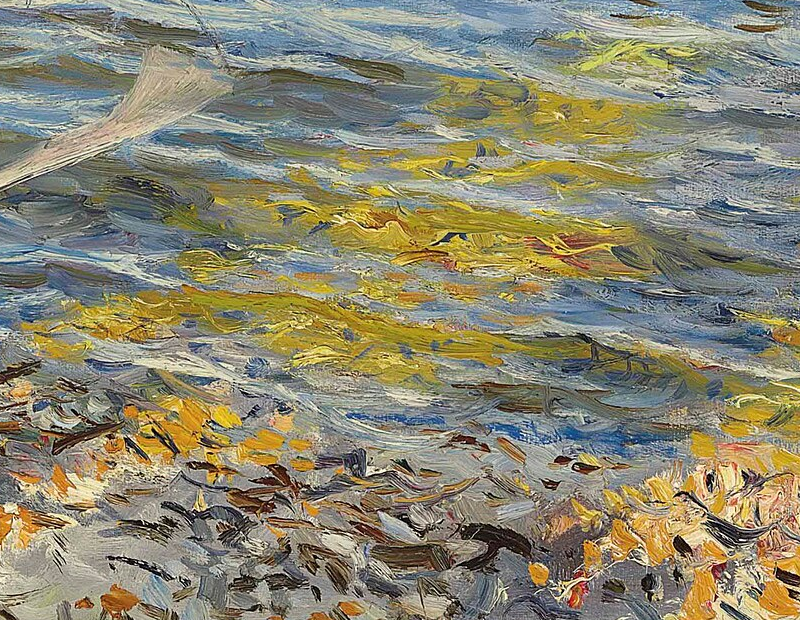
20 · Water and stony shoreFOCUSED SEQUENCE
Looking notes
Visible marks. Blue and cream bands break into short ocher, gray and white marks toward the shore.
Suggested effect. The change of stroke shape separates water from stones while keeping the paint marks conspicuous.
Henry James
John Singer Sargent · Oil on canvas
National Portrait Gallery, London
Artwork / collection reference · Reproduction source
The numbered rectangles locate the two details.

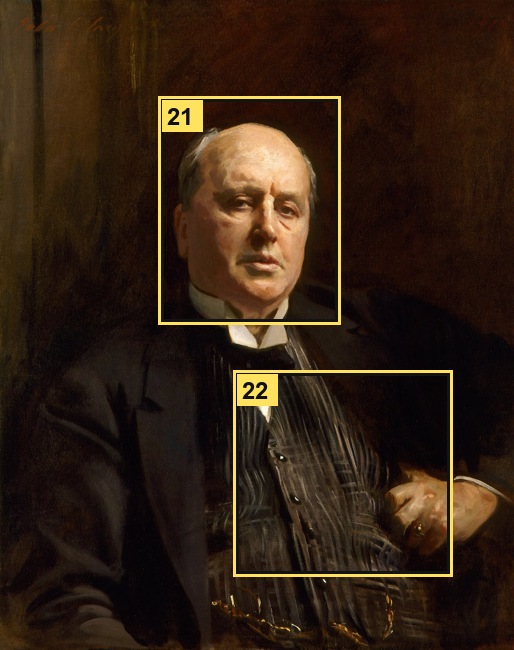
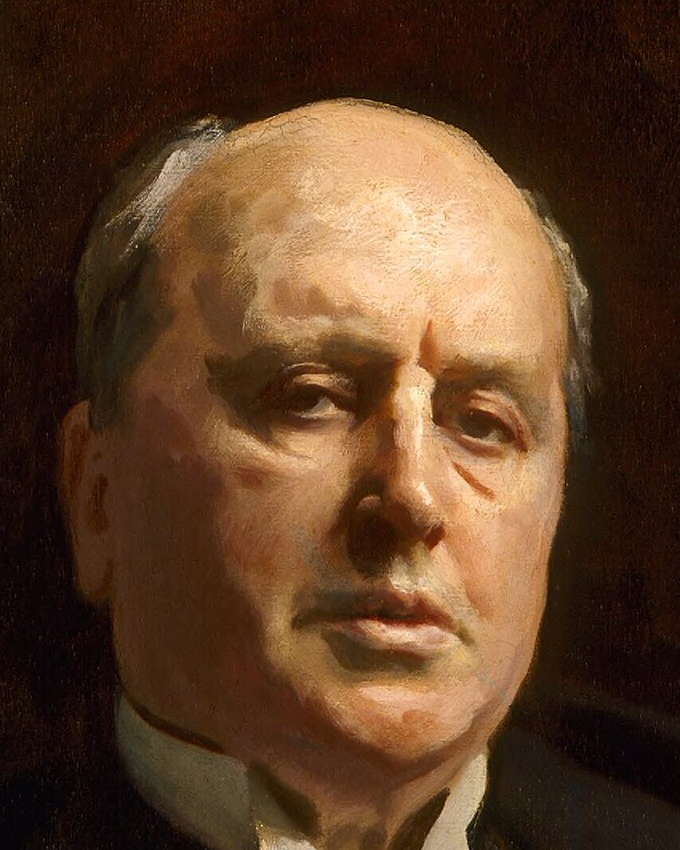
21 · Face in a late portrait
Looking notes
Visible marks. Small changes of light and dark articulate the forehead, eyes, nose and mouth.
Suggested effect. Careful facial modeling continues in 1913, the same year as Girl Fishing. Date alone does not determine the degree of finish.
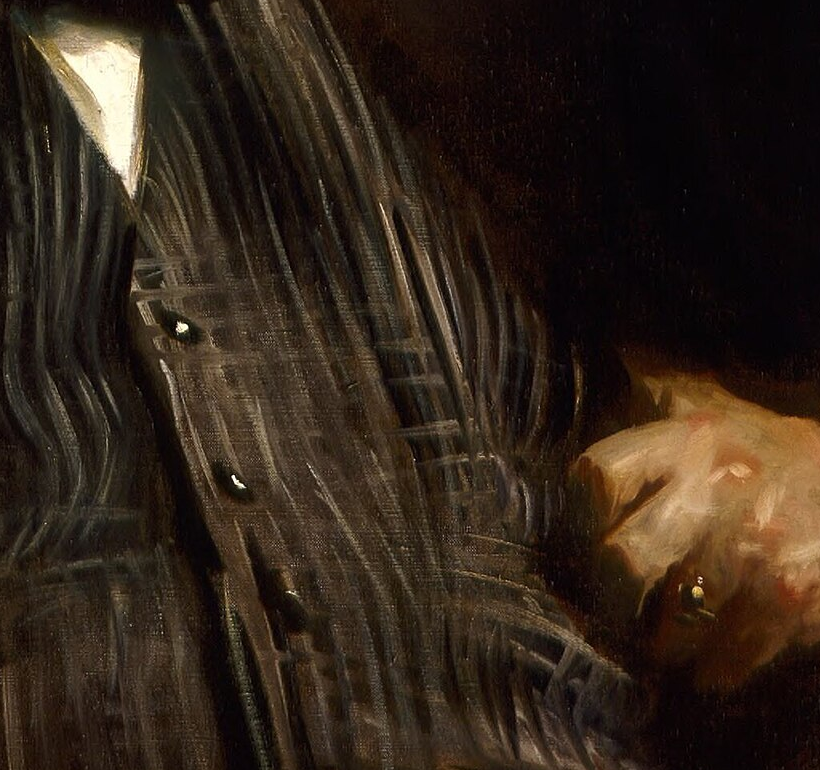
22 · Waistcoat and hand
Looking notes
Visible marks. Long pale strokes describe the waistcoat stripes. Broader brown passages surround a few bright touches on the hand.
Suggested effect. Expressive marks and concentrated description coexist inside this late formal portrait.
Lake O’Hara
John Singer Sargent · Oil on canvas
Harvard Art Museums/Fogg Museum
Artwork / collection reference · Reproduction source
The numbered rectangles locate the two details.

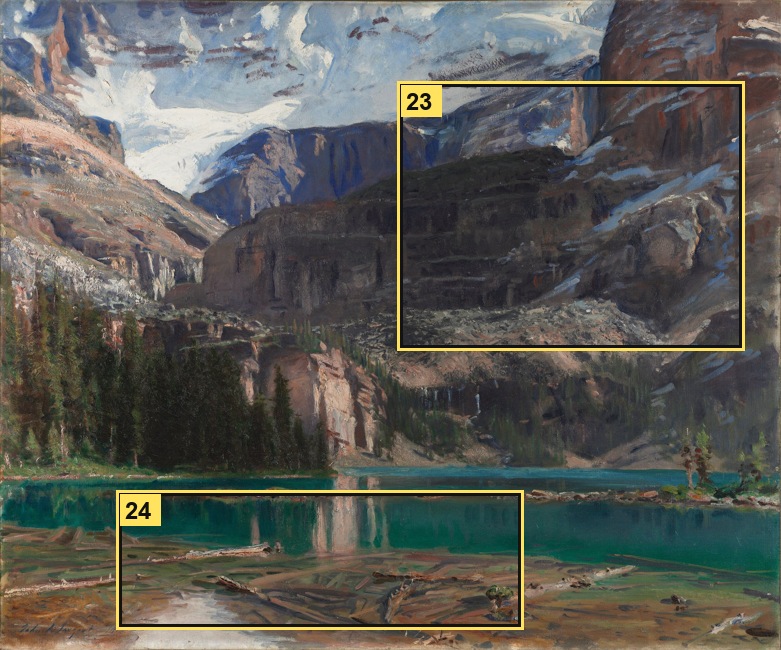
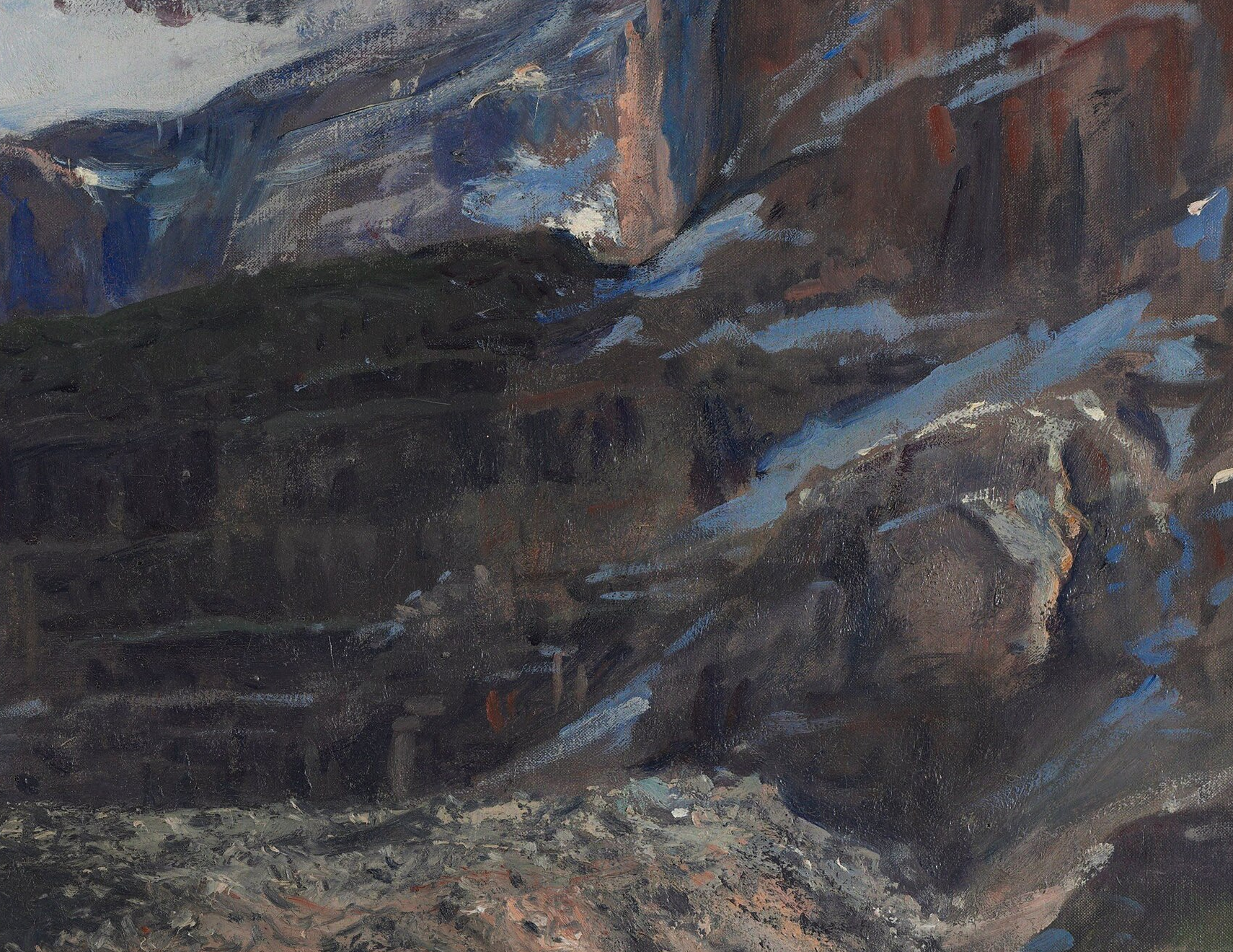
23 · Mountain planes and snowFOCUSED SEQUENCE
Looking notes
Visible marks. Broad blue, violet, ocher and cream shapes meet along angular edges. Narrow strokes cross some of those planes.
Suggested effect. Changes of direction and color build the mountain as a set of large, legible planes.
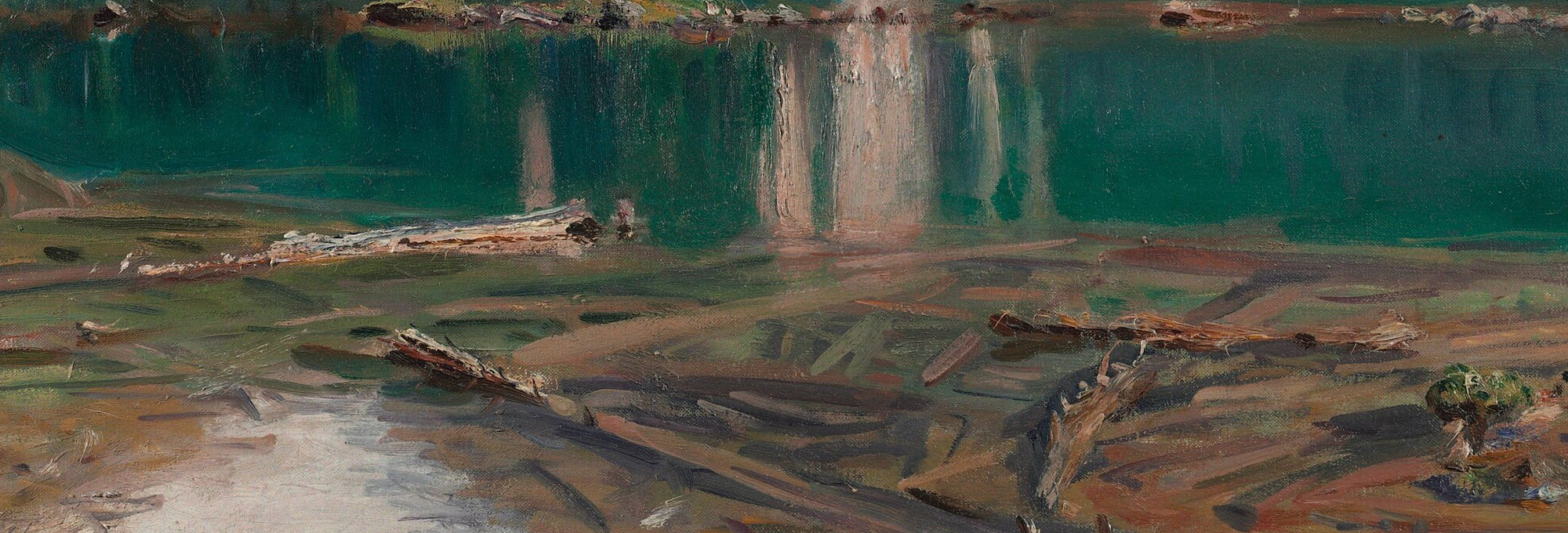
24 · Lake and foreground strokes
Looking notes
Visible marks. Horizontal turquoise bands meet longer brown, green and cream strokes in the foreground.
Suggested effect. The marks retain their separate directions while suggesting water, reflections and the shore.