Velázquez and Sargent: Looking into the Room
Wednesday practice: Velázquez and Sargent practice (PDF, two pages)
Explore Sargent’s brushwork, 1878–1916: 24 exact detail crops from 12 paintings, with complete compositions showing where each detail comes from. Compare edges, light and the direction of the brushstrokes across the sequence.
Lesson slides: Download the deck (PowerPoint, 46.9 MB) · image credits
At a glance
| The works | Jacques-Louis David, Napoleon Crossing the Alps, 1801, and Kehinde Wiley, Napoleon Leading the Army over the Alps, 2005; Diego Velázquez, Las Meninas, 1656, and John Singer Sargent, The Daughters of Edward Darley Boit, 1882 |
| Days | Monday’s 45-minute lesson, Tuesday’s two 45-minute periods, then Wednesday’s 45-minute reading and writing continuation |
| Dates | Mon 12 Oct P4 · Tue 13 Oct P6/P7 |
| Deliverable | Wednesday: one independent comparative response to question 1 or 2, using evidence from both paintings. Collect the two-page practice worksheet; ungraded |
| Feeds | A2, the unseen comparison on Friday October 16, 08:55–09:40 |
| Homework | None |
Objectives
By the end of Wednesday’s continuation you can:
- Distinguish an observation, a sourced contextual fact and an interpretation.
- Explain how one visual choice in each painting supports a comparative claim.
- Limit or refine a claim when a detail challenges it.
Goal
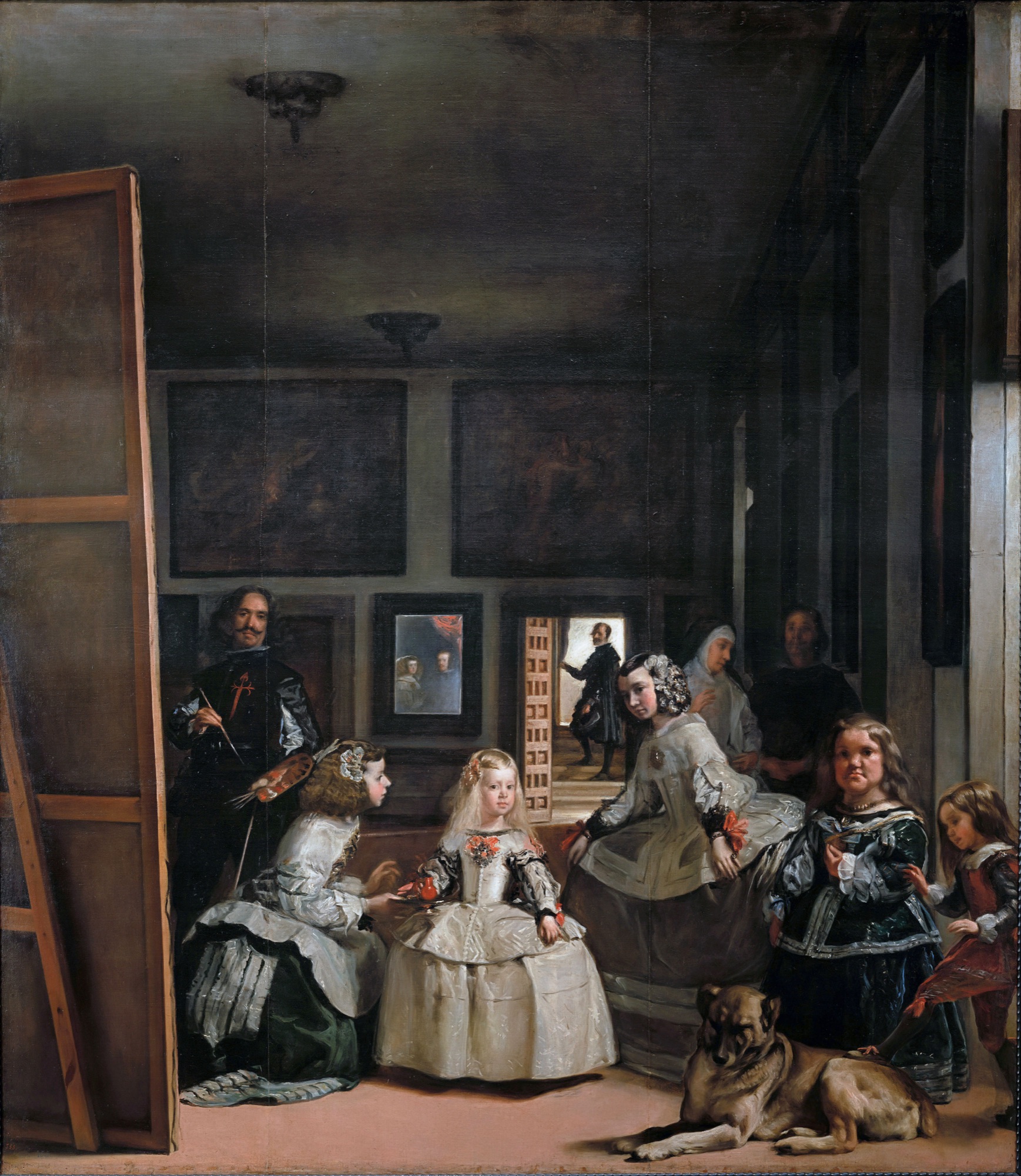
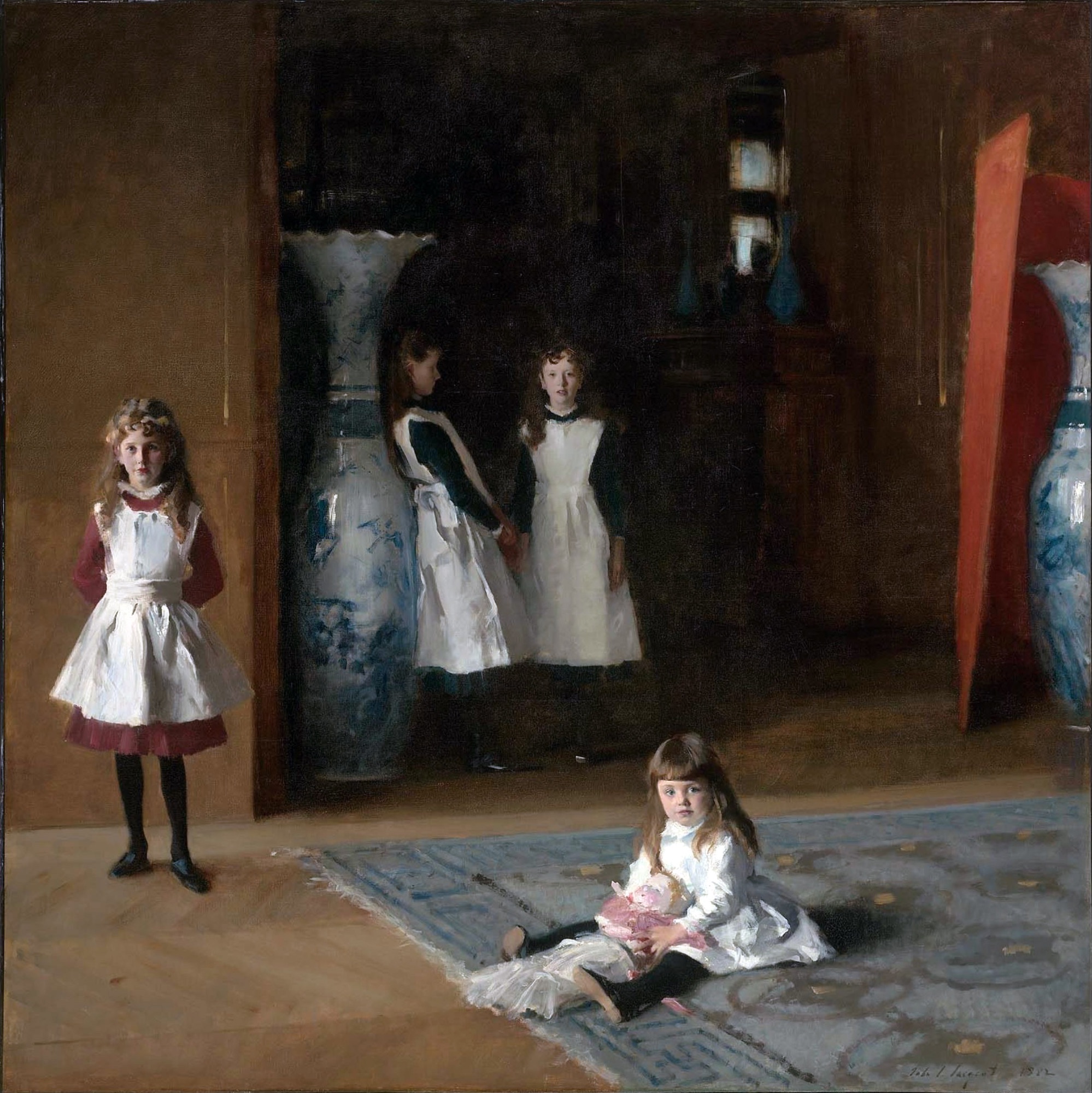
Current continuation, Wednesday October 14: finish the Sargent individuality reading (10 minutes), model one interpretation (5 minutes), then write independently for 30 minutes. Students choose between individuality and social roles and the viewer’s position, comparing Las Meninas with The Daughters of Edward Darley Boit. The full timings, two exact prompts, teacher script and checks are in Representation and Comparative Writing. Use the new two-page practice worksheet and deck slides 41–46. Earlier Tuesday timings below record the planned sequence; the class report records actual progress.
Monday reached the back-wall paintings in Las Meninas. The Tuesday plan resumes there after review, then applies the five steps to Sargent. Use the printouts and look and write before discussion.
Your finished work is one comparative paragraph supported by a specific detail from each painting. Keep its first draft and revised version. The five headings help you prepare; the paragraph connects the evidence into one argument.
Historical Context concerns the wider world in which the painting was made. Personal Context concerns the artist’s life, training, experiences and relationship to the subject. A contextual fact can help explain a choice, but the painting must still support your interpretation.
The checklist
Keep these headings in this order. Write short notes for each painting beside one another.
| Heading | What to record |
|---|---|
| 1. First Reaction | Name and locate the first thing you notice. A word such as “girl” or “mirror” is enough. Save possible meanings for the later steps, then revisit this first response. |
| 2. Content | Identify the people, objects, setting and action. Separate what is visible from what you have been told. |
| 3. Form | Explain how composition, scale, space, light, color, gesture and paint handling direct attention and create meaning. |
| 4. Historical Context | Use relevant facts about the period, social order, patronage and intended audience. Connect each fact to a choice in the painting. |
| 5. Personal Context | Use documented facts about the artist’s life, training, influences, experiences and relationship to the subject. Explain their relevance without inventing motives. |
How it runs
Tuesday has 90 teaching minutes and a ten-minute break. The break is not working time.
| Period | Work | Finished evidence |
|---|---|---|
| P6, 12:35–13:20 | Review observation and interpretation; see a short model; finish the back-wall paintings; look at Sargent through First Reaction, Content and Form | Notes and a three-sentence explanation of a visible choice |
| P7, 13:30–14:15 | Connect sourced Historical Context and Personal Context; test a comparison; write independently; check and revise | First draft, revised paragraph and explanation of one change |
No additional homework is assigned. If discussion runs long, reduce the number of spoken examples and the optional Spinners reference. Keep the independent writing and revision time.
David and Wiley recap
David and Wiley use a similar equestrian pose. Compare the rider, clothing, setting, pattern and direction of the gaze. Under Form, follow the raised arm, the horse’s movement and the scale of the rider. Explain how these choices present authority.
Use the Napoleon and Haiti discussion for Historical Context. For Personal Context, recall documented information from the Wiley film about his choice of models, study of earlier paintings and working process. Keep David’s position as the painter distinct from Napoleon’s biography as the sitter. Leave a contextual point open if the class has no reliable source for it.
Finish the recap with one change and its effect. The longer refusal exercise remains available for later use.
Velázquez and Sargent comparison
Velázquez’s Las Meninas and Sargent’s The Daughters of Edward Darley Boit both place children in large interiors. Compare the complete compositions before using details.
The back-wall paintings
Locate the two framed paintings above the mirror in Las Meninas. They are Juan Bautista Martínez del Mazo’s copies after Rubens’s Pallas and Arachne and Jordaens’s Apollo and Pan. The source compositions concern contests of artistic skill. The Prado connects their inclusion to the status of painting and the painter. Treat this as a supported interpretation to test beside Velázquez’s visible presence at his easel, not proof that we know his exact intention.
First describe what the small, dark rectangles actually allow you to see. The identifications and mythological subjects come from a source. After looking at the larger source compositions, explain how this new knowledge changes your reading of the painter’s place in the room.
First Reaction
Look silently at the complete painting. Write the first thing you notice and where it is. Begin with a person, object, color or patch of light. Keep an early interpretation in mind, then test it after you have described the picture.
Content
Locate the children, adults, objects and openings. In Las Meninas, identify the central child, her attendants, the painter, the dog, the distant doorway and the reflected royal figures. In Sargent, locate all four girls, the doll, the two large vases and the dark space behind them.
Form
Trace the light and the directions of the figures’ gazes. Compare the distances between people, their size against the room and the amount of open floor. Explain how the arrangements position the viewer. Support a reading of intimacy, ceremony, separation or uncertainty with visible details. These are possible interpretations for students to test.
Historical Context
Las Meninas was painted in 1656 in Madrid’s royal Alcázar. The court and its hierarchy help explain the princess’s attendants and the presence of the king and queen in the mirror. Sargent painted the Boit daughters in their family’s Paris apartment in 1882. Compare a royal household with the domestic setting of an American expatriate family. Use the setting and objects to examine how each painting presents social position.
Personal Context
Velázquez worked within the royal court and included himself at his easel in Las Meninas. Relate his presence to the painting’s presentation of the artist’s role. Sargent knew the girls’ parents and had studied and copied Las Meninas at the Prado in 1879. His direct study of Velázquez helps explain why the comparison is relevant. Examine what he retained and changed when painting a family he knew.
Read the Prado and MFA accounts listed below for the documented historical and personal context.
Build the comparison
Choose one difference that affects how the viewer understands the children, their relationships or their place in the room. State its effect and point to evidence in both paintings.
Test the claim in three ways:
- Swap the paintings’ names. A useful claim should stop making sense.
- Identify a detail in each work that supports the claim, and consider a detail that could challenge it.
- Check every contextual statement against the supplied sources. Keep a documented fact distinct from an inferred motive or feeling.
The five headings organize the preparation. The final claim should connect the evidence rather than repeat the checklist as five separate answers.
Assessment
Tuesday’s work is ungraded. A2 Unseen Comparison is on Friday October 16, P2, 08:55–09:40: five minutes to settle and distribute paper, then the existing 40-minute unseen essay. Its four criteria remain the claim, evidence from the pictures, comparison as argument and precision of language. The assessment paintings are revealed when writing begins. Tuesday’s context work adds no research or biographical recall requirement to A2. Wednesday finishes the reading, models one interpretation and gives 30 minutes for a first independent comparative response; Monday October 19’s post-A2 self-review was replaced by student contributions on October 18.
A quotation
“For example: the practice of seventeenth-century Spanish realism was closely connected with the religious principle of the moral value of simplicity and austerity and the dignity of charity. Courbet stole the practice and used it in The Stonebreakers to present desperate unredeemed rural poverty. For example: the Dutch seventeenth-century practice of painting group portraits was a way of celebrating a certain esprit de corps. Courbet stole the practice for Burial at Ornans to reveal a mass solitude in face of the grave. The hunter from the Jura, the rural democrat, and the bandit painter came together in the same artist for a few years between 1848 and 1856 to produce some shocking and unique images. For all three personae, appearances were a direct experience, relatively unmediated by convention, and for that very reason astounding and unpredictable.”
John Berger, on Courbet, in Portraits: John Berger on Artists (Verso, 2015). Read in the vault’s copy, Sun 27 Sep. Replace Courbet with Wiley and the group portrait with the equestrian portrait, and the sentence still runs. What did Wiley steal the practice for?
Suggested reading
- Museo del Prado, Las Meninas, collection entry.
- Museo del Prado, Invited Work: The Daughters of Edward Darley Boit, Sargent (2010), on Sargent’s study of Velázquez.
- Museum of Fine Arts, Boston, The Daughters of Edward Darley Boit, collection entry.
- Erica E. Hirshler, Sargent’s Daughters: The Biography of a Painting (MFA Publications, 2009), suggested in the banked comparison; not held in the vault.