Formal Elements on the Theme
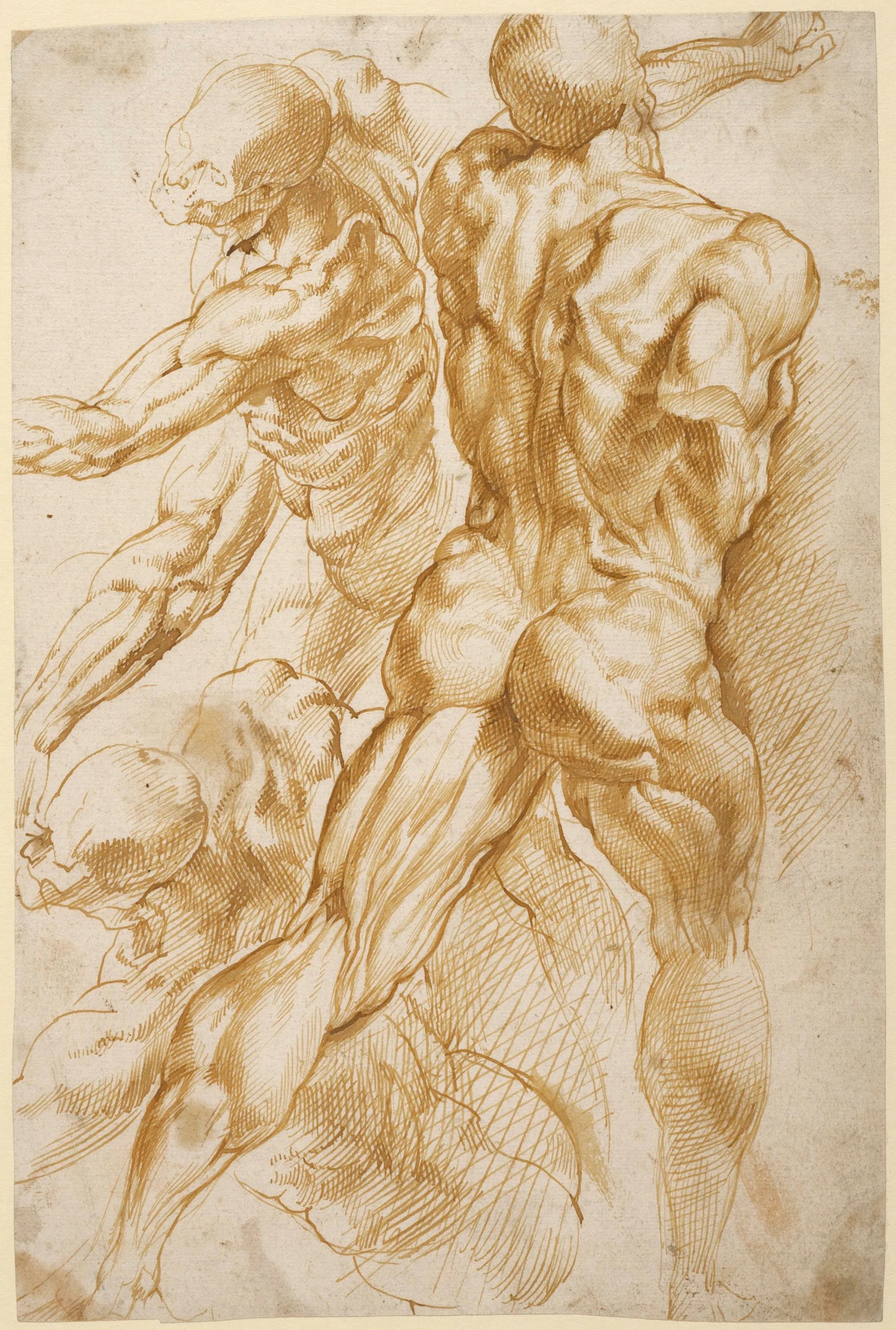
Lesson slides: Download the deck (PowerPoint, 7.3 MB) · image credits
At a glance
| Sessions | 6 sessions over 5 days (W2–W3), with no Wednesday slot and a Friday double. The revised route uses the diagnostic, Example 9 of the C1 sample portfolios, Portfolio Marking, studio texture/color studies, then Impressions and digital portfolio setup. |
| Dates | Mon 7 Sep · Tue 8 Sep · Thu 10 Sep · Fri 11 Sep (double) · Mon 14 Sep |
| AO focus | AO1 Record |
| Deck | 9479-s1-lesson-04-formal-elements-on-the-theme (Mon 7 Sep: the line demo, seven slides; any later demo section for this lesson appends to the same deck, since the site links one deck per lesson) |
| Deliverable | Formal elements study set (line, then texture and color in the Friday double; tone only as the nightly studies) in the sketchbook; Example 9 marked on the marking sheet at home, discussed and collected Thu 10 Sep; the digital portfolio set up as screen pages Mon 14 Sep. Recording Page 1 folds into the first page, built in L05 |
| Feeds | the weekend drawing homework, collected Tue 8 Sep (first CS check), and Portfolio Marking Thu 10 Sep (second CS check: the sheet went home Tue 8 Sep, discussed and collected Thu), both practice for A1 |
| Homework | Sketchbook: one further study per night from the theme, alternating element; ten minutes each |
Print: The formal elements, one object: the Monday drawing sheet (PDF, two pages) · Mark the portfolio: the marking sheet for the exemplar read (PDF, two pages) · Your first page: the student guide (PDF, two pages)
Objectives
By the end of this lesson, students can, observably:
- Work each formal element (line, tone and form, texture, color) directly on their own theme rather than in the abstract
- Mark a whole portfolio one objective at a time, a page cited for every mark, and land within one level of the room
- Set up the digital portfolio and file the study set into it
Goal
Students examine their themes in five ways through the formal elements, assess an exemplar using page evidence, and use the studies in L05’s first page. This closes Unit 1.
How it runs
- Mon 7 Sep, P9 (45 min), the diagnostic.
Five minutes of silent looking at one theme object, set at arm’s length and taped in place.
Eight minutes of demo from the deck and live on one object under the camera: contour line (Schiele, Dr. Koller, one line that slows where the edge turns) against structural line (Uccello, Perspective Study of a Chalice, every ring a complete ellipse, the far side included; then Cézanne’s Wash Basin and Scent Bottle as the same idea by hand in a sketchbook, the wrong lines left in).
Then the diagnostic sheet, twenty-seven minutes: one object through six cells at four minutes each, the same object in the same position throughout, each with a different instrument:
-
1 contour line in fineliner;
-
2 structural line in 2B, axis first, then the shapes drawn all the way round;
-
3 tone and form, no outlines, black reached somewhere;
-
4 texture, one part of the surface at three times life, the mark matched to the material;
-
5 shape and space, three silhouette thumbnails, one circled;
-
6 color, three swatches with their mixing routes, written in words if there are no colored pencils.
Three minutes of annotation: one line under each cell and, at the foot of sheet 2, which element records the object most accurately and why.
Close with tomorrow: sketchbooks open at Study 1, P3; tonight’s ten-minute study; Natural Forms keep the decay object where it is.
- Tue 8 Sep, as it ran, the weekend drawing homework review, then the theme talked through, then Example 9 of the C1 sample portfolios (Traditional Chinese medicine, 84/100) shown end to end;
the marking sheet handed out to take home: each objective on its own level and mark out of 15, 15, 20 and 10, a page cited for every mark, every objective starting at competent.
The tonal ladder demo planned for today did not run.
- Thu 10 Sep, Portfolio Marking, the second Course Skills check, the discussion.
Five minutes: the room’s marks collected on the board objective by objective, the spread visible.
Fifteen minutes: the largest gaps argued to a page, with Example 9’s sheets back on the screen (the RECORD sheet, the artist sheets for Zeng Xiaolian, Sarazhin, Guo Fengyi and Xu Bing, the cyanotypes, Composition Studies and Pre-Final, then the final); the back of the sheet filled in as the talk goes (my mark, the room’s mark, the word I misread, one rule for my own portfolio).
Fifteen minutes: Cambridge’s own mark, objective by objective, read from the rationale:
-
AO1 21 of 25 excellent, and the one thing it lost on (“appeared to use their own photography to record through other media, rather than recording directly from the subject matter in front of them”);
-
AO2 21 excellent, lost on inconsistency (the drawing on the cyanotypes “does not demonstrate the same level of refinement”);
-
AO3 22 excellent, “development of ideas is the strength of the response”, lost on “ideas sometimes remain separate… focusing on fewer ideas”;
-
AO4 20 confident, “the least successful area of the submission… would have benefitted from being more selective.”
On the 2028-30 grid those level words read 5 · 5 · 5 · 4, so roughly 50 to 58 of 60; the old 84 is not the answer key.
Close on the rule each student wrote. Sheets collected at the door.
Last ten minutes: how to prepare for Friday, the first studio exploration (below). Said in the room and written on the board: what Friday is, the bring list, the two rules (the object comes, not its photograph; three studies, each annotated with one honest line). Anyone whose theme object cannot travel names a substitute before leaving.
- Fri 11 Sep, P3+P4 (double), the first studio exploration. Ninety minutes in the studio, the theme worked through materials for the first time; the three approaches from Assessment Objectives II, the Game, and the Theme that the weekend homework did not take. The object stays on the table the whole session, taped in place.
P3 (45 min).
Ten minutes: the mark inventory, six tools on one strip (graphite stick, ink and stick, fineliner, soft pastel, biro, sponge), each pushed from its lightest to its darkest.
Thirty minutes: Touch it, three textures from the object at three times life, each rendered with the tool that fits it, the choice written under each; then the peer test, three photographed surfaces matched to the three studies by a neighbor without being told.
Five minutes: one line under each study.
P4 (45 min).
Ten minutes: the limited palette demo (two blues, two reds, two yellows, white), one observed color mixed live under the camera with the route said aloud.
Thirty minutes: Light it, the object under one lamp, no outlines: one tonal passage in paint reaching black somewhere, then three color studies of the object, each with its swatch and its mixing route written beside it, one of them the color in context (the object’s color next to what sits behind it).
Five minutes: the exit annotation, which of the three studies records the object most accurately and why, and the studies dated. Everything made today goes into the first page on Fri 18 Sep.
Close by announcing A0 (brief): next Friday’s double builds the first page and it is read at the desk in progress, with the observed studies behind it, as the first attainment; said in the room and written on the board, one week ahead.
Then set the weekend homework (brief): the intention statement in the three-part frame and the A3 mind map three branches past the first idea, photographed and uploaded by the end of Monday. Nothing else is finished at home; the nightly ten-minute study continues.
What each student brings on Friday (briefed Thursday):
-
the theme object, or two (Natural Forms: the decay object from Monday, plus one fresh one to set beside it; Still Life: three objects that can be arranged, one of them glass or metal so the light has something to do);
-
six to eight phone photographs of surfaces from the theme, close up, for the peer test;
-
the sketchbook with the diagnostic sheet and the weekend studies in it;
-
the rule each wrote on the back of the marking sheet, copied onto the sketchbook’s first page;
-
clothes that can take charcoal and acrylic.
The studio provides the mark kits, the paint and the lamps. The photograph is for the surface test only: the object itself comes, because every study on Friday is from life.
- Mon 14 Sep, the Impressions read and the digital portfolio. The exemplar from here on is Impressions (Example 10 of 2025, 96/100, the only digital submission in the C1 sample portfolios; decided Thu 10 Sep).
Twenty minutes: its eighteen screens in order, fast, from sample_portfolios/C1 - Example 10 - 2025/PNG/, then three of them slowly: screen 3 (the theme paragraph, the mind map, four sketches, every study labeled with medium and size), screen 17 (Process to Final Outcome: Draft 1, 2 and 3 and why each was left) and screen 2 (the final first, with four zoomed details). Against Thursday’s 84 the question is what the extra twelve marks bought: a final that carries the portfolio rather than falling below it, and fewer ideas taken further.
Ten minutes: the first-page guide handed out and its sheet 1 read against Impressions’ screen 3 (theme named once, the intention paragraph, own photographs captioned for what they show, one drawing from life largest, the medium named); the guide’s callouts are drawn on Script C’s opening page, and the rules are the same.
Fifteen minutes: the digital portfolio set up on the screen-page template: a running header “Screen Page n · Component 1”, the final outcome reserved as screen 2, supporting studies numbered from screen 3, medium and size under every piece, a bibliography screen last (the A4 brief carries the same order).
Recording Page 1 is not composed here: the study set and the weekend studies go into the first page, built in Intention and Composition Planning on Fri 18 Sep P4 with the guide. If the session runs short the template setup is homework, with the header and the reserved screen 2 as the check.
Last word: the intention and mind map are due tonight by 23:55, uploaded to the task; screen 3 of Impressions is what those two pieces become.
Assessment
Portfolio Marking (Example 9 marked on the marking sheet at home, discussed in class) collected Thu 10 Sep, full brief on Portfolio Marking, register on the S1 page. Graded on the reasoning (a level, a number in its range, a page cited per line, the back filled in), not on matching the teacher; returned inside five working days. The formal elements study set is not collected separately: it is reviewed inside the first page at A1.
Practice
Try each question before you open its answer. Everything here is the week’s material, and the first page is built from it in Lesson 05.
1. Contour line and structural line: what does each do, and how do you judge how accurately it records the object?
Answer: Contour line follows the seen edge. Structural line builds how the object is constructed. Compare how clearly each drawing shows the object’s form. Your annotation should identify which drawing communicates it more accurately and explain why.
2. The tonal rule on the board: no outlines. Why?
Answer: An edge in a tonal drawing occurs where one value meets another. An outline can flatten the form, so this exercise asks you to build it through changes in tone. Use the nine-step ladder to check that your drawing includes the darkest values.
3. Friday’s studio asks for three textures and three colors, each with a line under it, and some will fail. What do you do with the failure?
Answer: Keep the study and explain what you learned from it. Identify what did not work and why, such as a tool that could not describe the surface or a mixture that did not reach the observed color. This gives the examiner evidence of your observation and decisions.
4. The first page must communicate a point about your theme. How do you select and organize work to do that?
Answer: Select the studies before arranging the page. Choose studies that support one point about your theme, put them in an order a new reader can follow, and explain what you learned in the annotations. Eight exercises placed together still need this selection, sequence and explanation.
5. The nightly habit starts now: one further study per night from the theme, alternating element, ten minutes. Keep the studies in your sketchbook as you make them so the portfolio records your development over time.