Assessment Objectives II, the Game, and the Theme
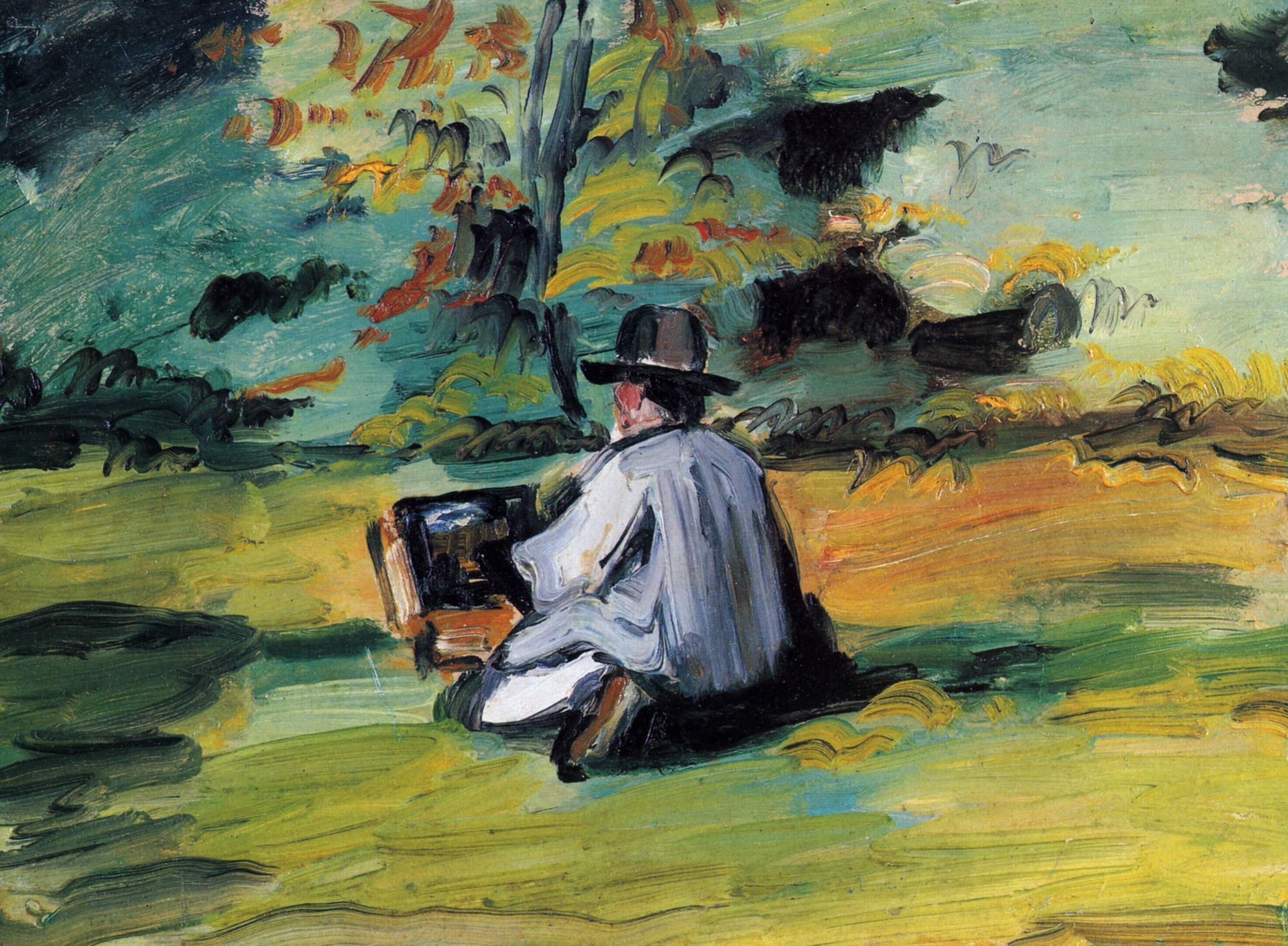
Lesson slides: The four assessment objectives (PowerPoint, 3.6 MB) · Two themes six approaches (PowerPoint, 7.1 MB) · image credits
At a glance
| Sessions | 2 sessions (W1, the Fri P3+P4 double). P3 is a full second session on the objectives with the AO Sorting Game; P4 confirms the theme, teaches six approaches, and sets the weekend homework |
| Dates | Fri 4 Sep (double) |
| AO focus | All four AOs sorted and argued (P3); AO1 Record in practice (P4 and the weekend) |
| Deliverable | The game played to the end screen with per-objective accuracy read out; signed commitment card (theme, three source locations, first shoot date); the approach trial, kept, dated and filed as the diagnostic; source folder opened; weekend homework set |
| Feeds | The weekend drawing homework, the first Course Skills check, collected Tue 8 Sep in Formal Elements on the Theme; its walked review is also the AO1 baseline for the mid-term narrative |
| Homework | Weekend drawing homework: three 30-minute studies for your theme, one per day, due Tue 8 Sep P3, marked as the first Course Skills check |
| Decks | 9479-intro-03-the-four-assessment-objectives (P3, the game slide and the grid) · 9479-intro-04-two-themes-six-approaches (P4) |
Objectives
By the end of this lesson, students can, observably:
- Sort any action an art student might take onto the right objective, with a reason, fast enough to do it in a game
- Commit to one of the two themes against the five criteria and sign the card
- Open the committed theme with at least two of six approaches, in class and over the weekend, from life
Goal
Students distinguish the assessment objectives and choose a theme against the criteria. Six approaches connect that theme to the weekend’s three observational studies.
How it runs
- Fri 4 Sep, P3. Objectives, second session.
Ten minutes of recap from deck intro-03: the ladder words, then the “one portfolio, four objectives” grid, each page named by the room before the label appears.
Then the AO Sorting Game, call-out version, twenty-five minutes: a card on screen, the class calls the objective, reveal, tally; a well-argued neighboring placement earns the point. Stop at the end screen and read the per-objective accuracy aloud: it says which objective the room still confuses.
Last ten minutes: the three border cases (thumbnails, artist research, several versions) argued by the room, and the rule written on the board: ask what the page is for, then write it on the page.
- Fri 4 Sep, P4. The theme, and six ways to open it. Two pages of the top-band exemplar (Cambridge Script C, 90/100, the handbook’s Sample 1) beside two from a middle-band one (Example 4, Overgrown, 40/100), five minutes; both from the C1 sample portfolios.
Deck intro-04: the two themes the cohort converged on, Natural Forms and Decay and Still Life and the Everyday, re-read against the five criteria; commitment cards signed one-to-one while the room starts the approach trial (one object from the theme, two of the six approaches, fifteen minutes, pencil): this is the diagnostic, kept, dated and filed the same day.
Did not run (Mon 7 Sep): the double stayed on the objectives and nothing was drawn; the diagnostic moved to Formal Elements on the Theme’s Monday line sheet.
The six approaches taught alongside from the deck, each with a plate, Cambridge’s own phrase, a task and a check.
Source folder set up (one phone folder, one physical).
The weekend drawing homework set from the brief and deck slides 13 to 15 in the last ten minutes: three studies, thirty minutes each, one per day, from life, dated, one honest line under each; the first Course Skills check, marked on evidence of observation and honest annotation, not polish. “Nothing found, nothing borrowed” restated.
- Tue 8 Sep (in Formal Elements on the Theme). The sketchbook review opens the session: sketchbooks open at Study 1, walked; each student identifies the study that records their observation most accurately; each page labeled with the AO1 phrase it proves.
Key content: the themes and the approaches
The theme menu, issued. Four themes went out in the Summer Preparation Homework, which set exploratory tasks against them over the break (source photographs for each, one artist response, a written theme reflection). After the summer work and the opener the cohort converged on two: Natural Forms and Decay (shells, bones, feathers, seed heads, dried or rotting fruit, rust, weathered wood; Karl Blossfeldt, Georgia O’Keeffe, Anselm Kiefer, and Edward Weston’s shells and peppers) and Still Life and the Everyday (household objects, tools, glassware, food, fabric, the play of light; Giorgio Morandi, Wayne Thiebaud, Paul Cézanne, and Chardin and the Dutch breakfast painters). Identity and the Portrait and The Built Environment stay on the menu for anyone who argues for them at sign-off.
A theme earns its place only if it passes all five criteria: (1) primary sources photographable within daily reach all semester; (2) survives four months of looking; (3) genuinely carries line, tone, texture and color; (4) opens both 2D and 3D development; (5) has a deep artist reference pool the teacher can prescribe from.
Six approaches to a theme, each tied to a phrase from Cambridge’s own AO1 or AO3 elaboration:
| Approach | Cambridge asks for | Fits first | |
|---|---|---|---|
| I | Turn it: one object, five viewpoints on one page | ”different angles, viewpoints” | both |
| II | Look close: one detail at three to four times life, tone only | ”close-up study, observation of surface quality” | natural forms |
| III | Light it: one arrangement, one light source, no outlines | ”colour, tone and form” | still life |
| IV | Arrange it: three objects, three thumbnails, one chosen in writing | ”alternative compositions, angles, viewpoints” | still life |
| V | Time it: a decay clock, drawn today and again next weekend | ”recorded ideas, insights and observations using different methods” | natural forms |
| VI | Touch it: one surface at three times life, the mark matched to it | ”observation of surface quality” | both |
The weekend homework takes the first three on each theme’s list; the other three arrive in L04 and L05.
What students bring to the first lesson, per the summer brief: the sketchbook with all seven tasks, their own source photographs (sixteen to twenty, four or five per theme), the media taster sheet and artist response, and the written theme reflection. The theme choice and the approach trial both stand on this work.
Practice
Try each question before you open its answer.
1. A theme earns its place only if it passes five criteria. Name as many as you can.
Answer: Primary sources photographable within daily reach all semester. Survives four months of looking. Genuinely carries line, tone, texture, and color. Opens both 2D and 3D development. Has a deep artist reference pool to draw from. Check each criterion before committing to a theme so it can support your work through November.
2. Card 02 reads “A page of thumbnails exploring various compositions for a final piece.” The game key says AO1. Cambridge’s AO3 asks for alternative compositions. Who is right?
Answer: Both. Thumbnails record ideas and consider alternative compositions. The visible evidence and its purpose determine which descriptors it supports; the heading does not allocate credit. Explain what the thumbnails investigate, and recognize that one piece can contribute to several objectives. This is why the game gives the point to a well-argued neighboring placement.
3. Name the six approaches, and say which two your theme starts with.
Answer: Turn it, Look close, Light it, Arrange it, Time it, Touch it. Natural forms start with Look close and Time it, to investigate detail and decay within the theme. Still life starts with Arrange it and Light it, because the arrangement is the composition and the light decides where it goes dark. The weekend homework is the first three for your theme.
4. What are the four tells the Tuesday review looks for?
Answer: Drawn from life. More than one viewpoint, or a close-up. Tone that reaches black. A line of annotation that says something. Aim to meet all four criteria. If you meet three, we discuss what the remaining one needs.