Narrative, Myth and Allegory in Bosch
Lesson slides: Download the deck (PowerPoint, 23.2 MB) · image credits
At a glance
| Field | Details |
|---|---|
| Dates | Mon 14 Sep P4 |
| Focus | Narrative, Myth and Allegory in Bosch |
| Unit | Narrative Myth And Allegory |
Handouts (PDF): La Chimera: the viewing sheet and discussion questions (PDF, two sides)
Objectives
- Use a located detail in Bosch to distinguish narrative, myth and allegory.
- Explain why a connection across panels needs more than a shared subject.
Materials and resources
- Art Appreciation Bosch Garden Details.pdf
- the-first-board.pptx
Use the works and source readings named below. Keep the full composition visible while looking.
Tasks
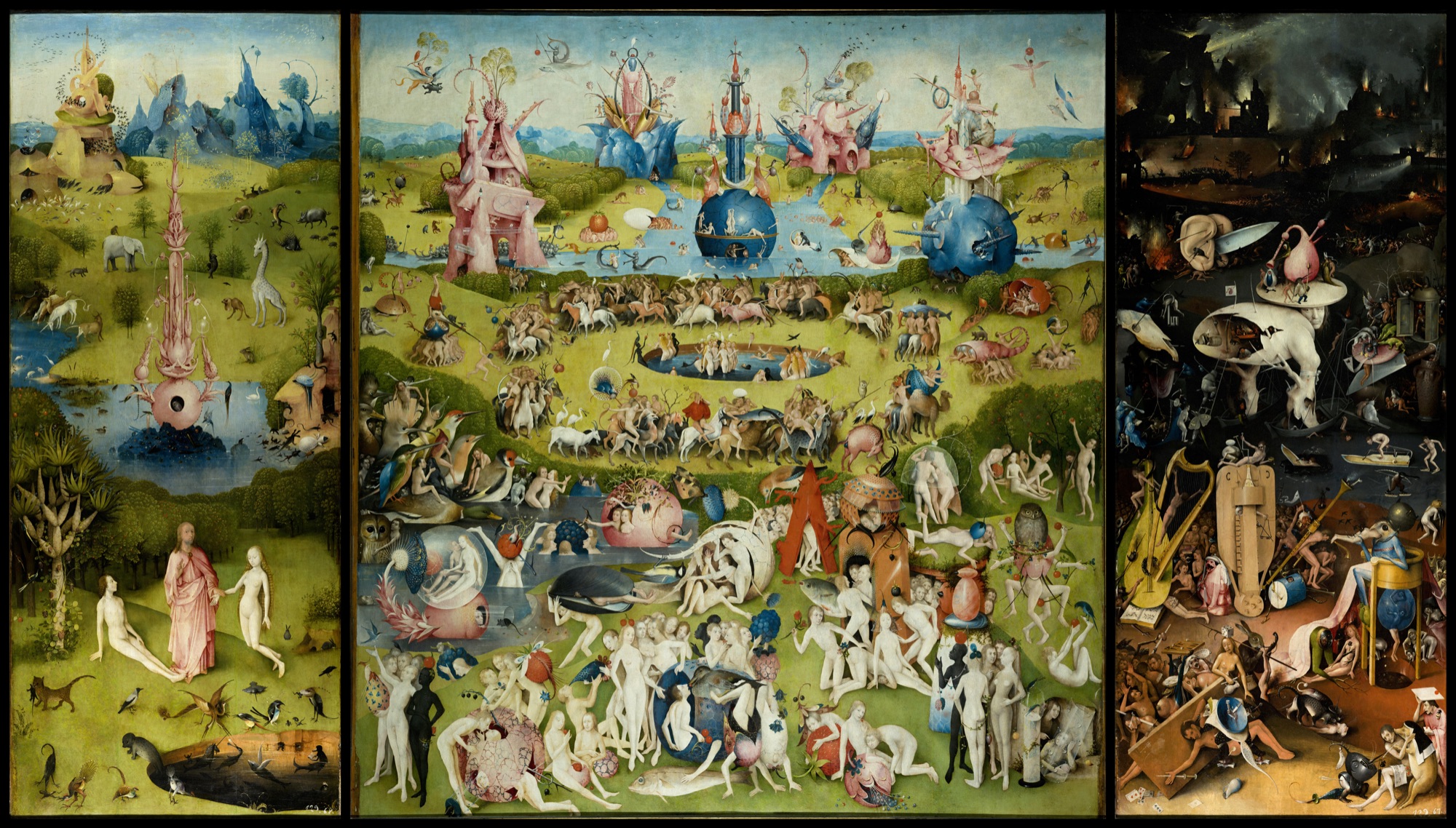
Begin with the full-size Garden of Earthly Delights. Place at least five observation strips, with at least one on each panel. Describe a pose, gesture, scale change or repeated object before explaining it. Follow a repeated motif across the garden, central panel and hell. Decide whether its changes amount to a narrative, an allegory, or both, and cite two details. The A1 narrative board is a separate workshop.
Assessment and homework
The A1 board was introduced here. Its final deadline is September 23 at 08:00; the separate board workshop carries the full brief.
Description
Annotate the full-size Garden of Earthly Delights. Use a located detail to distinguish a pictured event, a familiar story and an allegorical reading. Introduce the narrative board here.
Teaching reference
Goal
Unit 2 develops Unit 1’s question of survival into the study of narrative, myth and allegory. Bosch’s panels place time in a sequence of creation, use and consequences. In La Chimera, Orpheus supplies a myth, the red thread carries literal and additional meanings, and the singer guides our reading of the tomb robbers. Finding also causes loss: air fades the tomb paintings, and the goddess is beheaded to fit a bag.
These connections prepare each student’s individual A1 narrative board, continuing the predecessor course’s approach. Complete Monday’s shared board by 11:30 and keep it visible. Develop enough connections for every student to leave Friday with more candidate pairs than they need; later reviews bring selected pairs back to the main board.