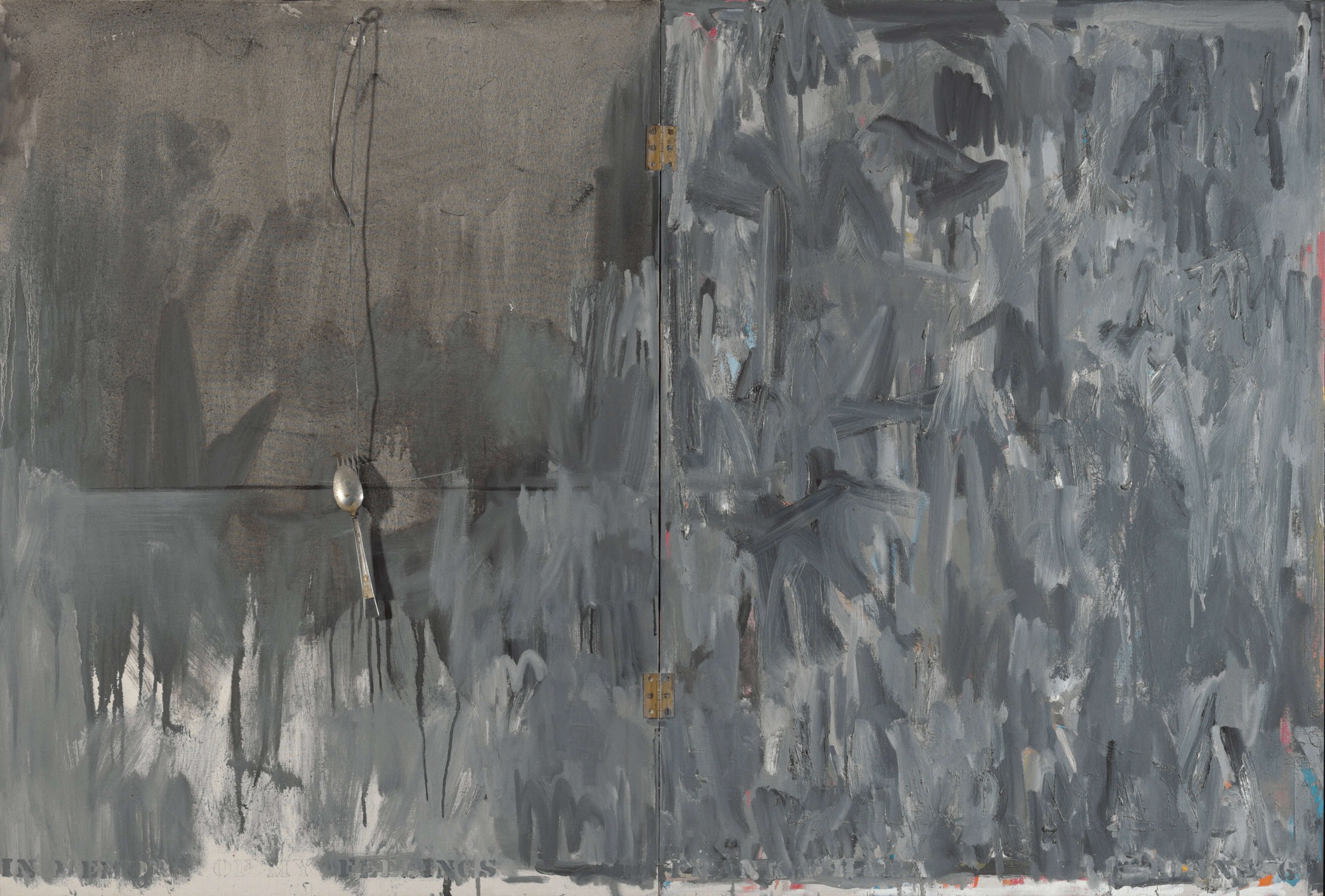
Jasper Johns: In Memory of My Feelings
Lesson slides: Lesson slides (PowerPoint, 1.7 MB) · Jasper Johns, In Memory of My Feelings (PowerPoint, 46.0 MB) · Two later judiths (PowerPoint, 2.9 MB) · image credits
At a glance
| Field | Details |
|---|---|
| Dates | Fri 18 Sep P2 · Sun 20 Sep P6 |
| Focus | Jasper Johns: In Memory of My Feelings |
| Unit | Narrative Myth And Allegory |
Objectives
- Explain how the gray surface, fork and spoon, stenciled words and O’Hara reference change successive readings of Johns’s painting.
Materials and resources
Use the works and source readings named below. Keep the full composition visible while looking.
Tasks
Begin with silent looking. Inventory the gray brushwork, fork and spoon, lettering and stencil before reading the title. Compare the object attached to the canvas with the space it occupies in the painting. Attend to how the poem’s name changes the image. Revise one interpretation after discussion; the Sunday session did not add a three-sentence written submission.
Assessment and homework
There was no three-sentence written response to the Johns. The A1 workshop started after the break on September 20.
Description
Follow the gray surface, fork and spoon, stenciled words and reference to O’Hara. The Sunday close returns to the same painting. The board workshop followed after the break.
Teaching reference
The unit’s three words come out of the paintings. Narrative is where a still image puts time. Myth is a story the viewer already knows, so the picture can lean on it. Allegory is a thing that is shown and also stands for something else. You met all three on the Bosch print and in La Chimera. Now you find them in paintings you have not seen before.
A quotation
“Seeing comes before words. The child looks and recognizes before it can speak.
But there is also another sense in which seeing comes before words. It is seeing which establishes our place in the surrounding world; we explain that world with words, but words can never undo the fact that we are surrounded by it. The relation between what we see and what we know is never settled. Each evening we see the sun set. We know that the earth is turning away from it. Yet the knowledge, the explanation, never quite fits the sight. The Surrealist painter Magritte commented on this always-present gap between words and seeing in a painting called The Key of Dreams.”
John Berger, Ways of Seeing (1972), the opening of chapter 1. The lesson’s title is his first sentence turned into a question: if seeing comes before words, what does a painting say before you have any?
Suggested reading
- John Berger, Ways of Seeing (1972), chapter 1. Short, and written to be read by anyone. The course comes back to it in Berger: Reproduction and Meaning, so reading it now is reading it twice.