A Painting in Four Settings
Lesson slides: Download the deck (PowerPoint, 4.7 MB) · image credits
At a glance
| Field | Details |
|---|---|
| Dates | Mon 7 Dec P4; Tue 8 Dec P6 |
| Focus | A Painting in Four Settings |
| Unit | Images Mediation And Modernity |
Objectives
- Track how scale, crop, surface or caption changes a reading of the selected painting.
- Defend a gain or loss and answer another interpretation.
Materials and resources
-
berger-and-the-reproduction.pptx
-
Source text
Tasks
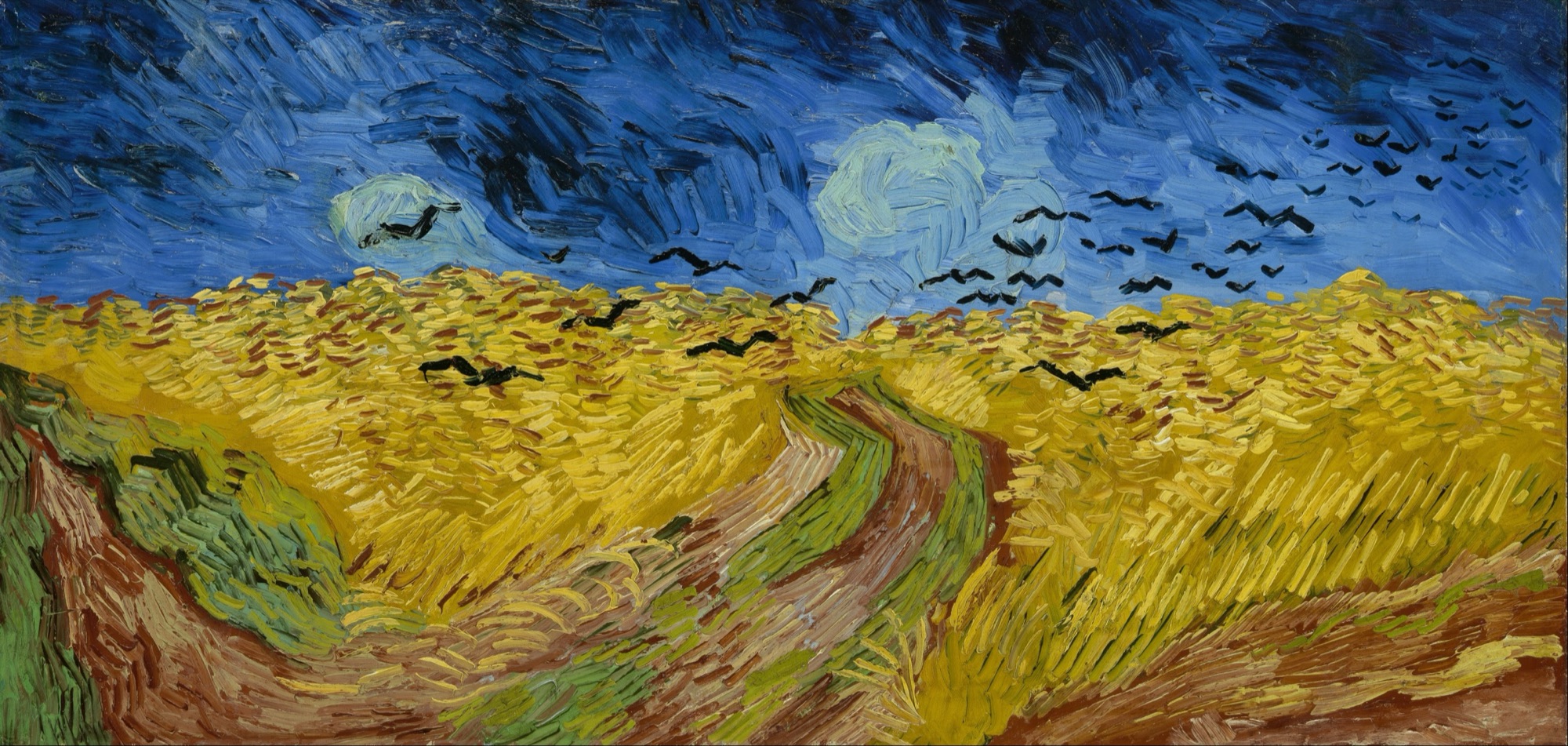
Compare the four labeled classroom settings of the same image. Record a visible change and explain how it directs meaning. Use Version / Visible change / Effect on meaning / Evidence or limit. Compare scale, crop, surface, caption and surroundings without assuming every gallery viewer or phone viewer behaves alike.
Write one misleading and one accurate caption. Explain which detail each makes prominent and which claim would need another source. Choose a provisional seminar claim, test an objection with a partner and revise or defend it through evidence.
On December 8 P6, discuss what the image gains and loses in reproduction. Use two settings and a specific feature; respond to another position and explain why you keep or change the claim. There is no written hand-in. Follow the unchanged seminar brief.
Assessment and homework
Copies and Reproductions remains December 8 P6, 12:35, with its full 45-minute slot and existing rubric. The brief is issued by December 2. Use students’ actual reading and notes from November 20 or 23; Kissick and other preparation share the existing thirty-minute allowance. Caption writing and A4 case rehearsal remain formative.
Description
Consolidate Berger and ukiyo-e through four labeled contexts, caption comparison and a reasoned claim. The December 8 P6 discussion retains its existing assessment criteria.
Teaching reference
Berger: reproduction, knowledge and context
Berger asks readers to examine how looking is shaped by knowledge and belief, and how an image carries a maker’s choices. Reproducing a painting changes the conditions in which viewers encounter it. A small screen, a page of explanation and a sales image can make different aspects prominent. The original painting does not cease to exist, and a reproduction is not automatically deceptive. The task is to explain what changes in this particular version.
The slides also show Raphael’s The School of Athens as a brief example of the change from a wall-sized fresco to a screen image. Begin the four-context exercise with the teacher-selected painting. Compare what the gallery label, phone display, textbook caption and advertisement invite a viewer to notice. Use the layout and wording of each classroom simulation as evidence. Select the painting before teaching this lesson.
Source quotation
John Berger, Ways of Seeing, essay 1 (1972). Provided PDF page 8, left panel, printed web-page number 15/31; paragraph beginning This is vividly illustrated. Source text.
This is vividly illustrated by what happens when a painting is shown on a television screen. The painting enters each viewer’s house. There it is surrounded by his wallpaper, his furniture, his mementoes. It enters the atmosphere of his family. It becomes their talking point. It lends its meaning to their meaning. At the same time it enters a million other houses and, in each of them, is seen in a different context. Because of the camera, the painting now travels to the spectator rather than the spectator to the painting. In its travels, its meaning is diversified.
Reading support: A reproduction enters a new setting. Berger argues that its meaning changes through that setting. Explain his claim in your own words, then test it with one of the four classroom reproductions. This supplied printout uses web pagination, not the original book pages.