Animatics and Narrative Clarity
Worksheet Industries and Audiences workbook (PDF)
Lesson slides: Download the deck (PowerPoint, 20.2 MB) · image credits
At a glance
| Dates | Fri 27 Nov P6 13:01–13:20 |
| Time | 19 minutes on November 27; the existing December 11 animatic clinic tests the result. |
| Inquiry | At what second does the planned sequence lose a viewer? |
Objectives
Turn a storyboard into a timed sequence and identify which transition or sound cue needs testing.
In class
Friday, November 27 · P6 · 13:01–13:20
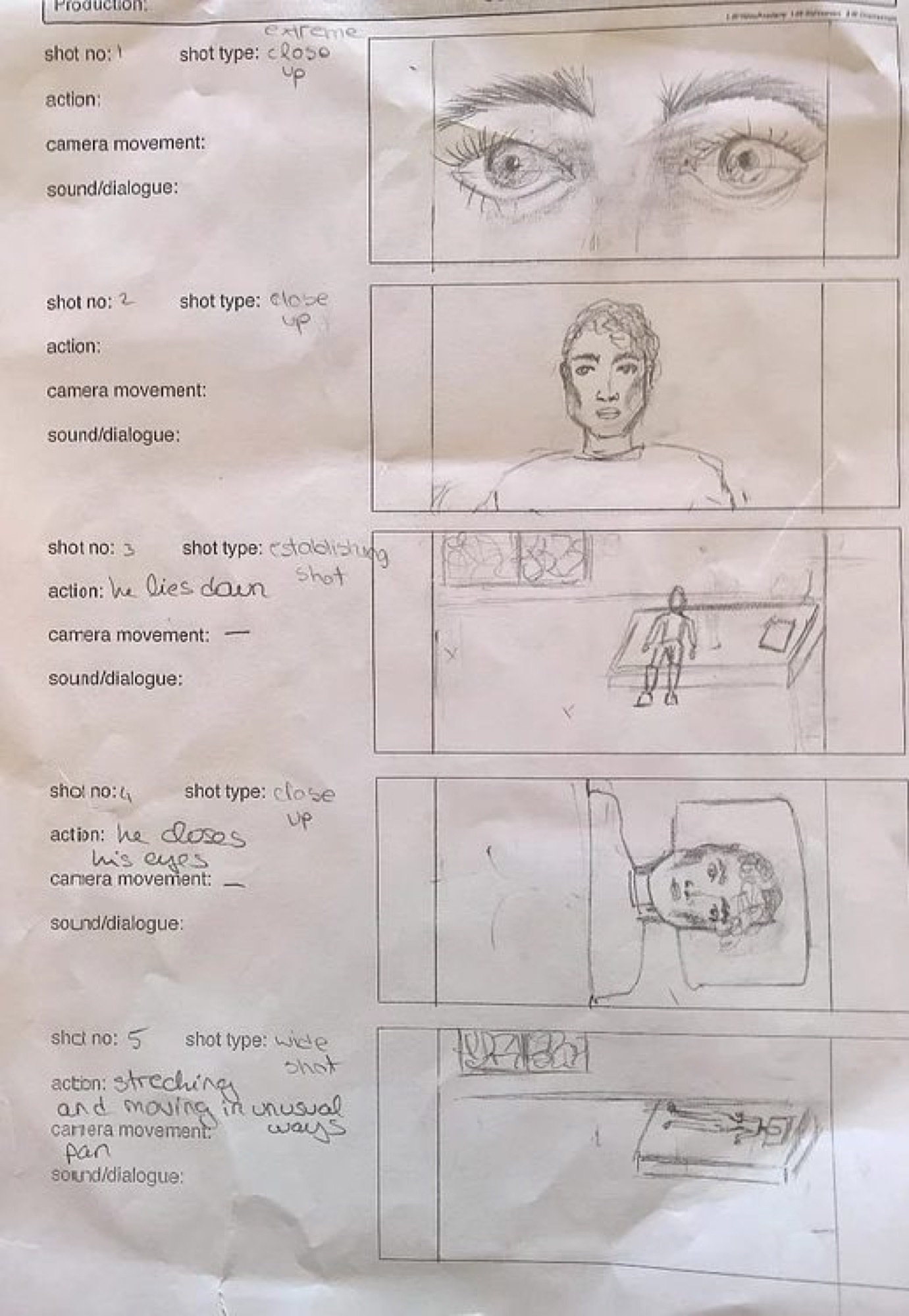
Return to the pitch fixes. Assemble the actual storyboard images in order, set each duration and add a temporary track. Before playback, write what information the transition should communicate. Show it once without explanation and record the viewer’s actual account. Identify the exact second where it differs from the intention or becomes unclear. Propose one timing, shot-order or sound edit to test. Continue the same animatic for December 11, where a viewer will identify the first unclear second.
Materials and resources
Download the lesson slides · Download the November worksheet · Film case evidence · Industries and Audiences
Tasks
Practice
Use actual storyboard frames and a temporary track. Time the sequence and record the intended information at the transition. Show it once without explanation. Write the viewer’s actual words beside your intention, identify the first unclear second and propose one edit. Keep this evidence for the December 11 retest.
Assessment and homework
Check your progress
The November work begins the existing animatic. A3 is the week’s assessment.
Description
19 minutes on November 27; the existing December 11 animatic clinic tests the result. Continue with Scriptwriting and Storyboarding, Film Pitching and Production Development.
Teaching reference
Learn
A viewer’s difficulty can reveal a missing transition, a shot held too briefly or a sound cue that arrives too late. Test the smallest change that addresses the observed moment.
Source quotation
It is important to visualise your production before you start to film.
Marshall, Naisbett and Stoklosa, Media Studies for Cambridge International AS & A Level, printed p. 153.
Suggested reading
Use the notes on image, sound and approximate timing in §6.3, p. 153.