Film Pitching and Production Development
Worksheet Industries and Audiences workbook (PDF)
Lesson slides: Download the deck (PowerPoint, 20.2 MB) · image credits
At a glance
| Dates | Wed 25 Nov P6 12:35–13:20 · Wed 25 Nov P7 13:30–14:15 · Fri 27 Nov P6 12:35–12:40 · Mon 30 Nov P6 12:35–13:05 |
| Time | 55 minutes for pitches and 35 for sound and representation on November 25. Portfolio check November 27 and feedback November 30. Prepare for the pitch on Tuesday, November 24. |
| Inquiry | Can a filmmaker defend a particular shot and act on a viewer’s response? |
Objectives
Use the actual storyboard and test footage to justify a creative decision, answer a feasibility question and make one visible revision.
In class
Wednesday, November 25 · P6 and P7 · 90 teaching minutes
12:35–12:40 explain the protocol. Use four six-minute rounds from 12:40 to 13:04: three minutes to pitch, two for questions, one to finish a response card or switch presenters. From 13:04 to 13:19, exchange cards and decide which fixes the maker will carry to Friday. Allow one minute to save. Break 13:20–13:30. From 13:30 to 13:40, write the existing 60–100-word pitch post and save the feedback. 13:40–14:15: sound and representation clinic, 35 minutes. Use five minutes for an individual diagnostic: identify a sound’s source, a relationship across a cut and a match in a short teacher demonstration. Record uncertain items against the semester plan’s technical coverage matrix.
Use twelve minutes for sound repair. Make a brief teacher demonstration using the same neutral corridor image: visible hand knocks with matched sound; the knock continues while the speaker is outside the frame; add narration over the corridor; carry the knock across a picture cut. Separate synchronous/asynchronous relation to the pictured source from diegetic/non-diegetic status and from a sound bridge. A heard but unseen story-world knock can be asynchronous in the Cambridge/coursebook usage while remaining diegetic. Compare one repeated identifying sound (motif), sustained mood music (incidental music), a recurring theme and a brief accent (sting). Show a level change between voice/background to explain mixing and near/far sound perspective. Students annotate one actual example and explain the effect. These are teacher-made demonstrations, not claims about sounds in the assessed extract.
Use eight minutes for the existing Rear Window clip, approximately 01:40–02:01. The cast and restricted movement provide evidence of physical impairment. Compare that restriction with the agency the viewpoint gives Jeff as an observer. Locate framing, a prop and a looking relationship; support two possible readings of dependence/control. Do not treat one temporary injury as a universal disabled experience. Use the whole relevant frame rather than an isolated cast detail.
Write an independent seven-minute paragraph linking a specific sound or edit to a representation in the demonstration or Rear Window passage. Use the last three minutes to check terminology, precise evidence and the reasoning from the choice to meaning, then revise one weak link. This is formative classwork, not an extra upload. The production approval clinic remains in December.
Friday, November 27 · P6 · 12:35–12:40
Record A3 as the blog stands at 12:35. Check the existing blog address. The pitch and portfolio are one attainment. Later additions develop the continuing portfolio. At 12:40 begin the compressed effects teaching in the linked audience lesson.
Monday, November 30 · P6 · 12:35–13:05
Return A3 and allow 18 minutes to identify one improvement. Use ten minutes for the existing before-and-after storyboard or shot-list revision; name the feedback addressed and explain how the changed detail may clarify the intended meaning or make the shot feasible. State what a retest would check. Give the two-minute A4 notice by 13:05. The revision task is due at 13:20. Record Learning Behaviour through the observed response to feedback.
Technical reference: Technical Elements.
Materials and resources
Download the lesson slides · Download the November worksheet · Film case evidence · Industries and Audiences
Tasks
Practice
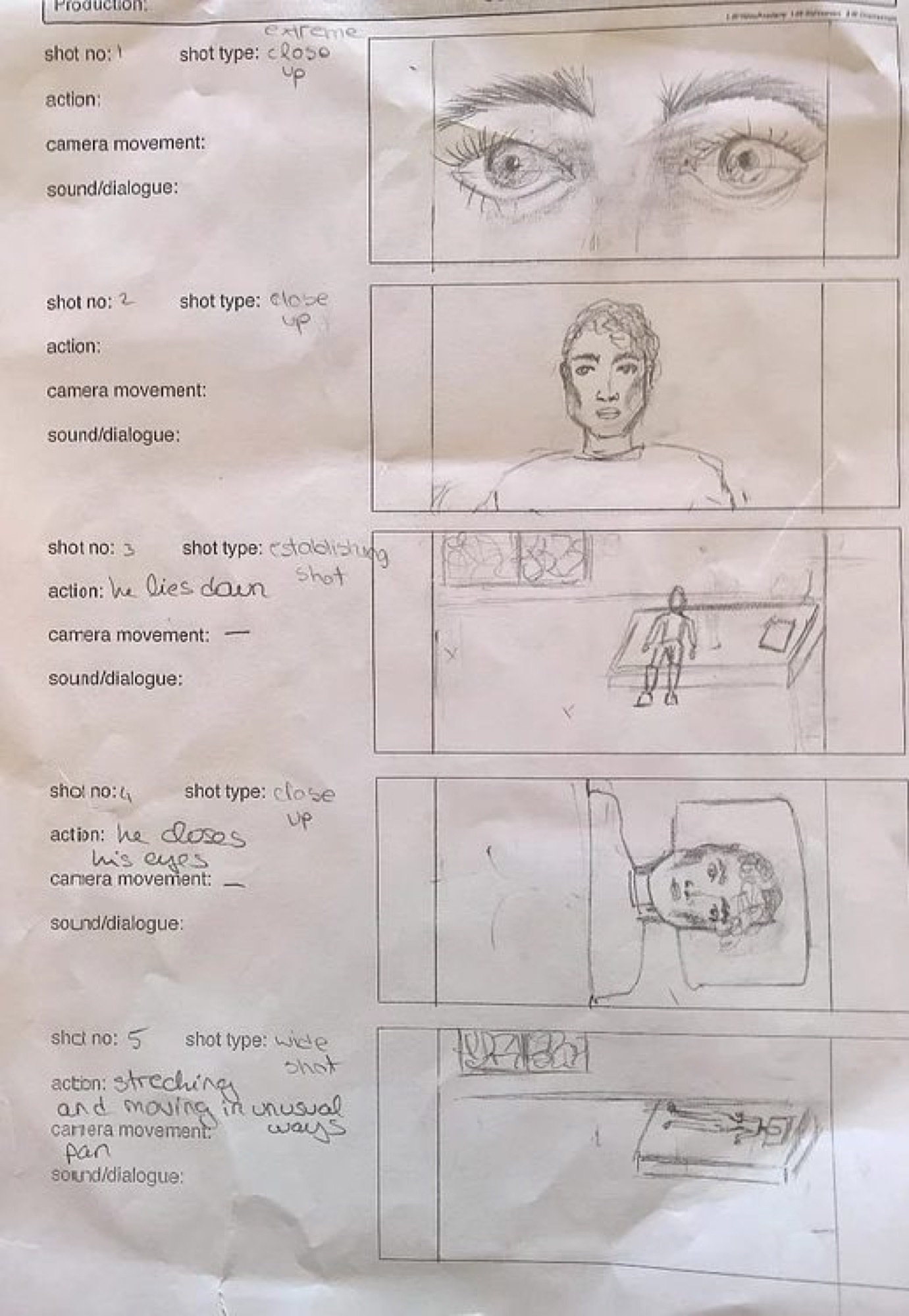
On Tuesday, November 24, use your checked proposal and focused research to prepare your storyboard and rehearse the pitch. Cover genre and tone, three story beats, characters and cast, ident and title placement, location, and shoot window. Before the pitch, identify two storyboard shots. Mark the eyeline and line of action. Explain how the eyeline match establishes where a character looks, or how the action match carries movement across the cut. In the November 25 clinic, distinguish a sound’s source from its relation to the picture and to the edit. Use the Rear Window passage, approximately 01:40–02:01. Locate a framing choice, a prop and a looking relationship. Analyse how they represent Jeff’s restriction and agency; test an alternative against the same evidence. Write a short paragraph with precise technical evidence and revise its weakest link. Keep this in existing notes; no separate submission is set.
Use your three-minute pitch to show one storyboard frame and explain a decision about genre, story, cast, titles, location or shoot window. Tell the listeners who the opening is for and how the intended audience might reach it. Name an audience platform and two relevant films or programs that audience watches, with the shared interest. Record the listener’s actual question, the shot it concerns and a feasible revision. Use page 5 of the November workbook for the 35-minute sound/representation clinic. Use one section of your plan for Monday’s before-and-after revision.
Assessment and homework
Check your progress
A3 Planning Portfolio and Pitch is due November 27 at 12:35. Creative Intent and Critical Revision is the single task in the November 30 teaching week.
Description
Bring your opening research and storyboard from Scriptwriting and Storyboarding. At the pitch, justify a storyboard choice and its feasibility using your research, then respond to a listener’s question. Identify missing evidence honestly rather than invent a successful test.
The sound/representation clinic develops technical precision for C2 separately from the C1 pitch. The portfolio snapshot records the existing attainment. November 30 uses its feedback to revise a specific part of the plan. Animatics and Narrative Clarity develops the storyboard into a complete timed sequence with sound; the production-approval work then checks whether the plan is ready to film.
Teaching reference
Learn
Keep the three-minute limit and let each of the four students explain an actual frame. Response cards and the short pitch post are evidence inside A3. The November 30 task assesses the revision, not the whole portfolio again.
Source quotation
It is important to visualise your production before you start to film.
Marshall, Naisbett and Stoklosa, Media Studies for Cambridge International AS & A Level, printed p. 153.
Suggested reading
Return to §6.3, p. 153 to check what the storyboard says about each shot. The A3 brief retains five recce photographs with uses and risks, a timed shot list and audience evidence.