Post-production and Analytical Independence
Media Studies · Spring workshop sequence
At a glance
| Phase | February 22–April 30, with internal C1 completion March 26 and readiness April 23. |
| Calendar | These are planning windows. Confirm actual school dates and the floating Qingming week before assigning sessions. |
| Weekly balance | Before C1 completion: about three 45-minute periods for production/CCR and two for C2. Afterward: mainly C2. |
| Bring | Footage and two copies, editing project, dated production evidence, research, feedback and film-industry case file. |
| Final work | Film opening with titles, maximum two minutes; individual process blog; individual creative CCR. |
Objectives
- Assemble and revise the opening through purposeful image, sound and title choices.
- Use viewer response and production evidence to evaluate decisions.
- Complete an individual CCR addressing all four 2027 questions.
- Develop independent Section A analysis and detailed Section B arguments under timed conditions.
- Use feedback to choose focused revisions and exam practice.
Learn
From footage to a sequence
An assembly puts the available shots in an initial order so you can see what exists and what is missing. A rough cut develops the timing, sound and titles enough for a viewer to follow. A revised cut responds to evidence from that viewing. Keep versions and explain the important decisions. Technical effects should serve the intended meaning.
Audit footage before spending a week polishing an incomplete sequence. Check image, focus, continuity, usable sound, room tone and the shots needed to connect actions. Name the exact missing shot and whether existing material can solve the problem. Reserve the first two spring weekends for limited pickups or failed shots, subject to access and an agreed plan. Principal filming belongs to the winter break.
Feedback and revision
For assessed C1 work, teacher and assistant feedback identifies general strengths, limitations and requirements. You lead discussion of possible amendments and choose what to change. A teacher can demonstrate a technique on an unrelated example, but cannot prescribe your shot, edit, script, design or reflection. Detailed instruction remains available for separate preliminary exercises and exam practice.
Show the cut before explaining it. Ask what viewers understood, which moment shaped their response and where they lost the sequence. Separate a viewer’s observation from their suggestion. You decide which response to act on and explain why. Keep a brief before/after comparison for important changes; this supports your individual evaluation.
Critical reflection
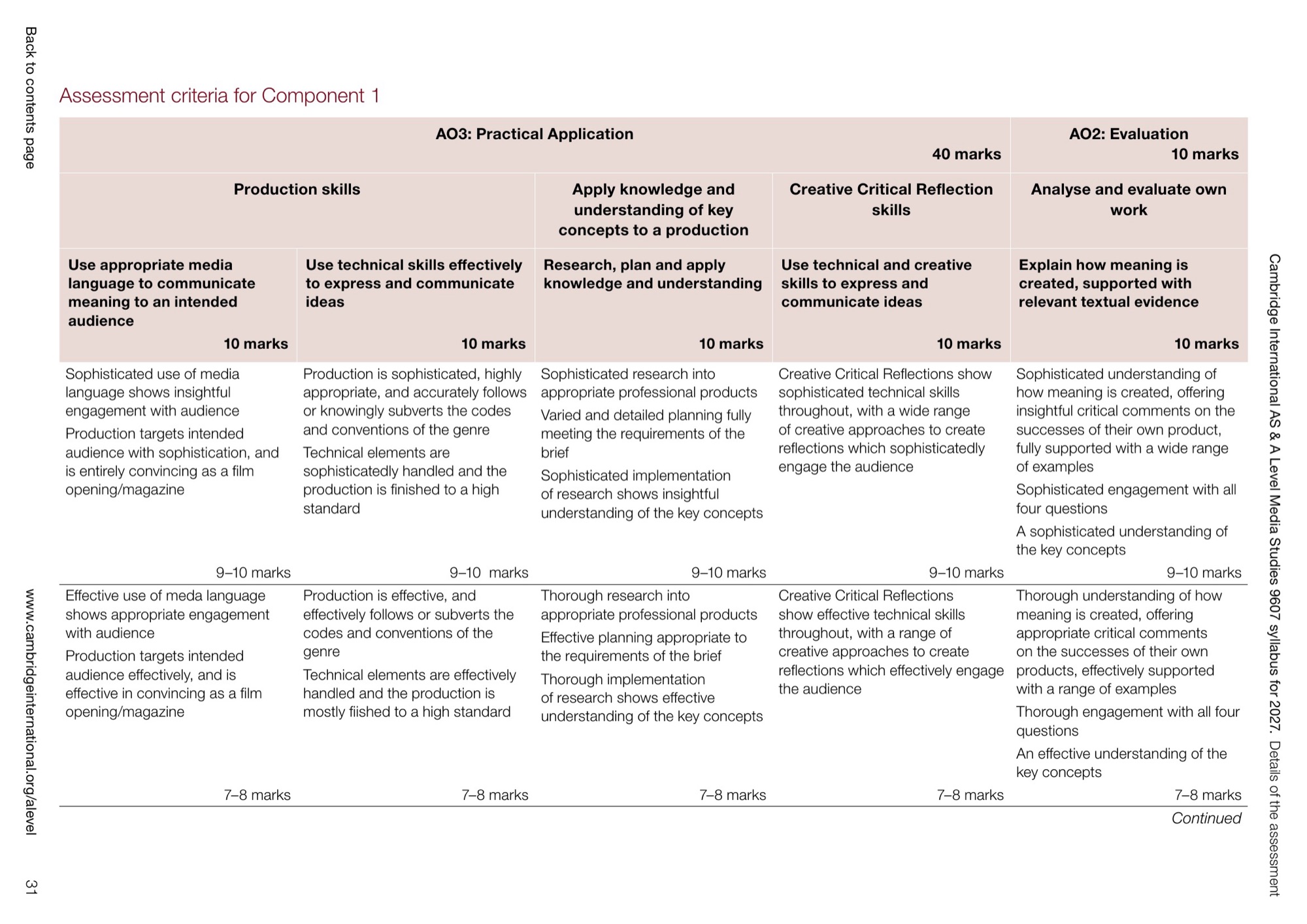
Use the Creative Reflection and Production Evidence guide to connect the final film with research, tests, skills and technology. The four questions address conventions/representation, audience/distribution, skills and integrated technologies. Use precise examples from your own work. A group product still requires individual evidence and reflection.
Independent analytical writing
For Section A, explain the relationships among camera, sound, mise-en-scène and editing in an unfamiliar television-drama extract. For Section B, answer the exact industry/audience question using named, dated case evidence. Use Barbie and La Chimera pack to test whether a claim applies across different production or distribution contexts. A detailed case fact becomes useful when you explain its consequence for the argument.
Workshop progression
Each row fits the normal five-period week only when that teaching week is confirmed. P1–P5 below name allocations, not bell-schedule period numbers. A full mock needs a separately arranged two-hour slot.
| Planning window | Three production/CCR periods | Two C2 periods |
|---|---|---|
| February 22–26 | Audit footage/backups; assemble the action; diagnose a limited pickup need. | Re-establish short Section A writing; retrieve and update case facts from January targets. |
| March 1–5 | Develop rough cut, provisional titles and sound; test pacing; check technical gaps. | Update/apply the Barbie and La Chimera comparison; write one evidence-based comparison paragraph. |
| March 8–12 | Screen rough cuts; record audience evidence; revise the most consequential problem. | Write a full 45-minute Section B answer, then use feedback in the next C2 period. |
| March 15–19 | Refine image/sound/title decisions and prepare evidence for all four CCR questions. | Independent Section A writing; targeted technical-language or case revision. |
| March 22–26 | Complete film, individual blog and individual CCR; check playback and access. | Second full 45-minute Section B answer; feedback and revision. |
| March 29–April 23 | Student access/authentication checks where required; teacher marking and administration. | Authentic Section A rehearsals; arranged full-paper mock; feedback within five working days; focused repair. |
| April 26–30 | Administrative or technical contingency. | Final clinics against actual scripts and case-file gaps. |
Reusable 45-minute workshops
Footage audit and assembly
Use 5 minutes to identify the intended action, 10 to check media/backups/sound, 20 to assemble or repair one sequence, 5 for a viewer to describe it and 5 to record the next action. In the first return week, the teacher inspects the actual media and project. Any pickup request names the shot, reason, location/cast access and date.
Sound, titles and continuity
Use 5 minutes to identify one communication problem, 8 to demonstrate a relevant technical choice with a teacher example, 22 for independent editing, 5 for playback and 5 for the decision record. Rotate the focus: continuity and pacing; dialogue/effects/music/room tone; then readable title placement, timing and credits. Do not require students to add an effect simply to show a technique.
Rough-cut screening
Use 5 minutes for the viewing questions, up to 12 for four openings and brief notes, 13 for evidence-led responses, 10 for each maker’s revision plan and 5 to save the record. If there are more films or longer access problems, spread the review over the allocated production periods. The teacher offers general guidance; students retain responsibility for assessed creative decisions.
Revision and reflection
Use 5 minutes to select one feedback issue, 25 for independent revision or CCR preparation, 10 to compare evidence before/after and 5 to name the next step. The dedicated CCR guide provides a 90-minute evidence workshop if it fits two of the three production allocations. Keep the two C2 periods protected.
Independent Section A writing
Use 5 minutes to focus on a short unfamiliar TV-drama example, 25 independent writing, 8 feedback and 7 revision. This short routine develops a particular connection. Authentic full Section A practice separately uses 30 minutes for four screenings/notes and 45 minutes writing, with the remaining 15 minutes of a normal double for setup/collection or brief reflection. Keep unused assessment extracts sealed.
Industry evidence and argument
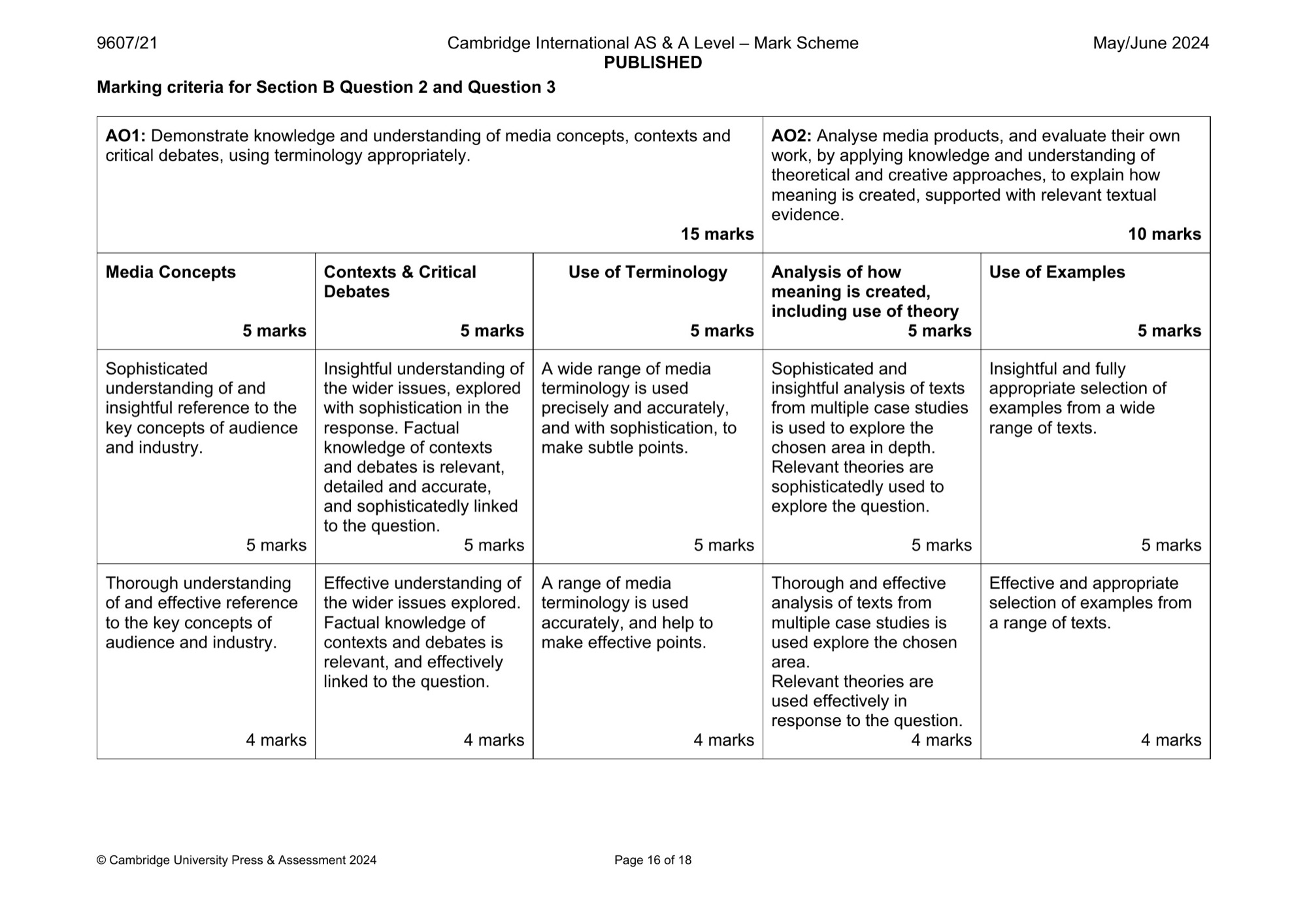
Use 5 minutes to read the question, 10 to inspect two supplied contemporary sources, 10 to discuss a comparison, 15 to write an individual paragraph or plan and 5 to check the evidence-to-claim link. Label a source’s fact, a reported claim and your interpretation clearly. Include production, distribution, marketing, consumption, ownership, funding, technology, synergy/convergence and local/global audience questions over the sequence. A trailer can support analysis of marketing; it cannot by itself establish financing or audience results.
Full Section B answer and feedback
Prepare the prompt and conditions before the period so the whole 45 minutes is available for independent writing. In the next C2 period, use 5 minutes to read feedback, 20 to revise the weakest paragraph, 10 to compare the original and revision, and 10 to make a new plan applying the correction. March 8–12 and March 22–26 contain the two full answers. Keep the first plan and the later answer so progress can be discussed.
Complete the portfolio
Check the maximum two-minute duration including titles; original images/text and predominantly original sound; acknowledged permitted sourced music; readable titles and credits; a working export; accessible individual blog and CCR links; individual contributions; and a chronological account of research, planning, preliminary work and development. The internal target is March 26. Any earlier confirmed external deadline moves the internal target earlier.
After the agreed final submission is locked, do not reopen assessed work automatically. Respond to required access, authentication or administrative checks. Teacher marking, standardization and Cambridge submission administration are teacher responsibilities.
Weekly homework
Use the weekly assignment route. Each normal teaching week has one Course Skills assignment or an attainment. Use existing classwork where the brief allows it. Every task produces material for the student’s own C1 portfolio or practices a C2 response. Other class exercises receive feedback without another submission.
After C1 is locked, weekly assignments practice C2 responses. Complete any required C1 access or submission checks during class. In a shortened or exam week, use existing preparation as the weekly task where appropriate. Do not add a second assignment or a separate holiday pack.
Check your progress
For production, point to the revised choice and explain the evidence behind it. For writing, point to a more precise claim, example or connection. Keep the original so the improvement can be seen. Use the next consultation to resolve a real uncertainty.
Source quotation
Editing can have a significant effect on how an audience interprets a media text and how they feel when consuming it.
Cambridge International AS & A Level Media Studies coursebook, §2.5, p. 50.
Suggested reading
Coursebook §2.5 on sound/editing, §6.3 on production planning and §6.7 on AS reflection. Use the 2027 syllabus and C1 criteria, the Shoot Guide, the Blog Map and the Exam Answer Guide for the assessed requirements.