The Table as Moral Space
Lesson slides: Lesson slides (PowerPoint, 887 KB) · Monday (PowerPoint, 23.2 MB) · image credits
At a glance
| Field | Details |
|---|---|
| Dates | Mon 19 Oct P4 |
| Focus | The Table as Moral Space |
| Unit | The Table As Ethical Space |
Objectives
- Test one reading of care, labor or belonging against a visible detail in a pictured meal.
- Identify what that image cannot establish.
Materials and resources
- the-table-as-moral-space-monday.pptx
- The Eaters and the Eaten (highlighted).pdf
Use the works and source readings named below. Keep the full composition visible while looking.
Tasks
Practice
Monday October 19: contribution and exit. Look at each contributed image before its presenter explains it. Record a visible detail and a possible interpretation. At the end, choose one image from today and write three sentences: “I notice …”; “This supports or complicates Berger’s claim that … because …”; “I would need to know … before deciding …”. Use a specific detail, represent Berger’s claim accurately and explain what remains uncertain. This is ungraded class practice.
Monday discussion: First consider the image or imagined situation with a partner. Support your response with a detail and consider another reading.
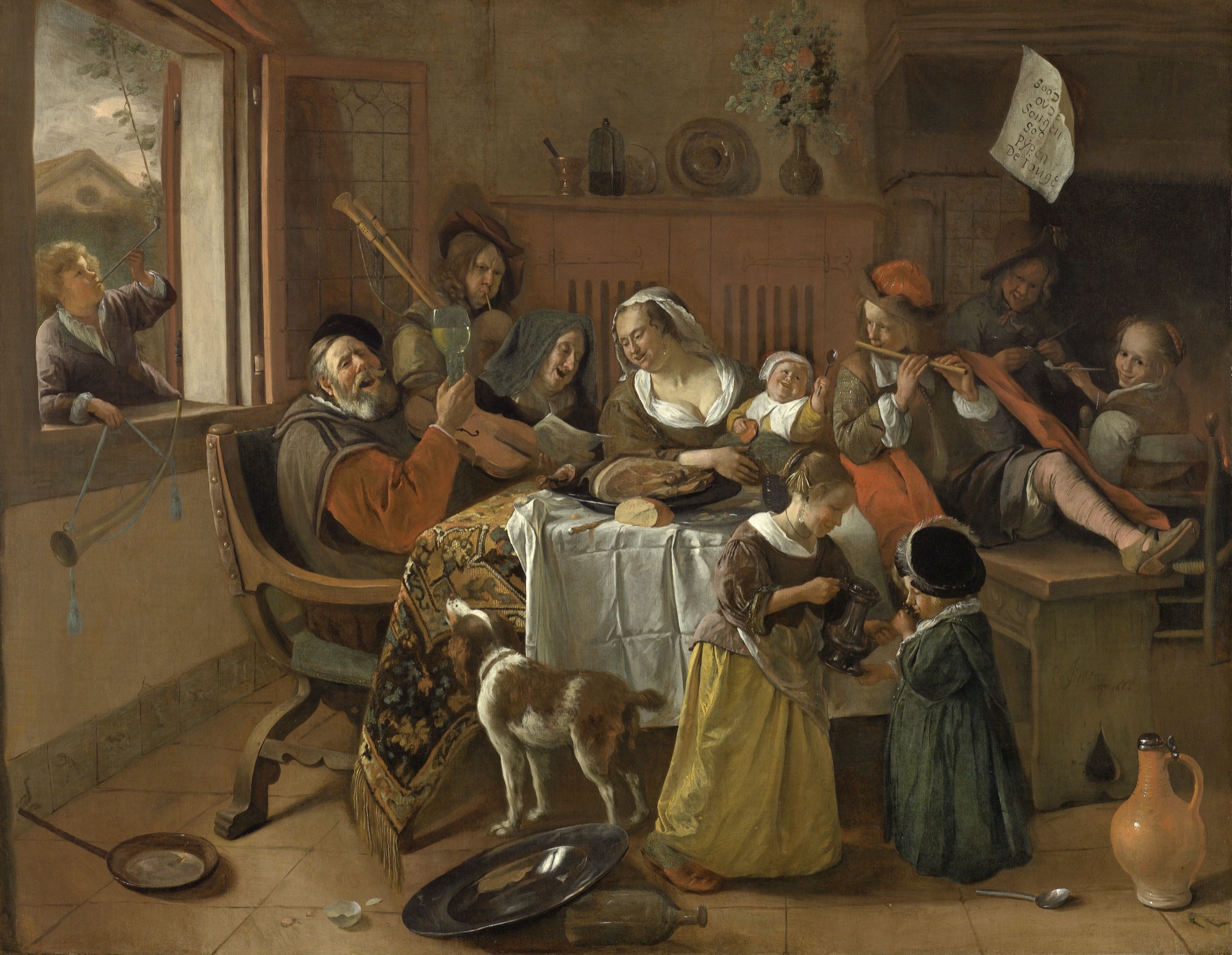
- The Merry Family: Would you want to join this meal? What in the picture makes you feel that way?
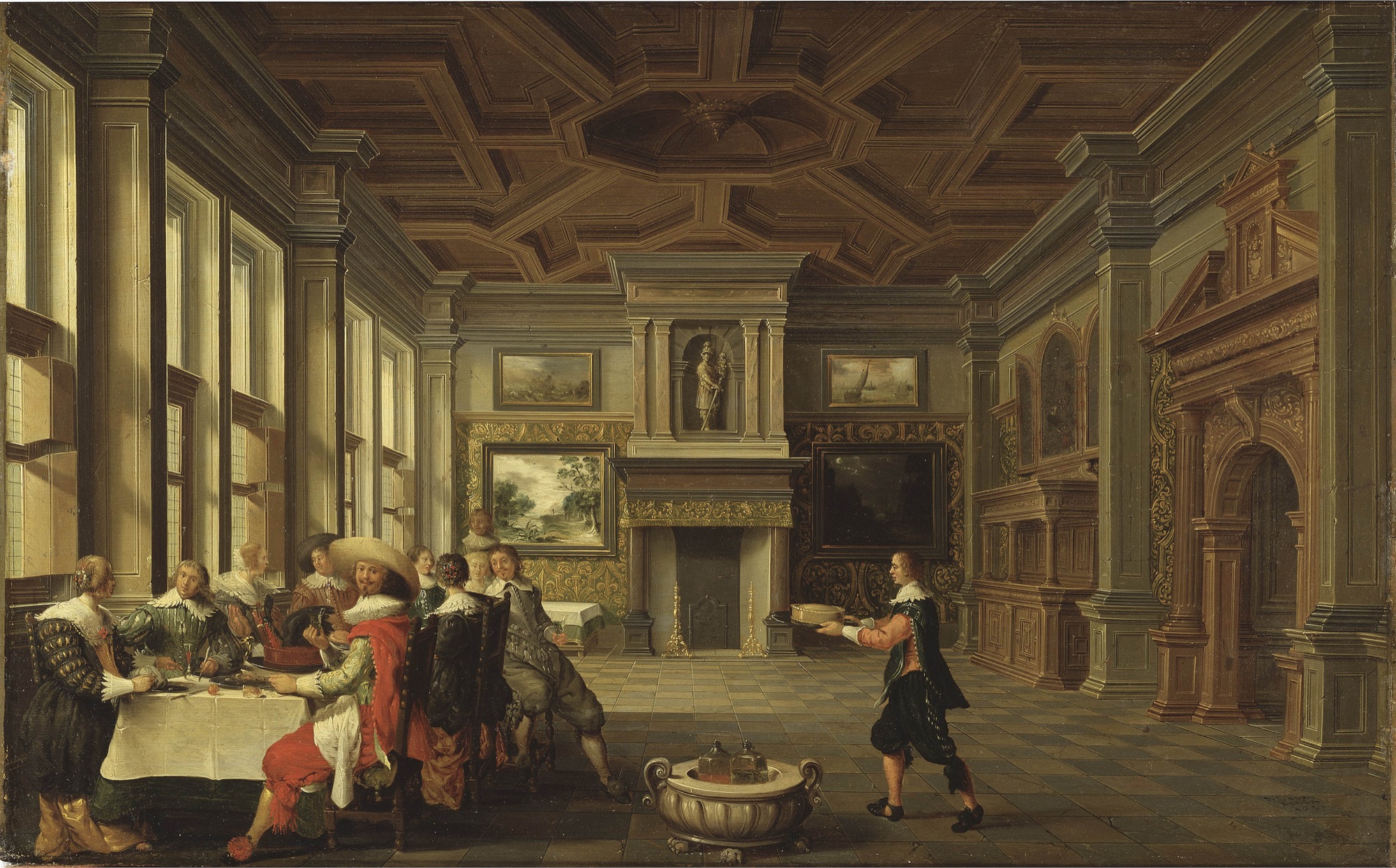
- Van Deelen’s dinner: Would you feel welcome at this table? What makes you say that?
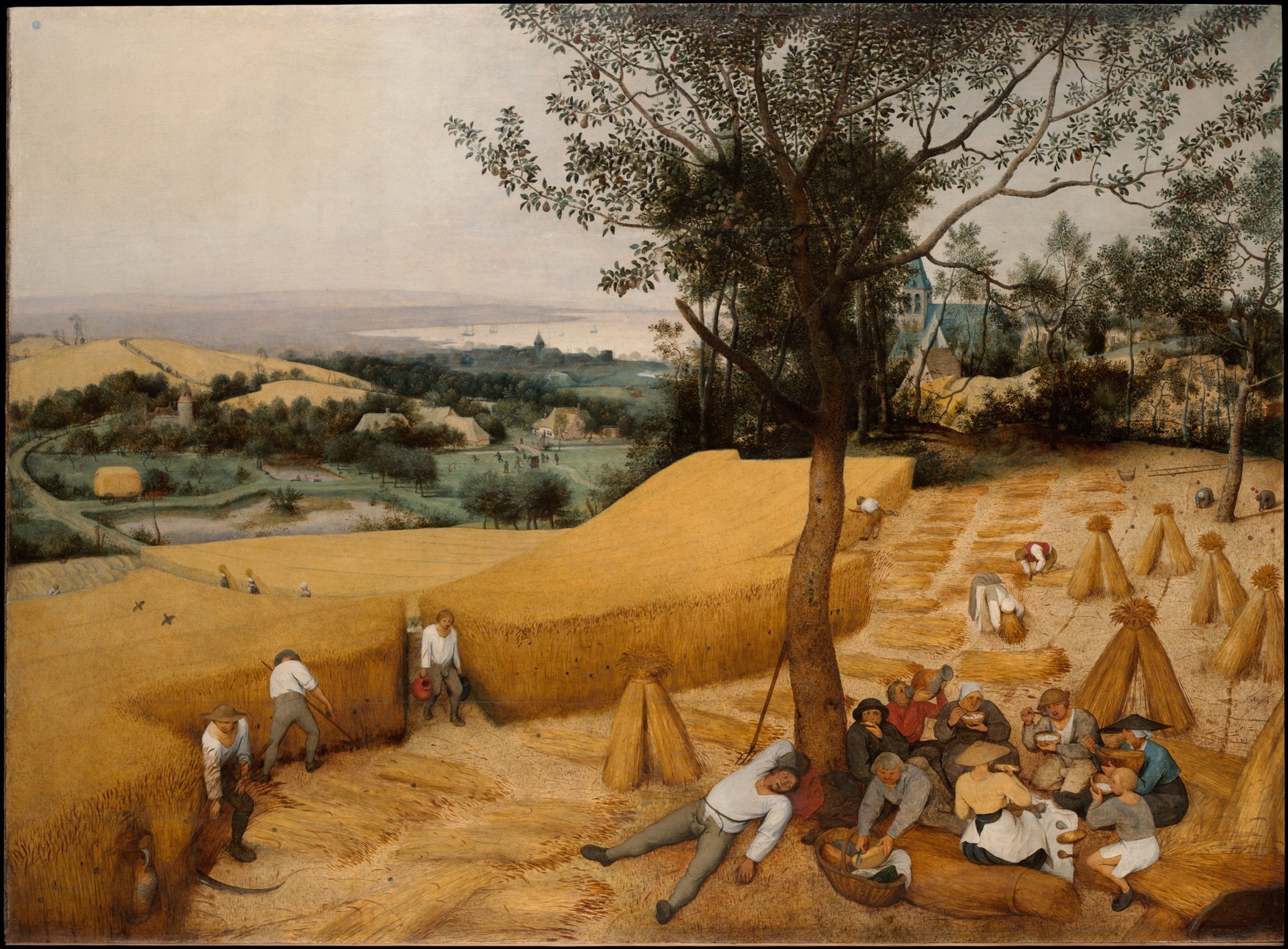
- The Harvesters: If we cropped out the people still working, would we understand this meal differently?
- Berger and a delivered lunch: When a meal arrives at your door, whose work becomes invisible?
Assessment and homework
Ungraded class work. Use the existing response to check the evidence and reasoning; no additional submission is required.
Description
Introduce Berger through students’ examples. Test an idea about care, work or belonging against a pictured meal and say what the image leaves open.
Begin with an overall introduction to Food and Ethics: how eating connects bodily needs with other people’s work, care, social class and belonging. Use Berger’s account of consumption as a cultural need to establish the inquiry, then show its three sections.
Review students’ images or examples for ten minutes.
Introduce The Shared Meal through Eat Drink Man Woman, the planned class lunch and images of religious, family and public meals. Use the approved questions with Steen and van Deelen, with Berger’s discussion of dining as social performance between them.
Move to Still Life, Possession and Labor through Heda, de Troy and Hogarth; place Berger’s wealth and work passages beside these examples, leading to the approved crop question for The Harvesters.
Introduce Semiotics of the Kitchen through signs, gestures and social expectations. Compare Vermeer and Velázquez under The Moral Image of Work, then place Berger’s separation passage beside the approved delivered-lunch question. Cassatt, Rosler and Weems develop domestic ritual, gender and identity; Tiravanija and Lee Mingwei introduce hospitality as art. Berger’s qualification closes the section.
Return to one student contribution and finish with the existing three-sentence exit.
The longer passages remain visible; select sentences to read aloud. These previews retain the later close studies. Student contributions replace the A2 self-review. The period remains 45 minutes; the shared lunch is November 2 P4, 10:45–11:30.
Monday introduction · teaching focus
The four approved questions are in . Allow 30 seconds in pairs before inviting responses, and use an optional follow-up only if it helps. Return claims to visible actions, objects and framing; do not assume a person’s intentions or circumstances from the image alone. The longer Berger excerpts are in the deck and Teaching reference; his historical class categories are arguments to examine, not labels for students or their families. The deck’s notes retain image credits and source-specific cautions.
Teaching reference
Source quotations
John Berger, “The Eaters and the Eaten,” in Selected Essays, pp. 370–374. The essay is dated 1976. These consecutive excerpts were checked against the assigned scan. Read a passage, paraphrase its claim, test it against an image, and identify a limitation. The final three passages are optional further reading.
Eating and culture
‘The consumer society’, so often and widely discussed as if it were a relatively new phenomenon, is the logical outcome of economic and technological processes which began at least a hundred years ago. Consumerism is intrinsic to nineteenth-century bourgeois culture. Consumption fulfils a cultural as well as an economic need. The nature of this need becomes clearer if we look at the most direct and simple form of consumption: eating.
Berger, p. 370. Reading support: eating can communicate identity, care or social position as well as meet hunger. Test that distinction against an example.
Labor and consumption
To the peasant all food represents work accomplished. The work may or may not have been his own or that of his family, but if it isn’t, the work represented is nevertheless directly exchangeable with his own work. Because food represents physical work, the eater’s body already ‘knows’ the food it is going to eat.
Berger, p. 371. Reading support: Berger connects food with an embodied understanding of the physical work that produced it.
Dining and production
One door connects with his own daily life; through it he has entered in order to be served with food. The second door connects with the kitchen; through it the food is brought out and the waste is taken away. Thus, in the dining-room, food is abstracted from its own production and from the ‘real’ world of his daily activities. Behind the two doors lie secrets: secrets of recipes behind the kitchen door; professional or personal secrets, not to be discussed at table, behind the other.
Berger, p. 372. Reading support: distinguish visible dining from the preparation and cleanup that the diner may not see.
Dining and social performance
Abstracted, framed, insulated, the eaters and what is eaten form an isolated moment. This moment has to create its own content out of the air. The content tends to be theatrical: the décor of the table with its silver, glass, linen, china, etc.; the lighting; the relative formality of dress; the careful seating arrangements whenever there are guests; the ritualistic etiquette of table manners; the formality of serving; the transformation of the table between each act (course); and, finally, the leaving of the theatre together for a more dispersed and informal setting.
Berger, p. 372. Reading support: locate one concrete choice about objects, clothing, seating or service before interpreting its social meaning.
Abundance and wealth
The cultural explanation, however, is as important. If the scale of the meal is spectacular, all the eaters share in its achievement, and boredom is less likely. The shared achievement is not, fundamentally, culinary. The achievement is that of wealth. What wealth has obtained from nature is an affidavit that overproduction and infinite increase are natural. The variety, the quantity, the waste of food prove the naturalness of wealth.
Berger, pp. 372–373. Reading support: a meal may express care and display wealth at the same time. The evidence needs to support the particular reading.
The limits of the comparison
The purpose of these comparisons is not to idealize the peasant. Peasant attitudes are mostly, in the strict sense of the word, conservative. At least until recently, the physical reality of the peasant’s conservatism has hindered his understanding of the political realities of the modern world. These realities were originally a bourgeois creation. The bourgeois once had, and still to some degree retains, a mastery of the world of his own making.
Berger, p. 374. Reading support: the comparison is a broad historical argument. Keep its usefulness and its limits visible when discussing particular works.
Meals within the working day · optional
The principal regular meal. For the peasant this meal is usually at midday; for the bourgeois it is usually dinner in the evening. The practical reasons for this are so obvious that they need not be listed. What may be significant is that the peasant meal is in the middle of the day, surrounded by work. It is placed in the day’s stomach. The bourgeois meal comes after the day’s work and marks the transition between day and evening. It is closer to the day’s head (if the day begins with getting to the feet) and to dreams.
Berger, p. 371. Optional reading support: shift work or a school lunch can test how far Berger’s account of the working day applies.
Serving and separation · optional
On the bourgeois table everything that can be is kept untouched and separate. Every dish has its own cutlery and plate. In general plates are not cleaned by eating – because eating and cleaning are distinct activities. Each eater (or a servant) holds the serving dish to allow another to serve himself. The meal is a series of discrete, untouched gifts.
Berger, p. 371. Optional reading support: connect the distribution of dishes and utensils to the actions of serving, eating and cleaning.
Berger’s concluding distinction · optional
I have tried to outline by using comparisons two modes of acquisition, of possessing, through the act of eating. If one examines each point of comparison, it becomes clear that the peasant way of eating is centred on the act of eating itself and on the food eaten: it is centripetal and physical. Whereas the bourgeois way of eating is centred on fantasy, ritual and spectacle: it is centrifugal and cultural. The first can complete itself in satisfaction; the second is never complete and gives rise to an appetite which, in essence, is insatiable.
Berger, p. 374. Optional reading support: accurately paraphrase the distinction before testing it against an example that complicates it.
Three meal paintings
Jan Steen, The Merry Family (1668). Describe the figures’ actions before deciding what kind of gathering the painting represents. Identify the detail that supports your interpretation and another detail that could complicate it.
Dirck van Deelen, Distinguished Dinner Company in an Interior (1631). Examine how the room, objects and arrangement of figures establish status. Connect the visible service to Berger’s argument about display without assuming that every diner fits his category.
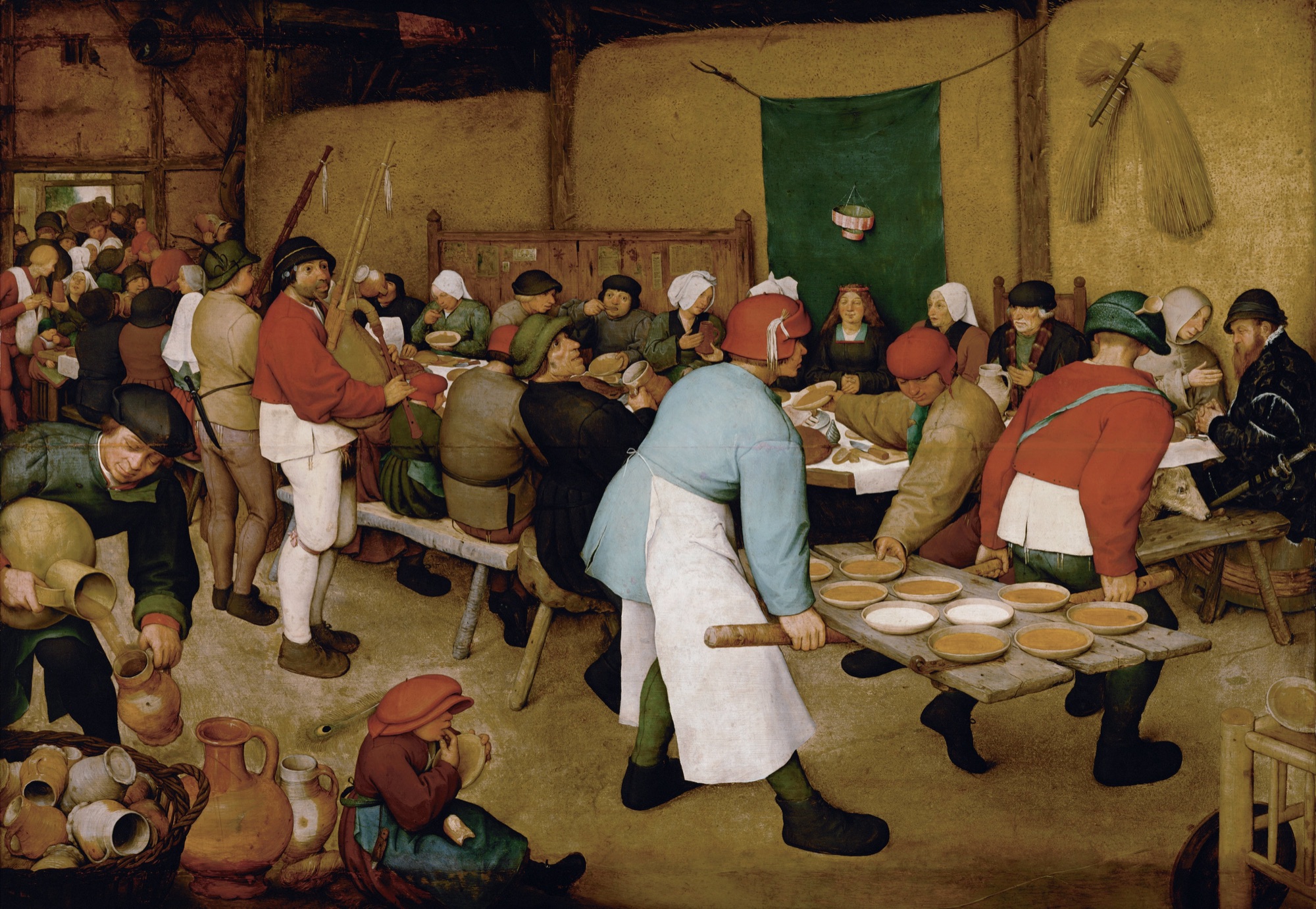
Pieter Bruegel the Elder, The Peasant Wedding (1567). Compare who serves and who is served. Explain whether showing labor necessarily means valuing it. The painting’s title does not establish the position or experience of every figure.
All three images come from the course Image Slides library. A painting is an arranged representation. It can support an interpretation, but it cannot alone prove how an entire class or community lived.
Further comparisons
Pieter Bruegel the Elder, The Harvesters (1565). Look between the workers in the field and the people eating and resting under the tree. Explain how their placement connects a meal to the working day. The scene lets us test Berger’s claim about work; it does not establish what each figure thinks. The Met collection record.
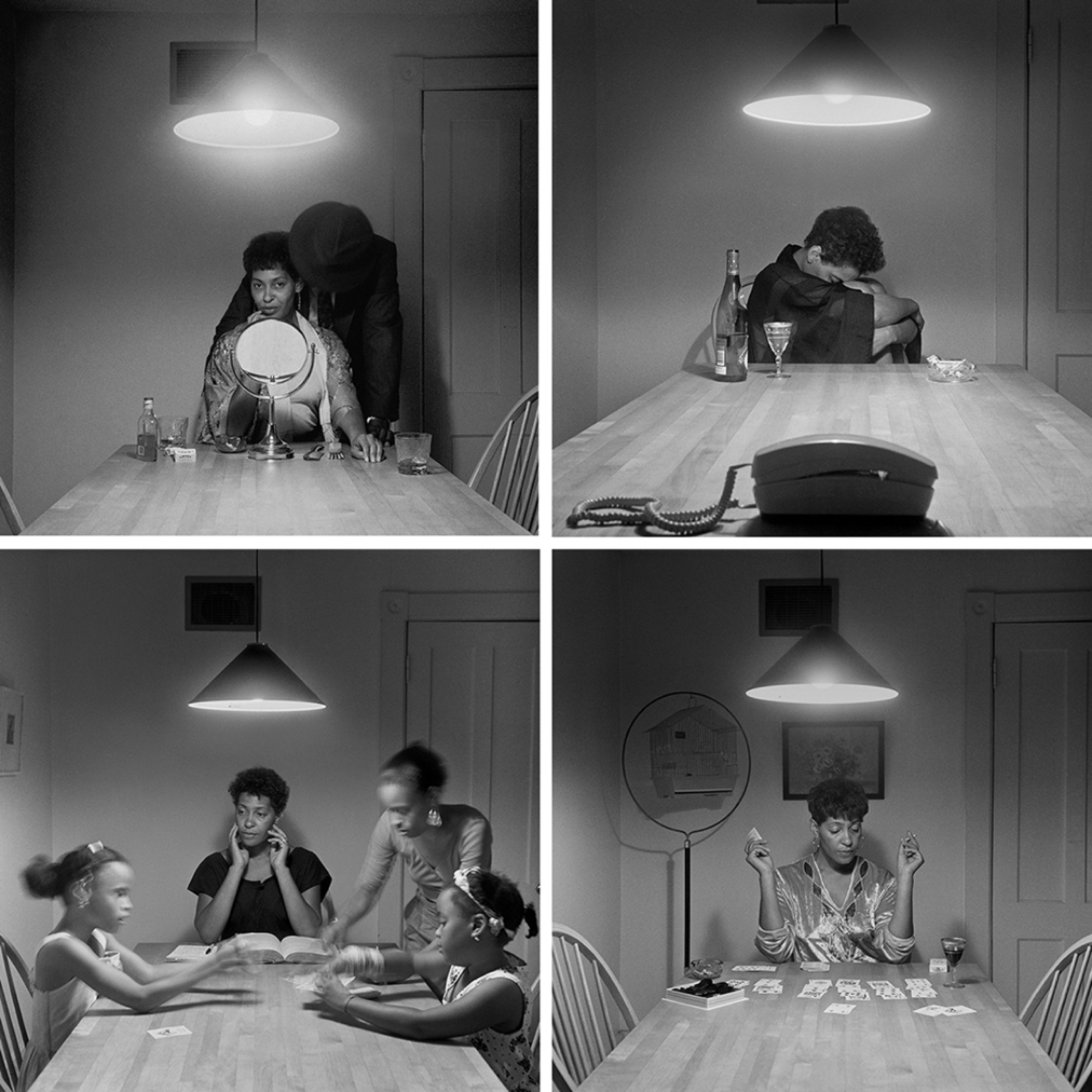
Carrie Mae Weems, Kitchen Table Series (1990), selected images. Compare gestures and relationships across the four images in the supplied montage. What changes while the table and light remain? These are staged photographs from a larger series, not four records of an unarranged family dinner. Consider how care, gender and intimacy complicate a comparison organized around class. National Gallery of Art collection record.
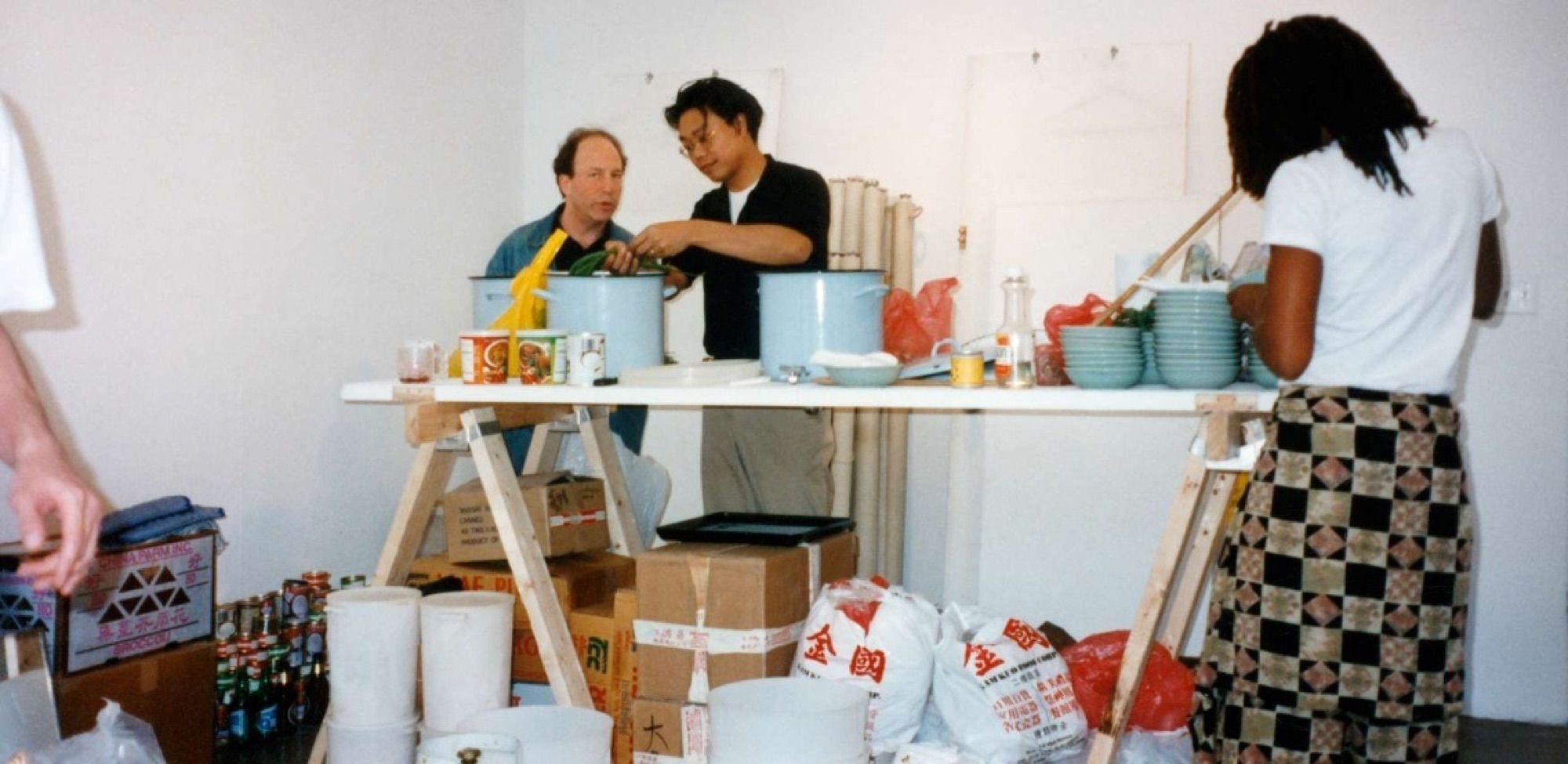
Rirkrit Tiravanija, Untitled (Free/Still), begun 1992; installation view, 1995. Here preparing and sharing food form part of an artwork. Discuss what would count as evidence for interpreting the work: the meal, the room, the actions or the relationships. The photograph records one installation and cannot reproduce the whole encounter. MoMA PS1 account.