Gesture and Pictorial Narrative in Leonardo’s Last Supper
Lesson slides: Download the deck (PowerPoint, 2.5 MB) · image credits
At a glance
| Field | Details |
|---|---|
| Dates | If time permits after Semiotics of the Kitchen |
| Focus | Gesture and Pictorial Narrative in Leonardo’s Last Supper |
| Unit | The Table As Ethical Space |
Objectives
- Change one hand in a group and compare the result with Leonardo’s composition.
- Explain how a neighbor’s response helps give the gesture meaning.
Materials and resources
- last-supper.jpg
Use the works and source readings named below. Keep the full composition visible while looking.
Tasks
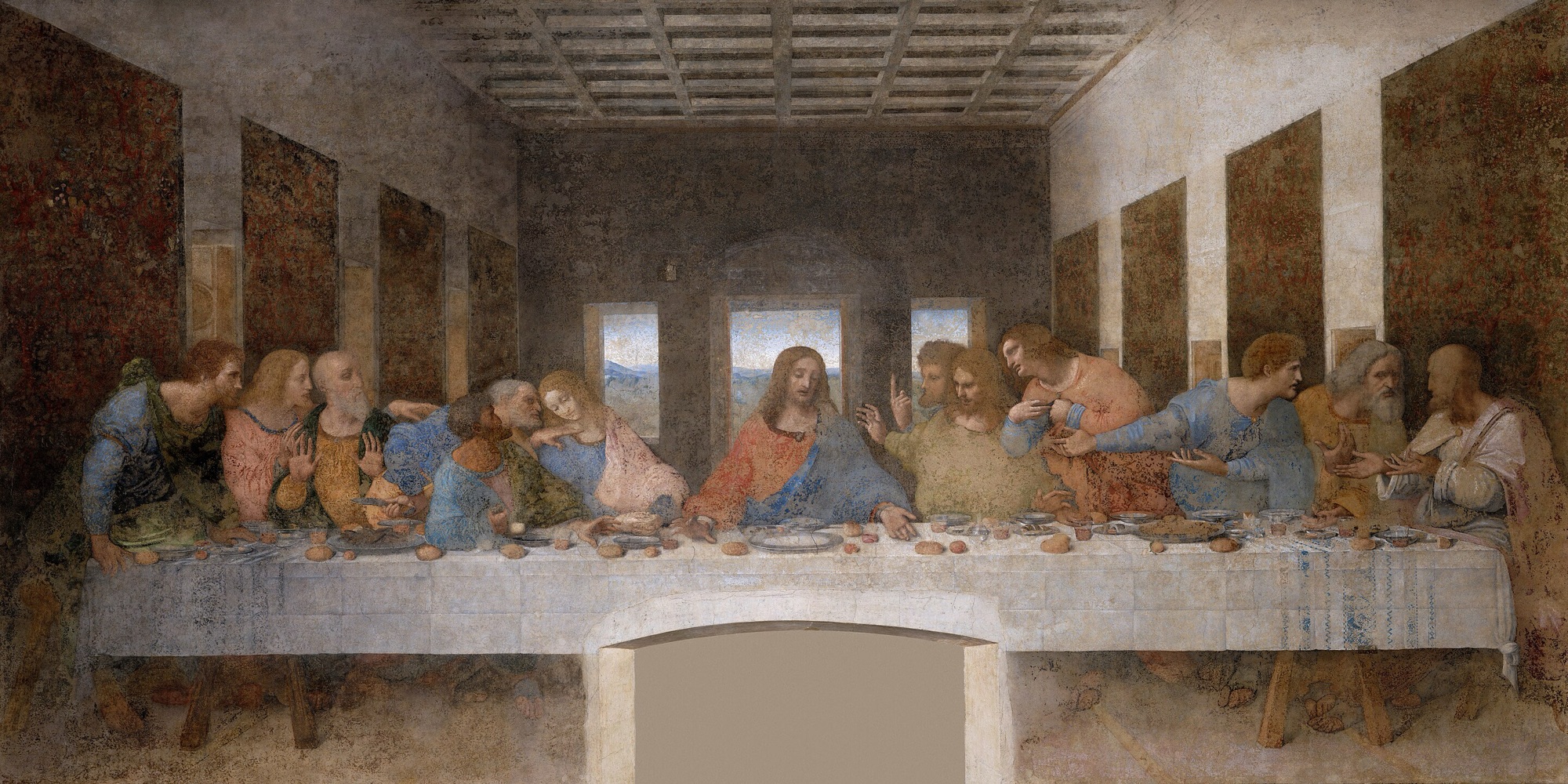
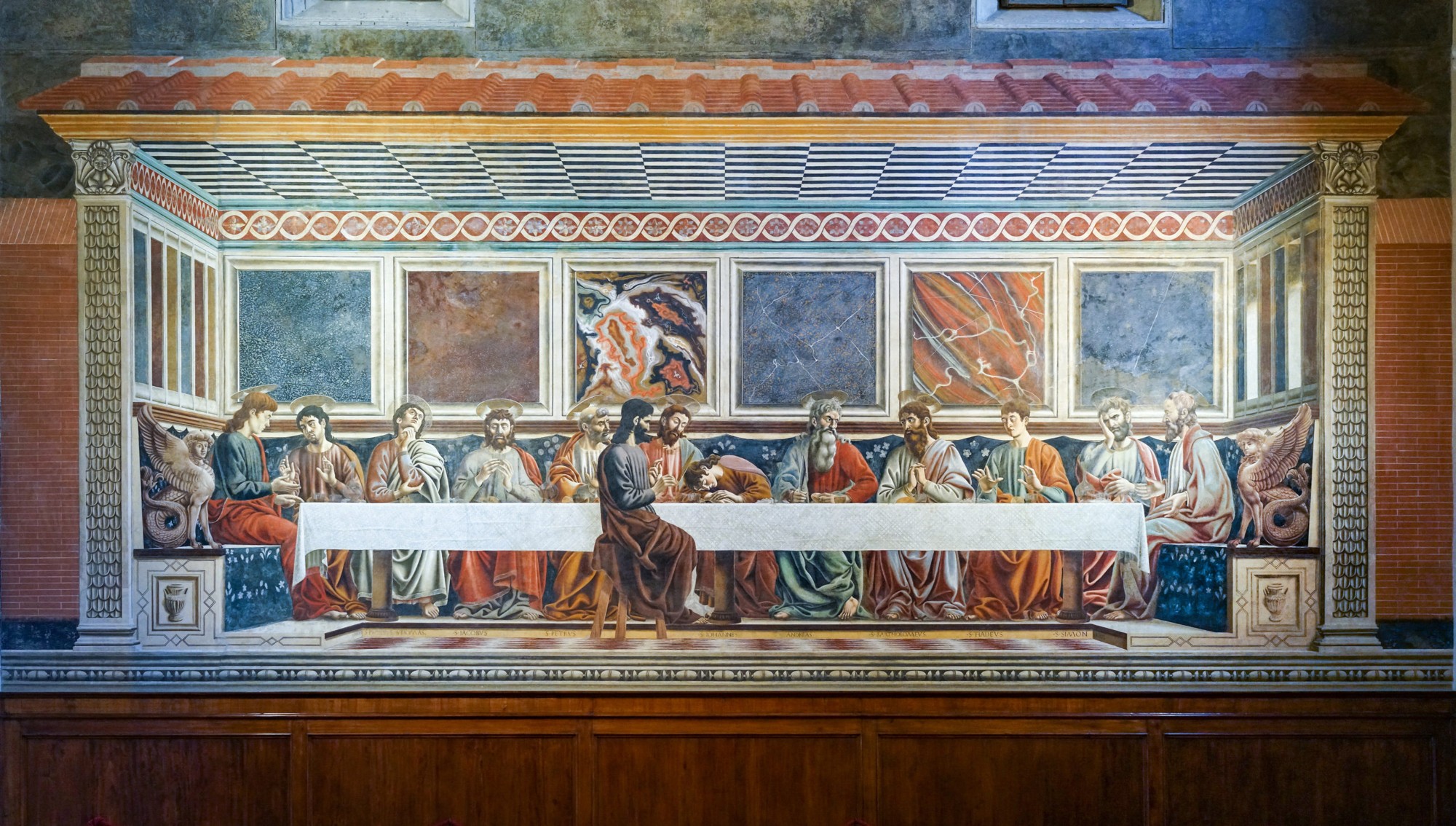
Look at the complete mural and locate Christ before naming the story. Follow a sequence of hands along the table. Recreate one gesture, alter one hand and return to the whole group. Explain how the neighboring figure’s response gives the gesture meaning. Compare the long table with Castagno’s earlier supper and use the refectory setting to test your reading.
Assessment and homework
Ungraded discussion if time permits after the kitchen section.
Description
Change one hand in a group, then return to the whole mural and its refectory. Explain how a neighbor’s response gives the gesture meaning.
Teaching reference
The shared meal: order, narrative and participation
The Shared Meal source connects sacred gathering, household behavior and public exchange. Castagno and Leonardo give the same religious subject different arrangements. In Castagno, Judas is physically separated on the near side of the table. Leonardo places the disciples in reacting groups around the central Christ. The comparison helps students explain how narrative meaning comes from placement and gesture, rather than only recognizing a famous story.
Leonardo’s chosen announcement makes a shared meal the setting for a break in trust. The painted room also addresses a real refectory in which people ate together. Show that setting without treating the viewer as if they occupied the exact historical place of the original community. The ethical connection is available through the pictured relationships: belonging, accusation, loyalty and betrayal.