Media and Mediation
Current assessment route, October 11: this page retains the earlier teaching sequence. The Film Letter is A1; timed analysis is A2 on October 28; the research checkpoint is Course Skills on November 13; A3 is November 27 and A4 is December 16. Earlier task codes and deadlines in this teaching record are historical. Opening direction now develops through the supported October workshops and November 2 review. Use the current register and opening workshops for present requirements.
Lesson slides: Download the deck (PowerPoint, 12.8 MB) · image credits
At a glance
| Days | 3, Wed double, Thu single, Fri single |
| Dates | Wed 2 Sep · Thu 3 Sep · Fri 4 Sep |
| Band/Unit | U1 Introduction (Foundations of Media Analysis) |
| AO focus | AO2 |
| Diagnostic | The unseen extract, D1: the Breaking Bad cold open, screened twice, ten minutes written, ungraded |
| Deliverable | the Denotation-Only Paragraph: denotation only, rehearsed in class Friday on one clip, then written as graded homework on the Stranger Things cold open, due Mon 7 Sep on ManageBac (decided Fri 4 Sep) |
| Feeds | A1 (the denotation discipline is the foundation A1 is marked on) |
| Homework | D2 (Thu): the overnight media-use log, set Thursday and collected Friday at the door (moved off D1 on Wed 2 Sep) · D3 (Fri): the Denotation-Only Paragraph on the Stranger Things S1 E1 cold open, clip sent by the teacher, due Mon 7 Sep on ManageBac before P6 · D1: blog set-up begun · D2: digital-identity mind map · all week: the class glossary (≥5 entries by Friday) |
Objectives
By the end of this lesson, students should be able to:
- Name the four Key Concepts unprompted and apply each, orally, to a text chosen from the opening menu
- Explain, with one concrete example, why a media text is a version and not a window
- Write a paragraph that contains zero interpretive claims and survives a peer challenge to find one
- Log at least five glossary entries, term and definition in English, by Friday
- Write ten minutes on an unseen extract, cold, so the course has a baseline of what each student does with camera, sound, mise-en-scène and editing before any of it is taught
Goal
Students use Language, Representation, Industry and Audience to examine media texts in week 1. Three historical examples help them test the claim that media is a version, not a window. They then write a paragraph that describes only what they can see and hear. This practice begins on day three and prepares them to support interpretations with evidence in A1.
How it runs
D1, Wed 2 Sep (double): the opener, the wager, the unseen extract, and the four tools
The opener (~25 min):
First Session Opener: introductions, why Media Studies, how the course runs, the two-year map in one slide.
The deck now carries the why: a Friedlander television as the hook, then three short cases, one per media area and each labeled with the Key Concept it previews: film (the Dr. No and No Time to Die posters: the same hero sold since 1962), news (the 1912 New York Times Titanic front page beside Winogrand’s 1973 press conference: who decides what happened today), advertising (Dior’s J’adore and Sauvage: an ad does not sell perfume): closing on the syllabus’s own sentence about the skill the subject trains.
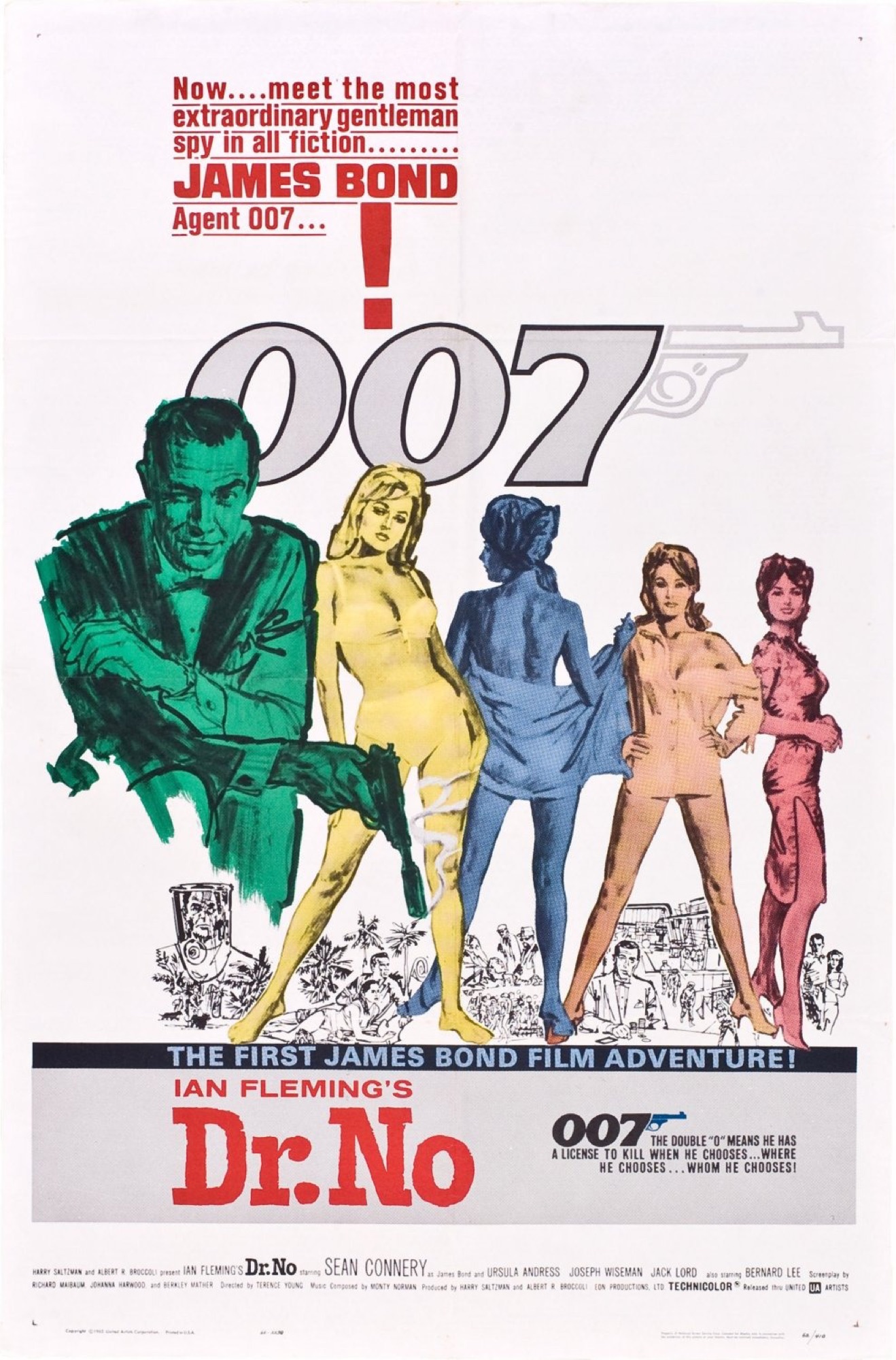
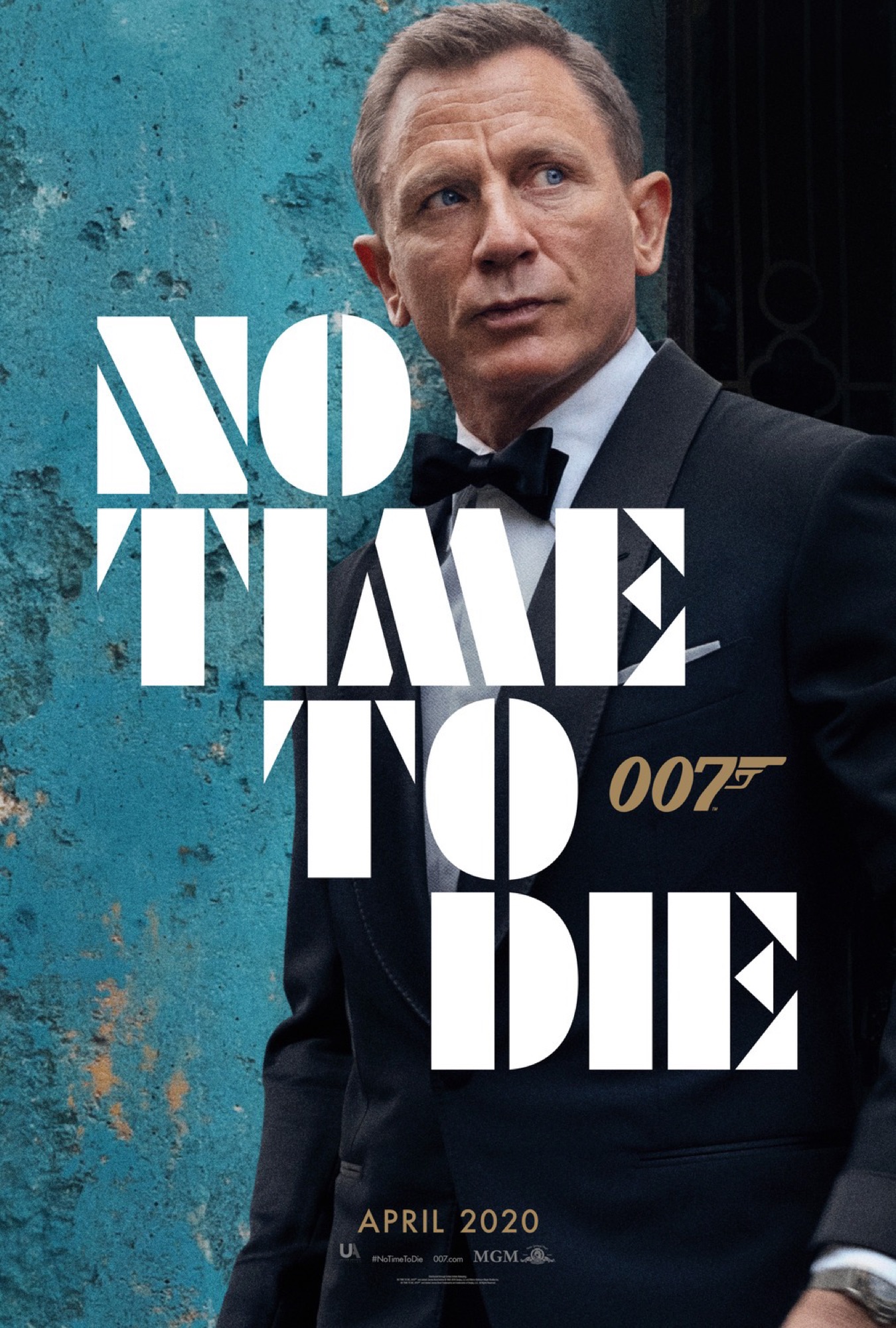
Two minutes a case; the wager follows.
Establish the working language: this is a Cambridge course, examined in English, and the room runs in English. The class glossary starts this week and lives on the wall.
Wed 2 Sep is also A-Level Introduction Days; if the class does not run, fold this day into Thu–Fri per the opener page’s fallback.
The wager (~10 min):
The misconception on the board, from the Teacher’s Resource: “I’m not impacted by media.” Hands up who agrees. Record the count, promise to re-run the vote in June. Then the homework that tests the claim: the media-use log (coursebook §1.1): every media contact from now until tomorrow morning’s P1 class, however small, EN or ZH, platform and minutes. The log covers one night rather than a full day.
Not set on Wednesday (Wed 2 Sep). The log is set on Thursday instead, runs Thursday night, and is collected at the door on Friday; the tally that was Thursday’s starter opens L02 on Monday.
The unseen extract (15 min, ungraded): the diagnostic:
Breaking Bad, S1 E1 “Pilot” (2008, dir. Vince Gilligan), the cold open from the first frame to the title card: trousers falling from a desert sky, the RV, a man in underwear and a gas mask, the video message to his family, sirens, the gun raised toward the road. About four minutes; pin the end at the title card on the copy you screen.
Run it as the exam runs, scaled down: screen once straight through, then once again for notes, then ten minutes writing on the Paper 2 stem in plain words on the board: How does this extract create meaning through camera, sound, mise-en-scène and editing, and who does it show us, how? Students may take notes in EN or ZH. They write the paragraph in English.
Give no teaching, vocabulary sheet or sentence frames before the task so it shows what they can already do. Collect the scripts. Explain that this gives a baseline and is not graded. The same four technical elements appear in every timed analysis from A1 to the June paper.
Content note: no graphic violence in the cold open; the gun is raised, not fired.
Teach: the four Key Concepts (15 min):
Return to the same extract four times, once for each Key Concept. Students apply each concept orally in pairs before writing (the clip they have just written on cold is the shared text; the opening menu stays in reserve): Language (how it is made to mean), Representation (how people, places and ideas are shown), Industry (who made it, and why), Audience (who it is for, and what they do with it). Board anchors stay up all semester.
The mediation demo (~20 min):
a version, not a window, examined through three examples across a century before Photoshop:
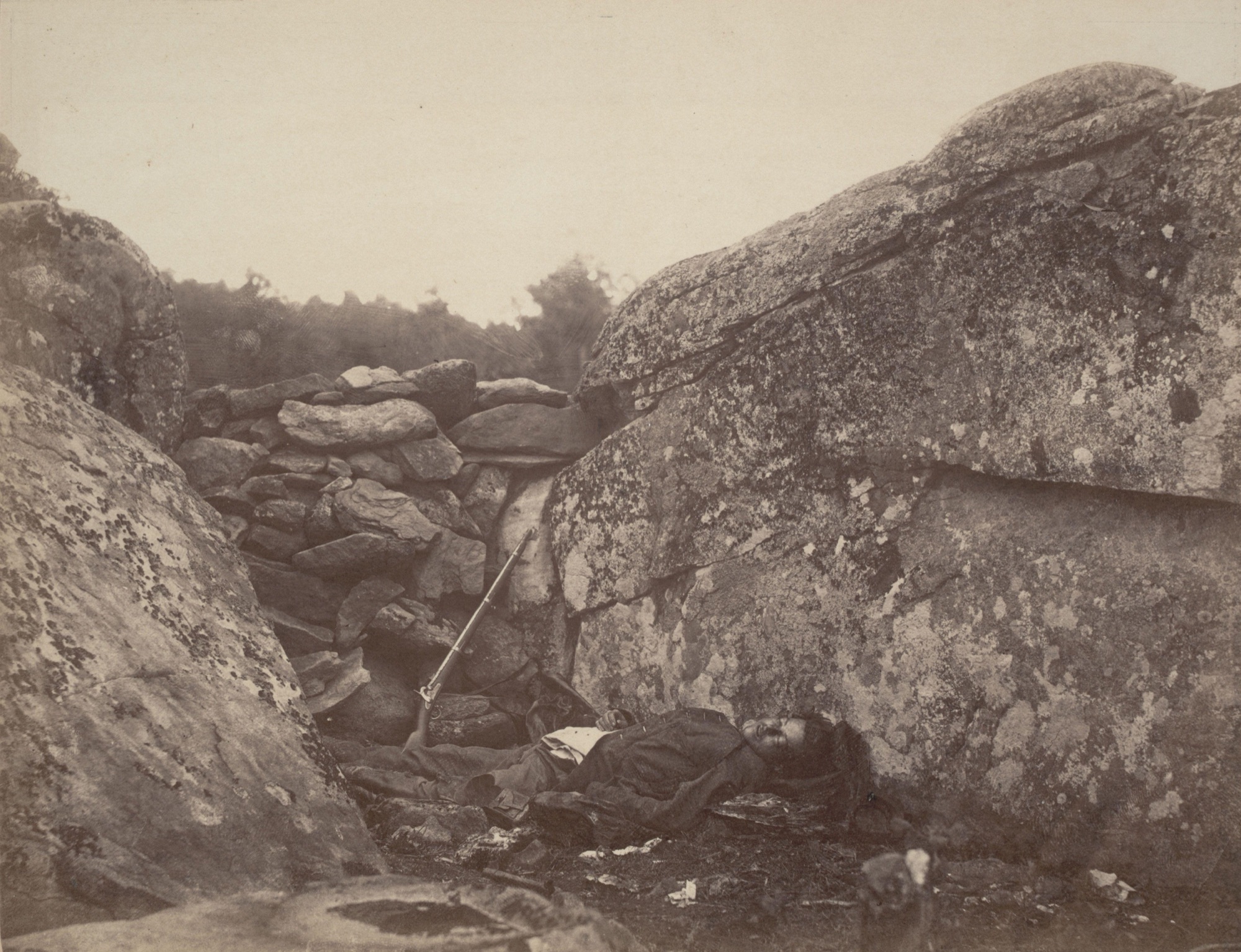
- Staging: Gardner’s Home of a Rebel Sharpshooter (1863): the most famous photograph of the American Civil War, and the soldier’s body was famously moved and posed for the composition, rifle propped by the photographer. The scene was arranged before the photograph was taken.
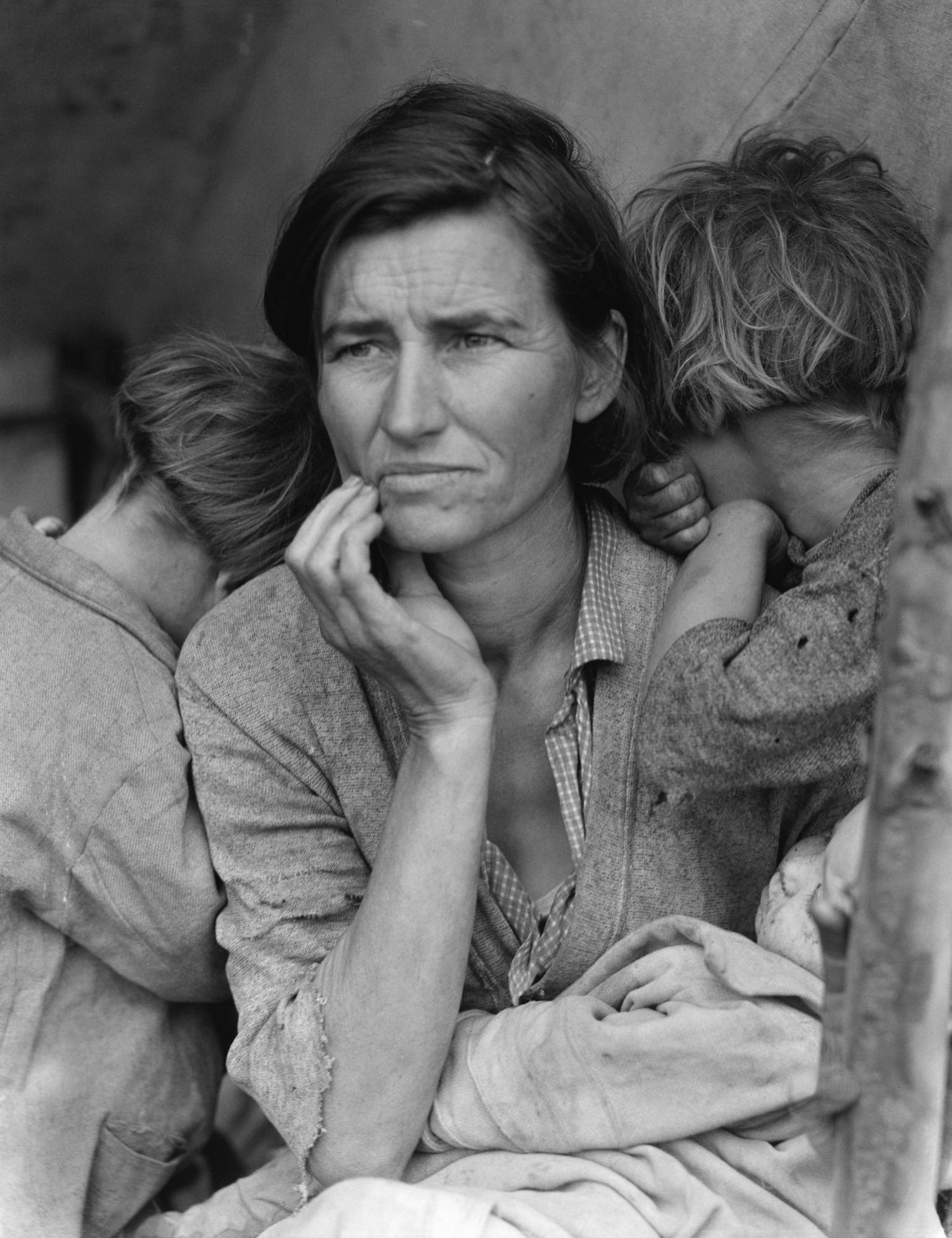
- Selection: Lange’s Migrant Mother (1936): one frame chosen from six exposures, cropped, a distracting thumb later retouched away. The chosen frame excludes the alternatives.
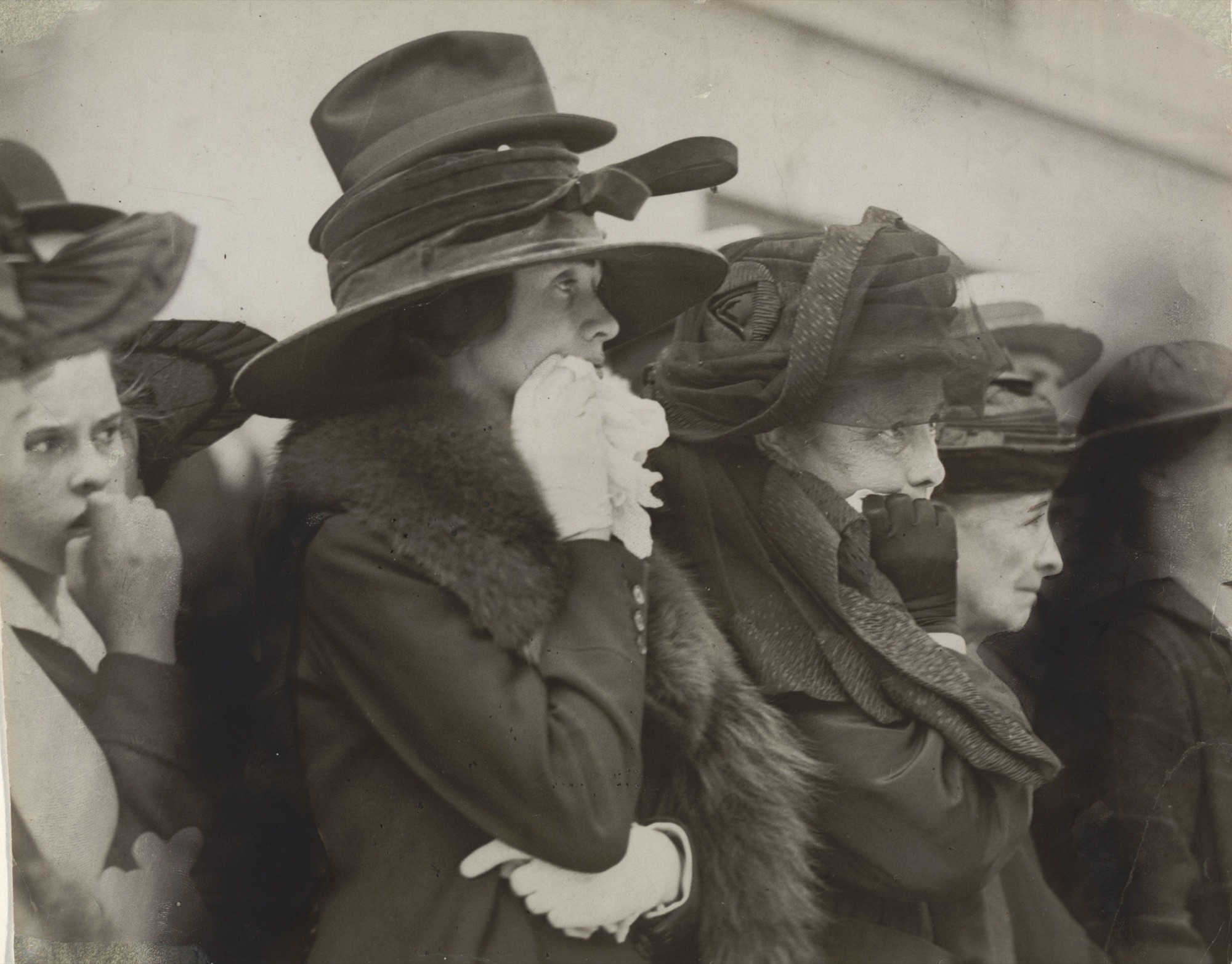
- Anchorage: an Underwood & Underwood photograph (1917): three women watch soldiers march away, and the caption: “Mother, Wife, and Sweetheart…”: tells you who they are and how to feel. The words steer the image.
Then stage one classroom “event” and photograph it once. Give three pairs five minutes to crop and caption that photograph on their phones. Compare the three versions of the same event.
Close (~5 min):
the denotation-only paragraph announced (Friday, in class): one paragraph, describing only. Blog set-up begins as homework this week (mechanics finish at L07; today just the account).
D2, Thu 3 Sep (single, P1): the room’s 24 hours, and Sort Wars
Starter (5 min):
the media-use log, set properly (it was not set on Wednesday): every media contact from now until Friday’s class, however small, EN or ZH, platform and minutes, one line each in the coursebook’s Table 1.4 shape. Collected at the door on Friday, not discussed; the tally and the wager’s payoff (not impacted? everyone in this room is an audience before they are anything else) open L02 on Monday.
Card sort (28 min): Sort Wars
(routine): the 24 concept cards in teams of three, three rounds with a visible scoreboard; every placement justified aloud, and a placement that survives a challenge scores. At least four cards deliberately contestable (“a podcast ad read”, “the seat you watch from”). Contested cards go to the challenge round; disagreements harvested on the board, not resolved.
Review (12 min):
The contested cards argued properly; exit line, written: “Media is a version, not a window, because…” Dense session: if it overruns, shorten the card-sort review, never the sort itself.
Homework:
WS 1.1, the digital-identity mind map (it feeds the L07 blog); the WS 5.2 body map stands in for students who need the more visual, lower-language route. Lexicon entries continue.
D3, Fri 4 Sep (single, P6): the audit, the four concepts, anchorage, and the denotation rehearsal
The lesson was revised on the morning of Fri 4 Sep into five activities. Friday now includes the detailed Key Concepts teaching that Wednesday did not complete. The anchorage comparison replaces the 15-minute Migrant Mother model. Keep the caption activity before denotation so students can distinguish the information in the words from the information in the image.
At the door, and the audit (5 min):
Media-use logs collected and tallied on the board as a headline only: the room’s Thursday-night hours by platform. The L01 wager revisited in one line (not impacted? everyone here is an audience before anything else). Moved here from L02 D1 on Fri 4 Sep; Show the total without opening a discussion.
The four Key Concepts (10 min):
Language, Representation, Industry, Audience, one image and one sentence each from the deck’s Key Concepts slides. They are named as the Key Concepts and pointed at the wall glossary. Nothing more today; Sort Wars already made them argue about the boundaries.
Caption and anchorage, which is the denotation lesson (7 min):
Underwood & Underwood’s 1917 photograph with its caption, then the caption taken away. What the words added is not in the picture; what is left is what a stranger looking at the same picture would agree is there. That is the whole rule for today, and it is taught without the word “denotation”: six sentences about the image go on the board and the class calls each one there or not there (a woman is seated survives; she is worried does not). The not there sentences start the parked list, which gets its name on Monday.
The rehearsal on a clip (18 min, ungraded):
Squid Game S1 E1 “Red Light, Green Light” (Netflix, 2021), trimmed to about a minute from the players walking onto the field to the first player falling, screened twice (3 min), then one paragraph, describing only (10 min). Clip frames on the board: “The shot shows…” / “In the foreground / background…” / “We hear…” / “The camera…” / “It cuts to…”; no evaluative adjectives, and nothing the clip has not yet shown. Most of the room has seen it, and that is the point: the pull to write what they know (“the doll is a killer”) instead of what is on screen (“a doll the height of the tree turns its head”) is exactly the smuggling the hunt catches.
Then the Smuggler Hunt (5 min) (routine): papers trade, each reader circles smuggled connotations, one point per catch, and a paragraph that survives earns immunity.
If projection fails, the paper fallback is Lewis Hine’s Sadie Pfeifer, a Cotton Mill Spinner (1908), shown untitled.
Homework, set and sized (2 min):
the Denotation-Only Paragraph, graded: the Stranger Things S1 E1 cold open (Netflix, 2016), about 90 seconds to the title card, sent to every student as a file today. One paragraph, the same rules and the same frames, headed with the timestamp of the moment being described. Submitted on ManageBac before Monday’s P6 (Mon 7 Sep). Monday opens with a two-sentence check on a timestamp called out in the room, so the paragraph has to be their own. Glossary: at least five entries by Monday. The WS 1.1 mind map continues.
Assessment
| Item | Date | What | AO |
|---|---|---|---|
| Denotation-Only Paragraph | Mon 7 Sep, on ManageBac before P6 | Analytical paragraph, denotation only, written as homework on the Stranger Things S1 E1 cold open; two-sentence verification in class at the start of L02 | AO2 |
Announced on day 1, the Denotation-Only Paragraph is due Mon 7 Sep, the first session of Week 2. On Sat 29 Aug it moved from Fri 4 Sep because the entry rules bar tests and quizzes during Aug 31–Sep 4. On Fri 4 Sep the 25-minute in-class write became homework on a supplied clip, allowing Monday’s L02 to teach connotation on a text students had already denoted. Friday’s ungraded rehearsal uses a different clip; the homework is their second paragraph. Mark only denotation discipline, requiring zero interpretive claims, not stylistic polish. Return it within five working days. See the full register.
Practice
Try each question before you open its answer. The terms come from Cambridge’s own media vocabulary and this week’s class glossary.
1. Which Key Concept asks who made a text, and why?
- a) Language
- b) Representation
- c) Industry
- d) Audience
Answer: c) Industry. Language is how a text is made to mean. Representation is how people, places and ideas are shown. Audience is who a text is for, and what they do with it.
2. Match each photograph to the mechanism it proves.
- Gardner, Home of a Rebel Sharpshooter
- Lange, Migrant Mother
- The Underwood caption
- a) Selection: one frame chosen, the rest discarded
- b) Anchorage: words steering what the image means
- c) Staging: the scene arranged before the shutter opened
Answer: 1c, 2a, 3b. Gardner moved and posed the soldier’s body. Lange chose one frame from six exposures and cropped it. The caption told you who the three women were and how to feel about them.
3. Which sentence is pure denotation?
- a) A worried mother stares past the camera.
- b) A woman is seated, hand at her chin. Two children face away, heads on her shoulders.
- c) A poor family shelters in a tent.
Answer: b). “Worried” and “poor” are interpretations. Denotation records only what is literally there. That discipline is exactly what the denotation-only paragraph rewards.
4. Finish the claim in your own words: media is a version, not a window, because…
Answer: One strong version: because every text is made through choices. Something was staged, selected, or captioned before it reached you. If your sentence names one of those three mechanisms, it works.
5. Replay the mediation demo on your own phone. Take one photo of an ordinary scene. Write two captions that steer it two different ways. Keep both in your notes for Lesson 02, where the caption’s power gets its theorist.
Source quotation
Denotation - the literal description of the sign.
Cambridge International AS & A Level Media Studies coursebook, §2.1, p. 19.
Suggested reading
Read the coursebook section cited above alongside this lesson’s examples and visible vocabulary.