Mise-en-scène and Film Analysis
Handouts: Grand Budapest continuation worksheet (PDF, two pages) · Earlier film openings worksheet (PDF, four pages) · Film analysis glossary (PDF, one page) · Printable course route (PDF) · Course route online
Lesson slides: Lesson slides (PowerPoint, 2.1 MB) · Film Openings and Scene Analysis (reference deck) (PowerPoint, 2.1 MB) · Grand Budapest: Strange Reality (PowerPoint, 4.6 MB) · Mise-en-scène and Creative Intention (earlier reference) (PowerPoint, 2.1 MB) · image credits
At a glance
| Dates | Mon 12 Oct P6 · Wed 14 Oct P6+P7 · Thu 15 Oct P1 |
| Time | Four 45-minute periods. Monday 12:35–13:20; Wednesday 12:35–13:20 and 13:30–14:15; Thursday 08:00–08:45. Room 710. |
| Focus | How openings establish expectations through images, sound and editing. |
| Bring | Your existing opening idea or direction survey, a notebook or laptop, and your current Film Letter project. |
| Make | Wednesday: Phantom Thread notes on page 1; finish page 2 Question 2 for Thursday. Thursday: Grand Budapest technical notes, one paragraph and a visible revision, using the new two-page worksheet. Save relevant viewing notes for C1 research. |
| Next use | Research and concept development lead to the November 13 checkpoint, then script and storyboard work on November 18–19. |
Objectives
- Explain what an opening leads you to expect and what it leaves uncertain.
- Support an interpretation with a precise image, sound, edit or title.
- Develop a provisional idea and identify research that could help you clarify it.
- Write and revise a C2 paragraph connecting camera and mise-en-scène to meaning.
Learn
An opening establishes expectations
A film opening gives the audience a way into its world. It may introduce a person, a place or an action. Viewers begin to form expectations from the information they receive and the way it is presented.
An opening does not need to explain the whole plot. A question left open may create curiosity. This is an enigma, an unanswered question that encourages the audience to keep watching. A relationship, a small action or a distinctive voice may also hold our attention. Explain the response the opening creates for you and support it with evidence.
Technical choices guide that response. A close-up can make a small action noticeable. Sound can direct attention to something outside the frame. Shot duration can give an action time to become uncomfortable or funny. Mise-en-scène, the arrangement of production design, lighting and color within the frame, helps us interpret a person or situation.
Titles name the film and identify credited people or companies. Their style, placement and timing can contribute to the opening’s tone. A title sequence is one part of an opening; it does not always contain the film’s first narrative scene.
Openings to study
For Monday, compare selected passages from F for Fake and Office Space. Use the same three questions for each. The other films in the opening reference bank are choices for later research, not an additional viewing assignment.
| Film | Passage | Focus |
|---|---|---|
| F for Fake | Welles’s opening magic demonstration at the station. | How a speaker’s performance, the camera and editing establish a relationship with the viewer. |
| Office Space | The opening traffic jam. | How reactions to an ordinary situation establish characters and comic tone. |
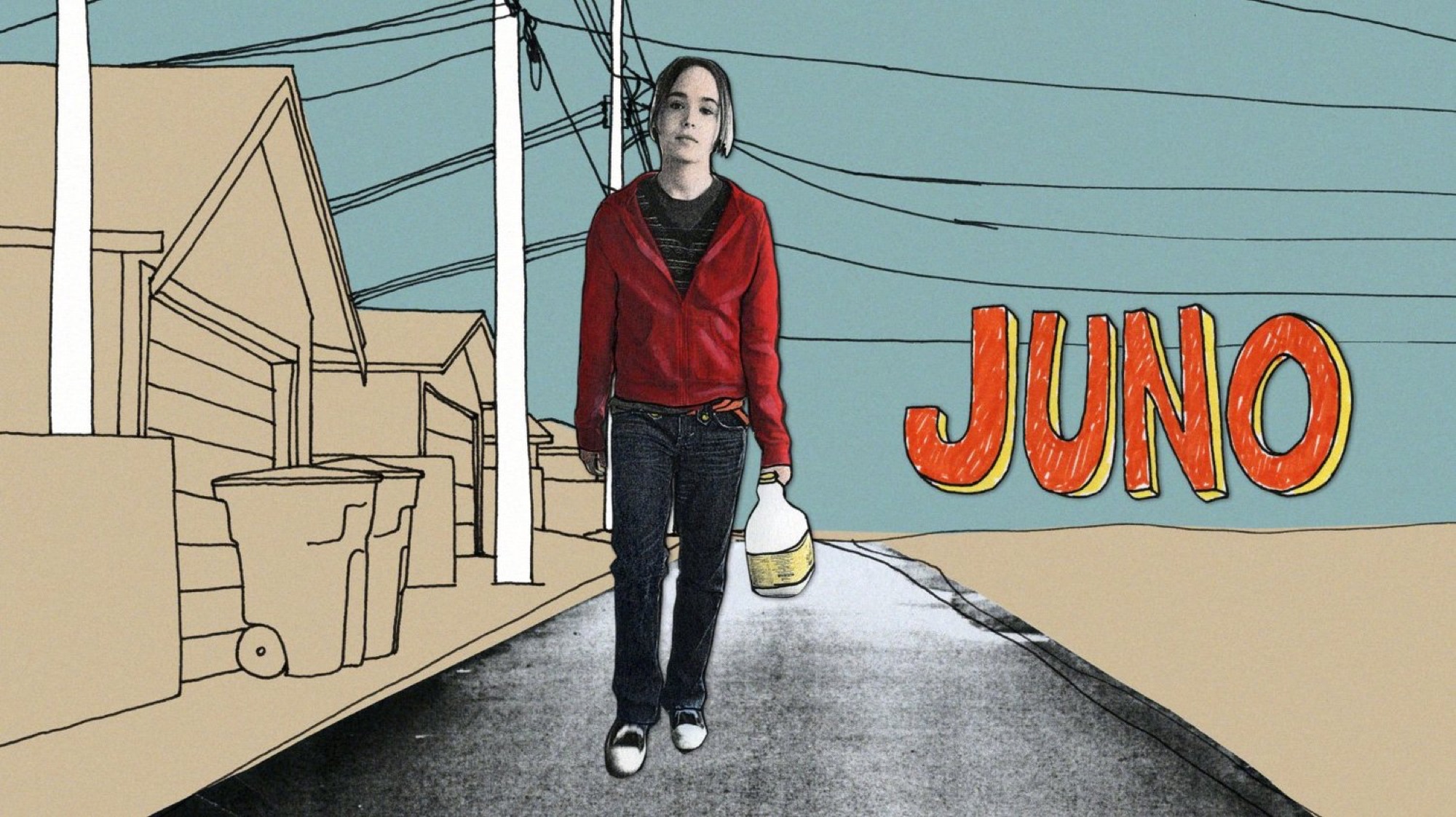
| Juno, supporting stills and optional title comparison | The walk through the neighborhood in the main titles. | How costume, place, movement, music and lettering contribute to a first impression. |
F for Fake is an essay film. We use it to study audience address and the construction of an opening. The C1 brief remains the opening of a fiction film, including titles. You choose references that help you develop your own project.
The genuine Juno frames in the slides show different moments from its main-title sequence. They are not consecutive shots. The designers describe the sequence as following Juno through her neighborhood and establishing her point of view. Its handmade appearance involved substantial production work. Smith & Lee
Research and your own idea
Research helps you understand possible choices and decide what suits your project. You may find an approach useful, decide it would not serve your idea, or identify another opening to study. Explain the reason. You do not have to borrow a technique, story or style from today’s films.
Begin with something the audience could observe: a person, a place and an initial action. A student waiting outside a closed room is one possible classroom example. A repeated movement or a sound from inside could suggest a situation before its cause is explained. Your own opening may begin differently.
Keep the concept provisional. October is for research and concept development. Script and storyboard work follows in November. Filming tests will address specific needs in those plans; today’s task does not require filming.
Practice
Discuss each opening
Make brief notes on an image, action, sound, cut or title that you can identify precisely. Use these three questions:
- What has this opening led you to expect? Consider the people, the world and the kind of story you might be entering. What remains uncertain?
- How has the filmmaker created those expectations? Choose one specific moment. Explain how the images, sound or editing shape your understanding.
- What gives you a reason to keep watching? Explain what the opening has made you interested in, and why.
Alternate question 3: Does this opening give you enough to follow while leaving something to discover? Explain where it finds that balance, or where it loses you.
Use the alternate instead of question 3 when directed. It is not a fourth response. Different interpretations are welcome when they are supported by the opening.
Develop your concept note
Use your existing idea if you have one. Write brief sentences or add exploratory sketches to your existing research record.
| Part | Include |
|---|---|
| Situation | A person, a place and an initial action. |
| Tone | The feeling or attitude you want the opening to suggest. |
| Information | What viewers could understand at this point and what may remain uncertain. |
| Research | One question about your idea and a suitable kind of reference to investigate. |
If you are undecided, compare two possible situations in words. Choose one to investigate further. You do not need a finished pitch, shot list or storyboard.
Check your progress
Read your note to a partner. Ask them to describe the situation they imagine. Clarify anything they could not follow. Save the note with your opening-analysis notes; both contribute to your C1 research and concept development. There is no separate Monday submission or grade.
Source quotation
Creative choices should be based on research, and evidenced and justified in the blog.
Cambridge International, Media Studies Coursework Handbook, for examination from 2021, p. 7.
Mise-en-scene is literally everything you can see in a moving image or print text.
Cambridge International AS & A Level Media Studies coursebook, §2.4, p. 41. This definition introduces Wednesday’s visual-design work.
Suggested reading
Cambridge International AS & A Level Media Studies coursebook, §6.2, “Researching a production,” pp. 146–148. Focus on how research informs a production and its intended audience. This is optional reading, not another homework task.
Wednesday: Phantom Thread
The October 14 class studied Phantom Thread and completed the first worksheet page. Keep those observations for the next lesson. Grand Budapest is the October 15 viewing.
Homework for Thursday, October 15
Complete Question 2 on page 2 of the existing worksheet: “How has the filmmaker created those expectations?” Write about Phantom Thread. Choose one specific moment and use two precise details, including one you selected independently. Explain how the images, sound or editing shape your understanding. About four to six sentences is enough. Bring the worksheet back on Thursday.
This homework is Question 2 only. The revision section, Question 3 and pages 3–4 are not assigned for tonight.
Thursday: Framing and Character
Use the new two-page Grand Budapest worksheet with the film-analysis glossary. Watch the opening passage and another short scene selected in class. Label the scene or action so a reader can locate your example.
Begin with the same work as yesterday: describe a detail and explain what it suggests. The small next step is to name the technical choices accurately. Choose one camera choice and one mise-en-scène choice that support an impression of the same person, place or relationship. Keep the explanation connected to the scene.
Prompt: Explain how camera and mise-en-scène construct one aspect of a person, place or relationship in this extract.
Make brief notes on page 1, then write one paragraph of about four to six sentences on page 2. Choose at least one detail independently. Explain how the choices support your interpretation. Use feedback to revise one sentence or connection and state why it is more precise. Keep the first attempt and revision together.
Use framing, composition, shot size, angle or movement where you can identify them. Pair that camera observation with a detail of costume, setting, props, color or lighting. Symmetry is a balanced arrangement with similar forms on either side of a center line. It describes the arrangement; its effect depends on the scene. Describe what the lighting reveals, including contrast and shadow edges. Do not infer unseen lamps.


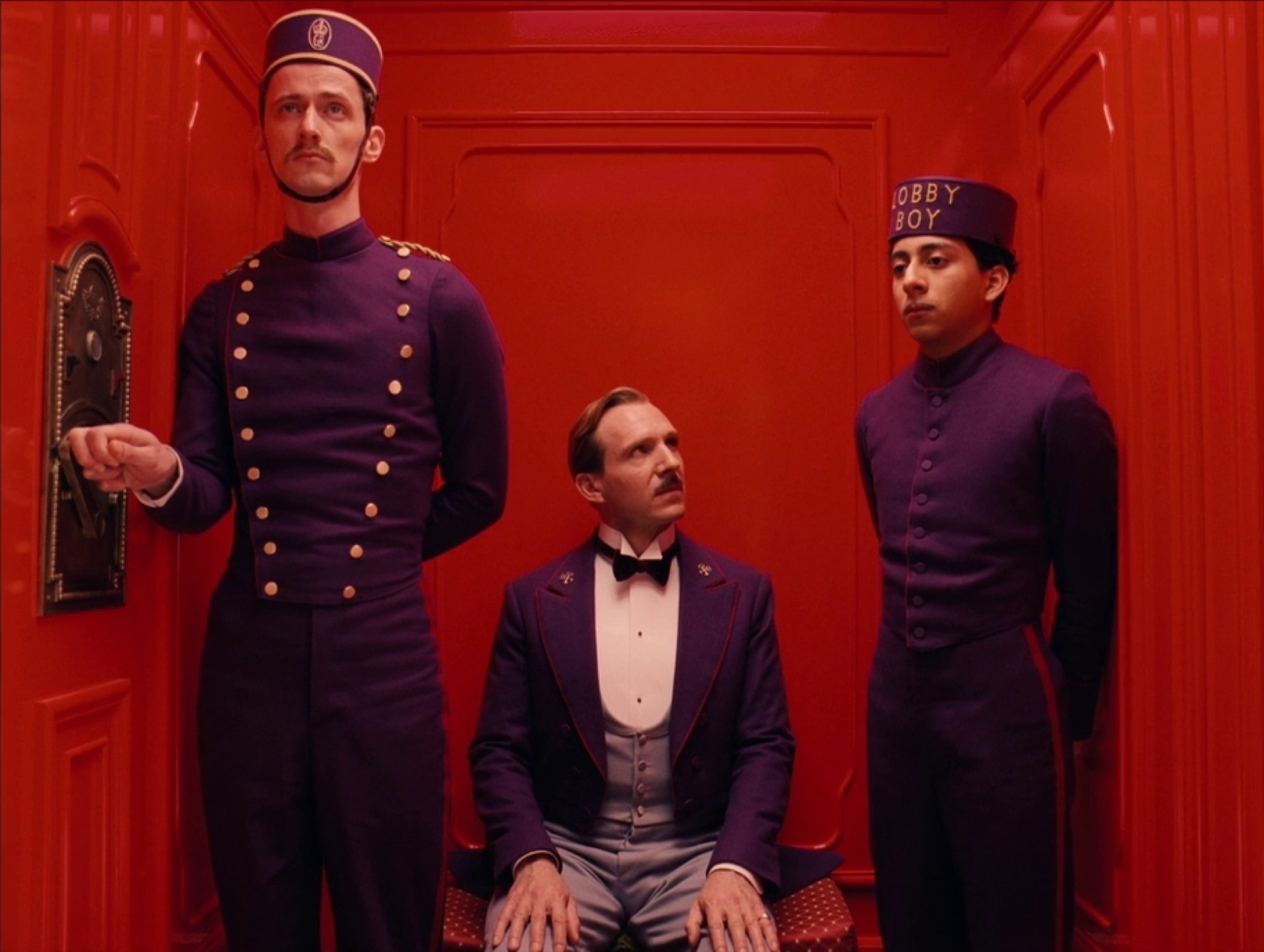
This paragraph and revision supply Camera, Mise-en-scène and Meaning, due Friday October 16 before P6. Grand Budapest replaces the previously assigned Downton Abbey classroom practice. Submit one response, with its revision. The task rubric and deadline are unchanged. Work already begun on the earlier assigned extract may be completed and submitted through that route.
The film practices analytical skills that transfer to C2. A2 itself uses an unseen television-drama extract. Later practice returns to that format.
Assessment and homework
The opening notes support C1 research and planning. Wednesday’s Question 2 homework is due Thursday. Thursday’s Grand Budapest paragraph practices a C2 Section A response and supplies this week’s existing graded Course Skills task. Use the weekly assignment route. Each normal teaching week has one Course Skills assignment or an attainment. Use existing classwork where the brief allows it. Every task produces material for the student’s own C1 portfolio or practices a C2 response. Other class exercises receive feedback without another submission.