Semiotics, Signs and Codes
Current assessment route, October 11: this page retains the earlier teaching sequence. The Film Letter is A1; timed analysis is A2 on October 28; the research checkpoint remains Course Skills, with its current branch and collection arrangements governed by the November 13 lesson and register; A3 is November 27 and A4 is December 16. Earlier task codes and deadlines in this teaching record are historical. Opening direction now develops through the supported October workshops and November 2 review. Use the current register and opening workshops for present requirements.
Related ideas: Semiotics · Framing.
Lesson slides: Download the deck (PowerPoint, 5.9 MB) · image credits
At a glance
| Days | 4 · Mon single, Wed double, Thu single, Fri single |
| Dates | Mon 7 Sep · Wed 9 Sep · Thu 10 Sep · Fri 11 Sep |
| Unit | Film Form and Production |
| AO focus | AO1 |
| Deliverable | Annotated Media Text an everyday media text of your own choosing, annotated with at least six accurate code labels, peer-checked and collected Mon 14 Sep at the start of Cinematography and Visual Meaning · post 0 on the Component 1 blog Thu 10 Sep (a composed photograph, one sentence, tagged film or magazine) · the Photo Story set and shot Fri 11 Sep, posted Mon 14 Sep (the camera task; brief in L03’s register row) · the caption photograph, one frame from Friday’s shoot with a caption that changes how it feels, posted Mon 14 Sep on the blog, dated, not graded |
| Feeds | L03 to L06 (the technical block) · A1 |
| Homework | the Annotated Media Text annotation (set day 1, due Mon 14 Sep), capped at 30 min per day |
Online: The cold open, second rung: the shot list to fill in (PDF) · Your first post: the student guide to post 0 (PDF, two pages) · Candidate B: a Cambridge top-band blog, all 66 posts in date order with the moderator's comments (PDF) · Candidate A: the Level 3 blog beside it, 14 posts with the moderator's comments (PDF) · The annotated media text: the text pack, 21 texts to choose from (PDF, 22 pages) · Semiotics, live: the eight class activities · Semiotics practice: eight self-checking exercises (interactive)
Objectives
By the end of this lesson, students should be able to:
- Use signifier, signified, denotation and connotation accurately in an unprompted sentence
- Sort unfamiliar signs into icon, index and symbol and defend each placement
- Identify the assumed audience of a text and cite the address features that prove it
- Name all four code families and give one example of each from a single still
- Annotate a self-chosen everyday text with at least six accurate code labels (the annotated media text)
- Post a first composed photograph with one sentence on what its framing does, tagged with their media area, on a blog that opens signed-out
- Define myth (Barthes) as a second system of signification and explain how a cultural value can be presented as natural
- Caption one of their own photographs so that it reads differently from the way it read uncaptioned, and name the move as anchorage


Goal



This week introduces semiotics before the technical lessons. Coursebook §2.1 covers it in four pages. The following thirty-eight pages cover the technical elements. Students use Saussure and Peirce to analyze signs, then study how address and anchorage shape a text’s relationship with its audience. Friday introduces the four code families. The next four lessons develop these through practical work with a camera.
How it runs
D1 · Mon 7 Sep: the check, then connotation on the clip they denoted
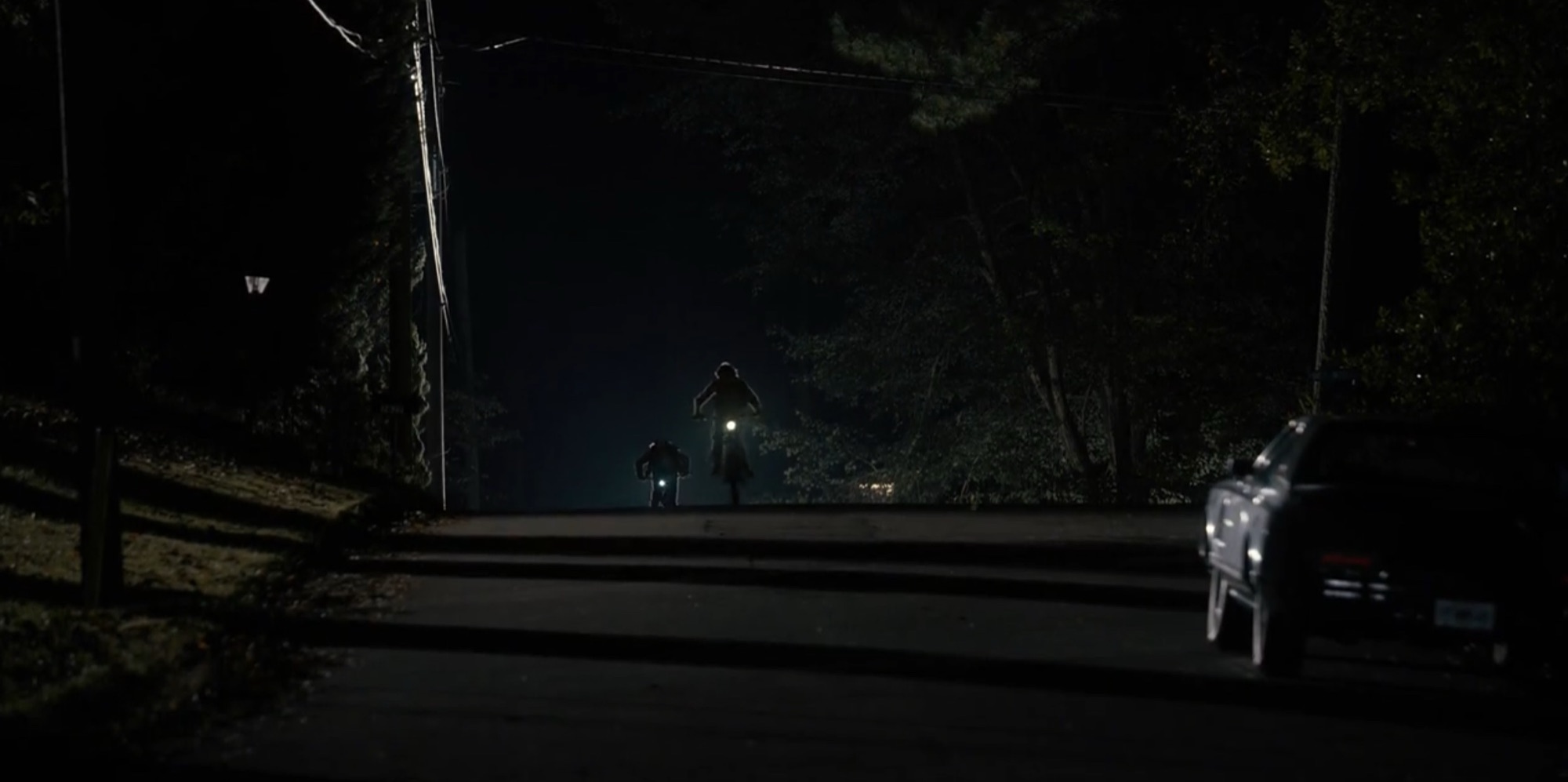
The graded Denotation-Only Paragraph is now homework on the Stranger Things cold open, submitted on ManageBac before this session, so the 25-minute in-class write is gone and the period focuses on connotation. The media-use tally moved to L01 D3.
Starter (8 min)
the verification write (5 min): a timestamp from the Stranger Things clip is called out, the frame is held on screen, and every student writes two denotation sentences on it under the same rules as the homework, on paper, collected. If the paragraph differs substantially from the student’s two sentences, discuss it with them before deciding a mark.
Then the L01 parked list on the board, verbatim (3 min): these words were smuggled on Friday; today they get a name.
Input (12 min)
From Deck U2.2, the pack’s best: sign = signifier (the form) + signified (the idea); denotation vs connotation, worked first on the parked list itself (the homework paragraphs are the denotation column; the parked words are the connotation column, each one owed a signifier), then on the pack’s ad reading; polysemy, one image with several legitimate readings.
The Ladder on the clip (20 min) · rungs 1 to 2
(routine): the Stranger Things cold open screened once more, then two columns in the sketchpad: shows (rung 1, lifted from their own homework paragraph) and suggests (rung 2, new today). Precision rule: a “suggests” entry must point at the signifier that triggers it (“something is hunting him” ← the lights flicker in sequence toward the elevator; the camera stays behind him).
In the last five minutes, show two stills around the room. Students use the same two columns to practice the method on new images.
Close (5 min)
the theory-card spine starts: WS 2.1’s card template, two cards tonight, Saussure and Barthes. Every theorist from now on gets a card.
The annotated media text set and sized (an everyday text, ≥6 code labels, 30-minute cap). The text pack (21 texts, one per page, built Wed 9 Sep) goes out with it: pick one, or bring your own if it passes the one-minute test.
D2 · Wed 9 Sep (double): the Foundation Portfolio, then address and anchorage
The double opens with Component 1. The announcement, guide and media-area commitment are planned for one period so the semiotics work stays within the week.
P6 · the Foundation Portfolio (45 min)
The announcement and the walkthrough (35 min)
Component 1 announced, then the interactive study guide walked section by section on the projector:
- What is submitted (product, Creative Critical Reflection, dated blog);
- The dates (groups and brief registered Fri 18 Sep in The Video Letter: Personal Address; initial design developed through the October workshops and November 2 review, with the final production gate Wed 23 Dec; principal filming during January 24–February 21; the Opening Research Checkpoint as Course Skills on November 13; A3, the planning portfolio and pitch, Fri 27 Nov);
- The blog rule (dated on the day, contributions labeled, no gaps);
- The planning suite, the six artifacts Cambridge names;
- The reflection and its four questions;
- The five marking strands;
- And the two failure modes the Cambridge exemplars show (the misweighted blog, and one application answering all four reflection questions).
The choice explained in Cambridge’s terms: the titles and opening of a new fiction film (two minutes at most, original images and sound), or a magazine’s front page, contents page and two-page feature article (at least four original photographs per candidate, one edition per group member in a shared house style); alone or in a group of up to four with one led area each, and what each route asks of the shoot and the edit.
Best practice from Candidate A and B: research that reappears in the plan, posts dated on the day, a blog that shows the work rather than describes it. Deck slide 12.
The commitment (10 min)
media area committed: every student chooses film or print, logs it on the blog with one line of justification, and that is post 0 of the Component 1 blog.
Before anyone writes it, every blog is opened from a signed-out browser on the projector or a neighbor’s phone; a blog that does not open is set up now, not at home (platform free, but it must show dates on every post).
This block did not run on 09-09; it is D3’s whole period instead.
The student guide Your first post (classes/media-studies/materials/9607-first-post-guide.pdf, two sides, built Wed 9 Sep) is on the desks for it: sheet 1 is the model post 0 taken apart, sheet 2 the six set-up steps in order, the leaving checklist and the post schedule to A3. The choice feeds the case-study document opened in Ownership and Media Institutions and survives until May. Not revisitable next week.
P7 · address and anchorage (45 min)
Address profiling (25 min)
One advertisement on screen and one question to open: how old does this text think you are? Evidence required. The opener is the Super Mario Bros. Movie poster (poster-supermario.jpg in the live app), because its answer is contestable (eight, or thirty-five and nostalgic?) and forces the evidence rule.
Then three contrasting texts, chosen Wed 9 Sep from the eight the speed round has already flashed:
The Dior J’adore print ad (adult woman, money, aspiration; indirect address, the model looks past you; the copy is first person, so the text puts I love in your mouth).
The Froot Loops box (a child on the front, Toucan Sam looking straight out, FREE, collect all 5; a parent on the nutrition panel and the sweetened multigrain line, so one text with two readers).
The Ofcom Broadcasting Code cover (a working broadcaster: no face, no mood, no pronoun, three regulatory titles assumed as known; for everyone is the only concession).
Deck slide 20 keeps its three generic types (luxury ad, broadsheet front, app splash) by decision on Wed 9 Sep: it is the frame, the app supplies the texts, and the slide is not to be rebuilt to match.
Small groups build an implied-reader profile for each: age, gender, income, knowledge assumed, mood invited, pronouns used.


Groups exchange profiles and question each other’s claims using evidence from the text. Compare formal and informal address, then direct and indirect address. Ask how the text addresses an existing audience and how it encourages readers to see themselves.
Anchorage (15 min)
L01’s Underwood photograph returns: the caption that told you who the women were now has a theorist’s name, anchorage (Barthes), text pinning down which of a polysemic image’s meanings you take.
Relay is words and image taking turns.
Each pair then writes three captions for one image: one to suggest sympathy, one suspicion and one comedy. Read the captions aloud and compare their effects. The image stays the same.
Close (5 min)
One paragraph: “This text addresses me as … but I am …”
D3 · Thu 10 Sep: your blog, and the first thing on it
Neither Cambridge example blog starts with a proposal or a declaration: Candidate B’s first post is four photographs and a sentence, Candidate A’s is research on a preliminary scene, and the syllabus asks only that the blog “is started at the beginning of the project” and shows the process.
Post 0 is now the first piece of work: one photograph, composed on purpose, one sentence on what the framing does, tagged film or magazine, which is the exercise the moderator called “a useful first exercise for both video and print briefs.”
The media area is still chosen today; it is a tag, not a paragraph.
Starter (5 min)
The two Cambridge blogs’ first posts side by side, two minutes: Candidate A page 2 (an essay on a Criminal Minds interrogation, five posts before the film is mentioned) and Candidate B page 2 (four photographs of a field and one sentence, 7 September). Both are dated and in order; the difference is size and direction.
Then the guide (classes/media-studies/materials/9607-first-post-guide.pdf) on the desks, sheet 1 on the projector, and the one question before anything is typed: does the platform you are about to choose show the date on every post without opening it?
Set-up (15 min)
As run on 09-10, on free platforms; Friday moves everyone onto blog.classroomtools.io. Complete steps 1 to 3 of sheet 2: a platform that shows dates, one blog per student with their name on it, public.
Neighbors test each other’s blog from a signed-out browser or a phone that has never seen it. A blog that asks for a login is fixed now. Limit time spent choosing themes and profile pictures. Appearance is not marked.
The photograph (8 min)
In pairs, within reach of the room: corridor, stairwell, courtyard, window. Before taking the photograph, each student tells their partner where they will stand, what the frame excludes, and what will appear large or small. Each takes one photograph. Return to the room at the eight-minute mark.
Post 0 (10 min)
From the model on sheet 1: the photograph, a title that says where and when, one sentence in the shape choice then effect, the tag film or magazine. Under forty words. No paragraph about plans; a student who starts one is pointed at Candidate B page 2. The tag is the media-area decision, and it is not revisited next week.
The address (5 min)
Every address onto one list, each opened on the projector from a signed-out browser. This list is the hub Cambridge asks for at moderation, started on day one.
Close (2 min)
The leaving checklist on sheet 2, ticked in pairs. Anyone whose blog is not open leaves with the guide and a Friday deadline; the final deadline is Mon 14 Sep at the door, because the camera exercise that day is the first post that must land on a working blog.
D4 · Fri 11 Sep: finding a direction, in ten photographs, and out shooting
The first blog assignment is a photo story, ten photographs that tell a story, set after a look at photographers who build narrative through sequence. It takes the place of the six-shot rebuild as the camera task (the six shot types now live inside the story, shot in Thursday’s workshop), and it is the direction-finding this session was for: the story a student chooses to tell is the direction their product takes. Brief: Camera, the Photo Story, due Mon 14 Sep.
As run: the class went outside to shoot, and one outing produced both the frames the photo story starts from and the single photograph for the caption exercise set at the close.
The move to the class site (7 min)
The blogs now live at blog.classroomtools.io, the course’s own site, built on 09-10 after the morning session: addresses and passcodes handed out on paper, one per student; each logs in on a phone and re-posts post 0 there, the same photograph and sentence, tagged and labeled preliminary exercises, with one line at the end saying it was first posted on 10 September on the platform they used.
The site stamps the date, so nothing can be backdated, and the hub page at the root is the address Cambridge gets at moderation.
The free-platform blogs from Thursday are abandoned, not deleted. The reprinted guide (classes/media-studies/materials/9607-first-post-guide.pdf) describes the site.
Retrieval (3 min)
The two briefs said back in Cambridge’s words by the room: the opening two minutes of a new fiction film; a magazine’s front page, contents page and two-page feature, four original photographs each. Then the sentence that runs the period: both begin with a story told in pictures, and by the end of it something is withheld.
The photographers (12 min, from 15 to pay for the move)
Five sequences on the projector, each read for what happens between frames, not inside them.
Jason Fulford, The Mushroom Collector: pairs of pictures that mean something together they do not mean apart; ask what frame 3 does to frame 4.
Masahisa Fukase, Ravens: one motif carried across a book until it turns from bird into grief; ask when the ravens stop being ravens.
Duane Michals, a six-frame sequence: a story with a beginning, a turn and an end in stills; the closest thing to the task.
Cindy Sherman, Untitled Film Stills: single frames that are the openings of films that do not exist, who and where in one shot, the withheld thing everywhere.
Gregory Crewdson, one frame: a whole story implied, which is the magazine student’s problem, one picture that has to carry a page.
Two questions per sequence: what do we know, and what is being kept from us? Genre words go on the board as the room supplies them, and that list is the genre gallery.
Per the exam-example rule, a Chinese photographer is an aside if one comes up, not the core. Image sourcing follows the standing rule: the best images for the point, found wherever they are; none of these are in the vault’s library.
The brief (7 min)
The photo story set from the page: ten frames, an opening with something withheld, the six shot types inside it, thirty frames shot and ten chosen, the contact sheet posted with them, one caption each in the shape choice then effect, one closing sentence on what it teaches the product. The frames are shot today, on the outing; the ten are chosen, captioned and posted on Monday 14 September in class.
Out shooting (14 min)
Students take the brief with them to shoot in the courtyard, stairwell or on the walk outside. They choose locations that suit the story and fit the available time. Two things come back from the one outing, and students should know which is which before they leave: the frames the photo story starts from, and one photograph they want to caption.
The story page of the earlier plan travels with them and is written from the frames rather than before them: who the story is about and where; what is withheld; the people, places and kit actually available this week, which is the practical limit on the story; two genres and one comparison text for each; up to three possible partners and what each brings.
Pairs read each other’s page and ask the two questions from the photographers. Pages collected and returned Fri 18 Sep for the group registration.
Close (5 min)
the caption set first: one photograph from today, one caption that changes how it feels, posted Monday beside the six shot types, with one line on what it read as before the caption and one on what it reads as now. Students apply Wednesday’s anchorage work to their own photograph, using the Underwood captions as the model. Dated on the blog, not graded, and the point said plainly: the photograph never changed.
Then the road map: Monday’s two posts, the story and the caption, Parasite in the Wednesday double, Thursday’s reading of it, groups and brief registered Fri 18 Sep, the lock Mon 12 Oct, A3 Fri 27 Nov.
The sentence about equipment in hand: sound, mise-en-scène and editing each get the same treatment, one dated preliminary post each, ending with what it teaches the opening. Annotated media texts are collected Monday.
Assessment
| Item | Date | What | AO |
|---|---|---|---|
| Denotation-Only Paragraph | Mon 7 Sep, on ManageBac before P6 | Analytical paragraph, denotation only, written as homework on the Stranger Things S1 E1 cold open; two-sentence verification write opens this session | AO2 |
| Photo Story | set and shot Fri 11 Sep, posted Mon 14 Sep | A story in ten photographs with the six shot types inside it; the camera task, set here after the photographers and shot on the outing, posted Monday in L03 | AO1 + AO3 |
| Annotated Media Text | Mon 14 Sep (was Fri 11 Sep; moved Wed 9 Sep) | Annotated everyday media text, ≥6 accurate code labels; homework-based, set day 1, collected at the start of L03 | AO1 |
Use the weekly assignment route. Each normal teaching week has one Course Skills assignment or an attainment. Use existing classwork where the brief allows it. Every task produces material for the student’s own C1 portfolio or practices a C2 response. Other class exercises receive feedback without another submission.
Practice
Try each question before you open its answer. Have your Saussure, Barthes and Peirce theory cards beside you; the terms are collected in the media vocabulary glossary.
1. A sign has two sides. Name both, and say which is which for a red rose.
Answer: The signifier is the form: the rose itself, its shape and colour. The signified is the idea it triggers: romance, passion. Saussure’s split, and the base of every analysis in this course.
2. Which of these is a connotation of the color white, in the set the exam trades in?
- a) A wedding dress photographed against gray
- b) Purity
- c) The lightest value on a tonal scale
Answer: b) Purity. The dress is a signifier that uses that connotation. The tonal value is denotation territory. Connotation is the cultural meaning a signifier triggers, and it is taught, not natural.
3. One image, several legitimate readings. The term is…
- a) anchorage
- b) polysemy
- c) relay
Answer: b) Polysemy. Anchorage is what a caption does about it: text pinning down which of the readings you take. Relay is words and image taking turns to carry the story.
4. A portrait, a footprint, a national flag. Sort them into Peirce’s three sign types, and say how each type means.
Answer: The portrait is an icon, it means by resembling. The footprint is an index, it means by physical trace. The flag is a symbol, it means by convention alone. A photograph is the interesting case: an index that looks like an icon, because light really did touch the sensor.
5. Name the four code families, and give one example of each from a single still.
Answer: Technical codes: camera, light, edit. Symbolic codes: objects, colour, gesture, dress. Written codes: any text in the frame. Audio codes: sound, music, silence. From one still: a low angle, a lit face, a black suit, a headline, and the hum the room would make.
6. Take any advertisement you saw today. Answer in two sentences: how old does this text think you are, and what in the text proves it?
Answer: No single right answer. A strong response names an address feature as evidence: the pronouns used, the knowledge assumed, the mood invited. That profile is the text’s mode of address.
7. Build one connotation chain of at least three links, starting from a signifier in the exam set (red, white, black, the rose, the dove, the suit). Then challenge one link: who taught you that?
8. A logo is presented as proof that its owner is naturally creative and independent. Explain how that reading could become myth in Barthes’s sense. How is that different from checking a story about the logo’s origin?
Answer: In myth, an existing sign becomes the signifier in a second system. A culturally produced value, such as creativity belonging naturally to a brand or its customers, is made to appear self-evident. Identify the sign, the value and the way the text naturalizes it. The Apple/Turing origin story is a separate historical claim that needs evidence. A false story is not, by itself, Barthes’s definition of myth.
Source quotation
Semiotic analysis is the study of signs and the meaning that they generate.
Cambridge International AS & A Level Media Studies coursebook, §2.1, p. 19.
Suggested reading
Read the coursebook section cited above alongside this lesson’s examples and visible vocabulary.