Millet and the Dignity of Labor
Study slides: Millet and the Dignity of Labor (study slides, PDF)
At a glance
| Field | Details |
|---|---|
| Dates | Tue 10 Nov P6/P7 |
| Focus | Millet and the Dignity of Labor |
| Unit | The Table As Ethical Space |
Objectives
- Explain how Millet’s treatment of gesture, scale and light can give dignity to physical labor while showing its hardship.
- Distinguish respect for a worker from an idealized account of the conditions of her work.
- Understand how Berger’s two essays connect Millet’s treatment of the body to the history of oil painting.
Materials and resources
-
Shawn Grenier | The Canvas, Why Did the Elite Fear the Gleaners? (2022). Optional further viewing; the class reading at 3:22–5:41 supports the explanation below.
-
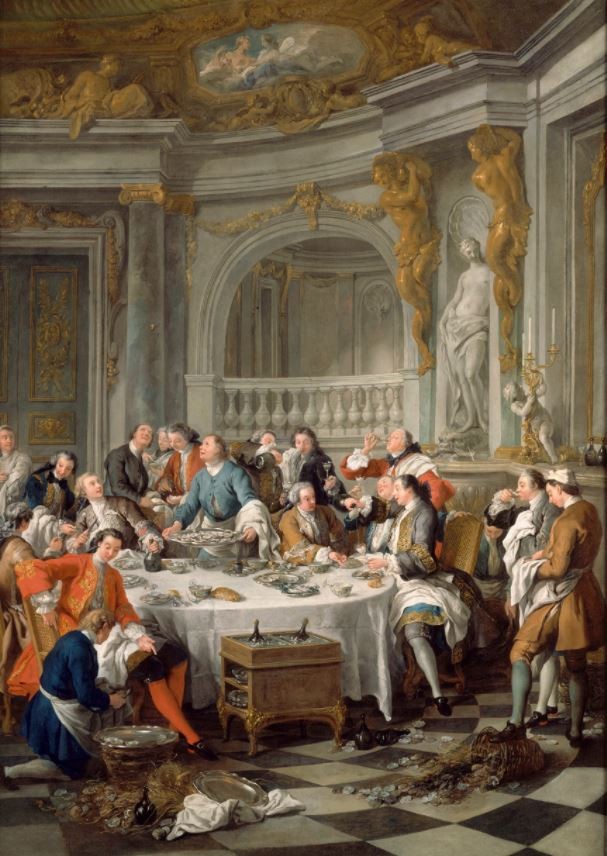
The Oyster Lunch: illustrated A4 info sheet · Video guide and source notes. Optional support for the existing opening comparison.
-
Jean-François de Troy, Luncheon with Oysters (1735)
-
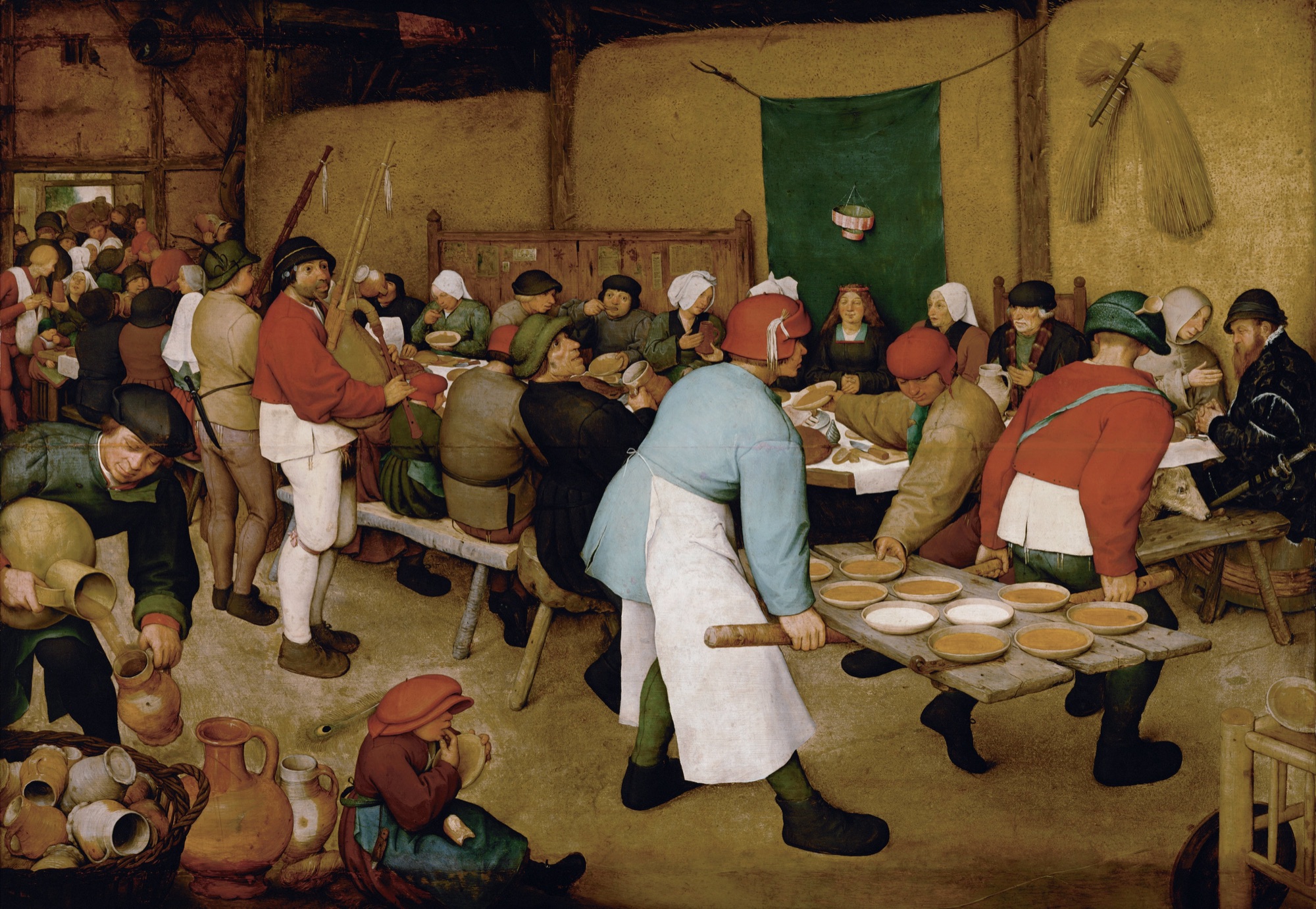
Bruegel, The Peasant Wedding
-
food-millet-gleaners.jpg
-
food-harvesters.jpg
-
berger-portraits.pdf
-
class-gesture-and-documentary-voice.pdf
-
Millet and the Dignity of Labor (study PDF)
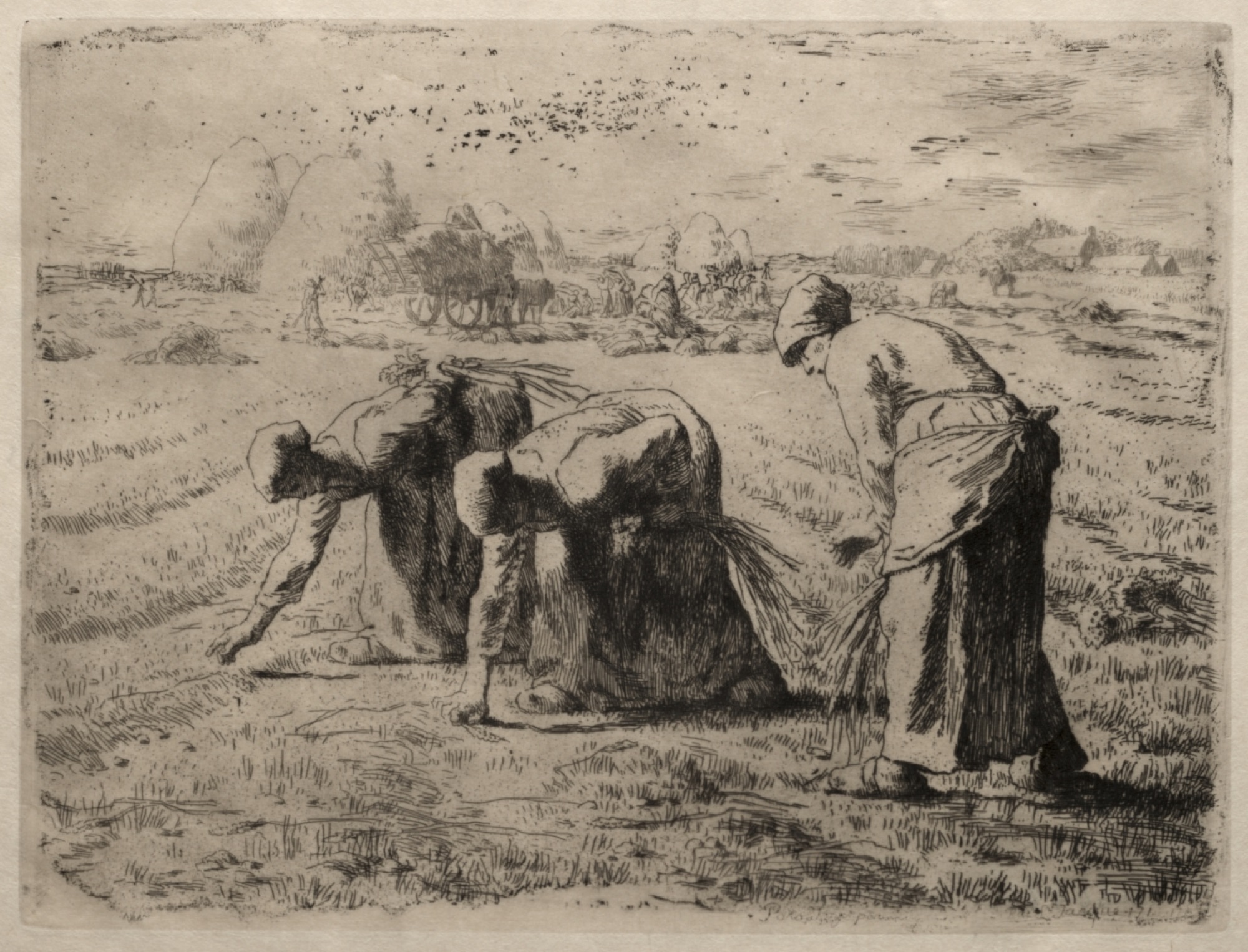
The study PDF includes the entire oil painting, Millet’s earlier gleaners etching and the appended Berger context supplement. The supplement also includes the complete Peasants Going to Work etching (1863, The Met, 17.21.43, public domain).
Tasks
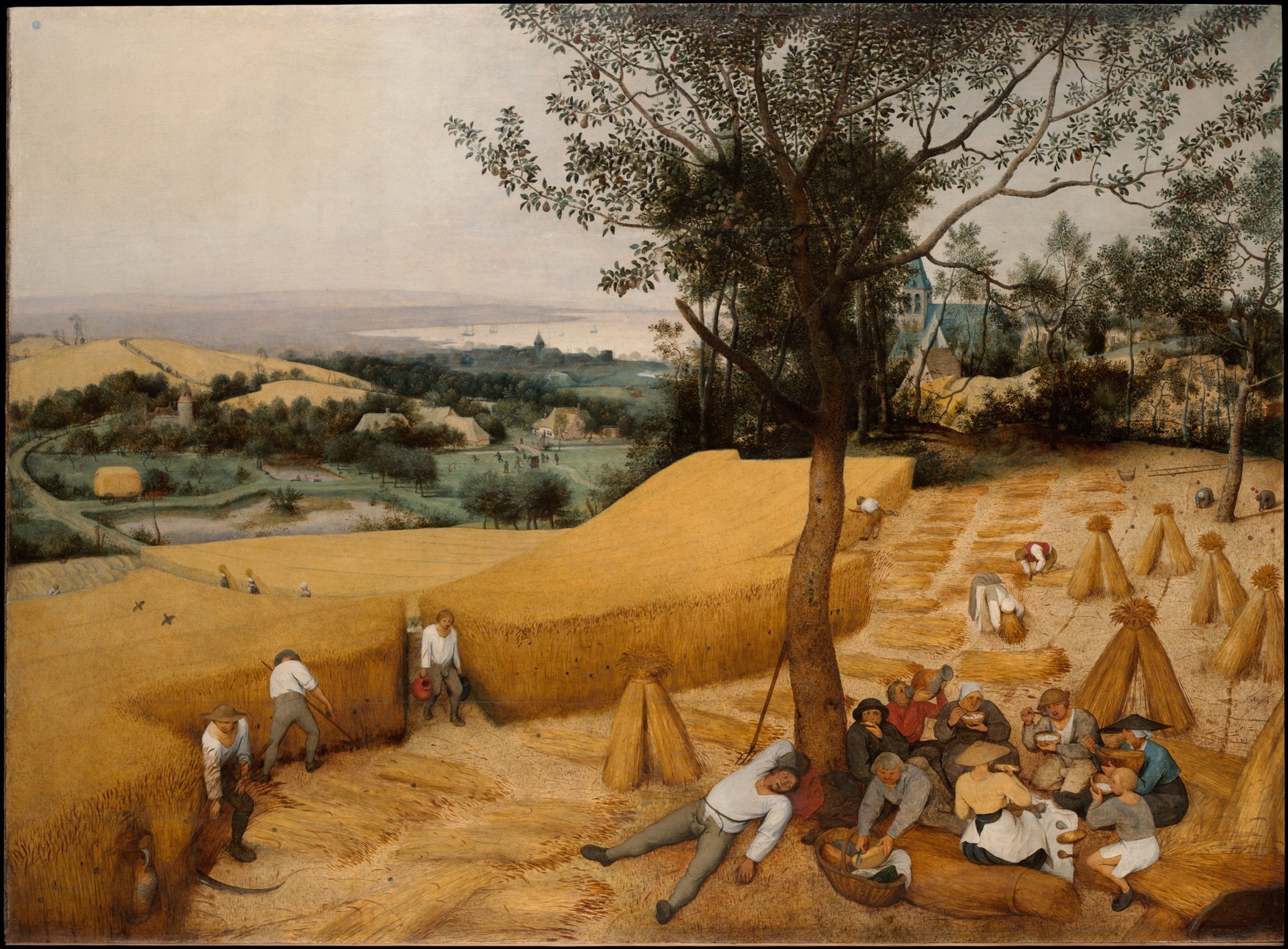
Compare de Troy’s Luncheon with Oysters with The Peasant Wedding, following the gestures of serving and eating. Then look independently at Millet’s whole painting before reading its title and context.
Central question: How does Millet give dignity to labor while showing its hardship?
Use the women’s hands, bent bodies, scale and light to support your reading. Test it against Bruegel’s harvest, Millet’s earlier etching and Berger’s two essays. Distinguish respect for the worker from an idealized account of poverty. End with a brief question for Varda: What might change when the people who glean can speak for themselves?
The supplemental reading can extend this discussion: test one of Berger’s claims against a precise relationship between a body and the field, then keep or revise your answer to the central question.
Assessment and homework
The discussion and any notes made in class are ungraded. A question that emerges in class can carry into Varda’s film.
Description
The opening returns to the Shared Meal comparison: de Troy’s diners and Bruegel’s wedding make eating and service visible in different settings. Millet shifts attention toward the bodies doing the work. Composition helps us explain how attention can express respect while hardship remains visible. The later Varda study will test what changes when a pictured worker becomes a speaker.
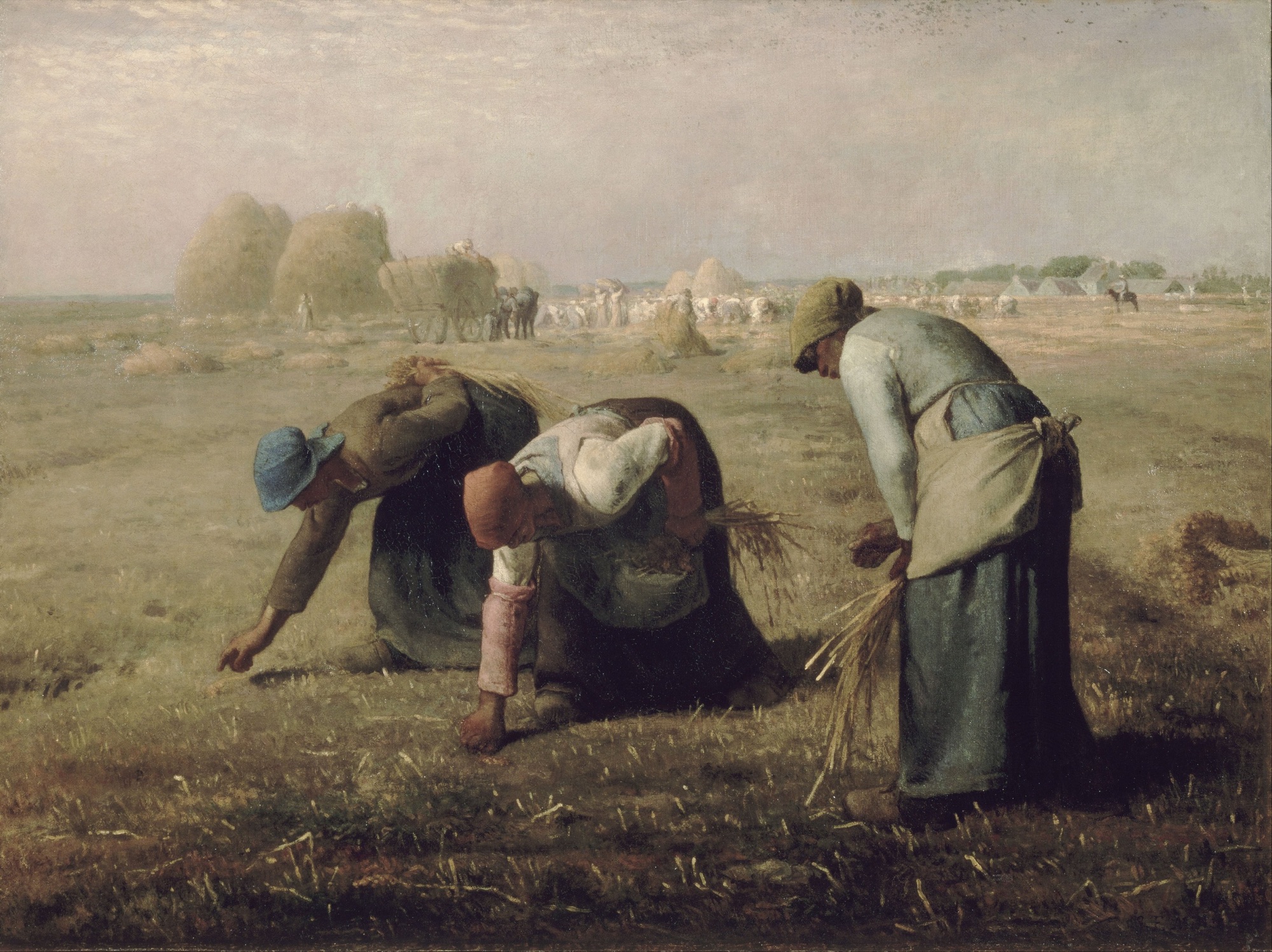
Gleaning meant collecting ears of grain missed in the main harvest. Poor women could enter the fields at sunset to gather them. In The Gleaners (1857), two figures bend almost to the stubble and a third has straightened only partway. The light picks out their hands, necks and shoulders. Far behind them are the stacks, the cart and the main harvest crew. The Musée d’Orsay identifies the distant rider as probably a steward. The painting gives us no record of who owned the field. Musée d’Orsay
Millet grew up in a farming family in Normandy. He moved to Barbizon in 1849 and developed the subject of gleaning over about a decade. His etching of around 1855–56 already arranges three women in a row. The plate is only 25.4 cm wide. The oil painting is 110 cm wide, and the slanting light gives the bodies a weight that the Musée d’Orsay calls sculptural. Bates College Museum of Art · Cleveland Museum of Art
At the 1857 Paris Salon, nine years after the Revolution of 1848, critics disagreed over the scale and gravity Millet gave his rural subjects. Paul de Saint-Victor compared the three women to the Fates of Greek myth. A painting could give poor workers prominence in public while the people it depicted could take home only what the reapers left. Van Gogh Museum, Renske Suijver · Dayton Art Institute
Class and the harvest
Shawn Grenier’s video essay reads the women’s bent bodies and their position below the horizon as signs of social subordination. Their large scale also gives them a strong presence. These features can support an account of dignity alongside physical hardship.
Grenier then connects the small handfuls with the abundant harvest in the distance. In his reading, poverty involves unequal access to food within a productive field. The contrast gives a reason to question the workers’ conditions while respecting them. This is a class interpretation supported by the arrangement of the painting. The distant rider is probably a steward, according to the Musée d’Orsay; his exact wealth and the ownership of the crop remain unknown.
Teaching reference
In chapter 24 of Portraits (class PDF p. 203), Berger calls Millet’s subject “the peasant as individual subject.” He contrasts this with Bruegel’s attention to a gathering. Each woman holds a slightly different posture, even as the repeated bend connects all three. An individual gesture can be visible when a woman’s name and circumstances remain unknown.
Two essays on Millet
In “Millet and Labour” (1956) Berger writes, “Millet was a moralist in the only way that a great artist can be: by the power of his identification with his subjects.” Millet supplies a different voice in the same essay. Remembering a Michelangelo drawing of a man fainting, he says, “I suffered with the body, with the limbs, that I saw suffer.” The hand that reaches into the stubble gives a way to consider Berger’s claim through the 1857 canvas. Portraits, p. 216, class PDF pp. 200–201.
In “Millet and the Peasant” (1976), Berger makes a claim about the history of representation. “The language was that of oil painting; the subject was the peasant as individual subject.” (Portraits, p. 218, class PDF p. 203.) He associates Bruegel with a wider gathering. Millet’s three women occupy the foreground. Their gestures repeat, but each body is at a different point in the movement.
Berger also questions how far Millet succeeded. Of much European landscape painting he writes that “the landscape is his view, the splendour of it is his reward.” The possessive refers to a visitor from the city. Of Millet’s monumental figures more generally he says, “As a result the cut-out figures look rigid and theatrical.” (Portraits, p. 223, class PDF pp. 206–207.) The Musée d’Orsay reads the weight of these particular gleaners as a source of dignity. The earlier print lets us see how paper, ink and the edge of a figure change what a viewer experiences.
Berger’s criticism in context
John Berger’s “Millet and the Peasant” (1976), in Portraits, chapter 24, class PDF pp.202–208, asks how a painter can introduce the experience of a peasant into an inherited language of art. The six selected passages below follow the order of his argument. He is discussing Millet’s major figure paintings broadly. The severe judgment is not a paragraph devoted only to The Gleaners.
The ambition Berger respects
Having chosen the peasant as subject, his life’s effort was to do him justice by investing him with dignity and permanence.
John Berger, “Millet and the Peasant,” Portraits, class PDF p.206.
Berger begins by taking Millet’s ambition seriously. The worker is given the sustained attention that painting had given to religious figures and classical subjects. Millet draws on that tradition to make a peasant’s life worth remembering. This describes the status of the figure within art. It does not mean the person’s life has become easier.
The worker moves into the foreground
Far from presenting these figures as something marginal seen in passing, he does his utmost to make them central and monumental. And all these paintings – in differing degrees – fail.
John Berger, “Millet and the Peasant,” Portraits, class PDF p.206.
Before this passage, Berger follows the peasant out of the small scene glimpsed by a passing viewer. In Going to Work, the couple occupies the foreground. He compares them with Masaccio’s Adam and Eve. Their importance is clear. His objection concerns whether those substantial figures belong convincingly to the world around them.
Why the moment might feel held in place
They fail because no unity is established between figures and surroundings. The monumentality of the figures refuses the painting. And vice versa. As a result the cut-out figures look rigid and theatrical. The moment lasts too long.
John Berger, “Millet and the Peasant,” Portraits, class PDF p.206.
I read the last sentence as a problem with the kind of stillness Millet creates. A bend that belongs to repeated work can begin to look like a pose held for us. The figure carries the weight of a monument, while the field remains scenery behind it. Berger’s criticism concerns that separation. It does not establish that the workers lack personality.
His next sentence changes the judgment
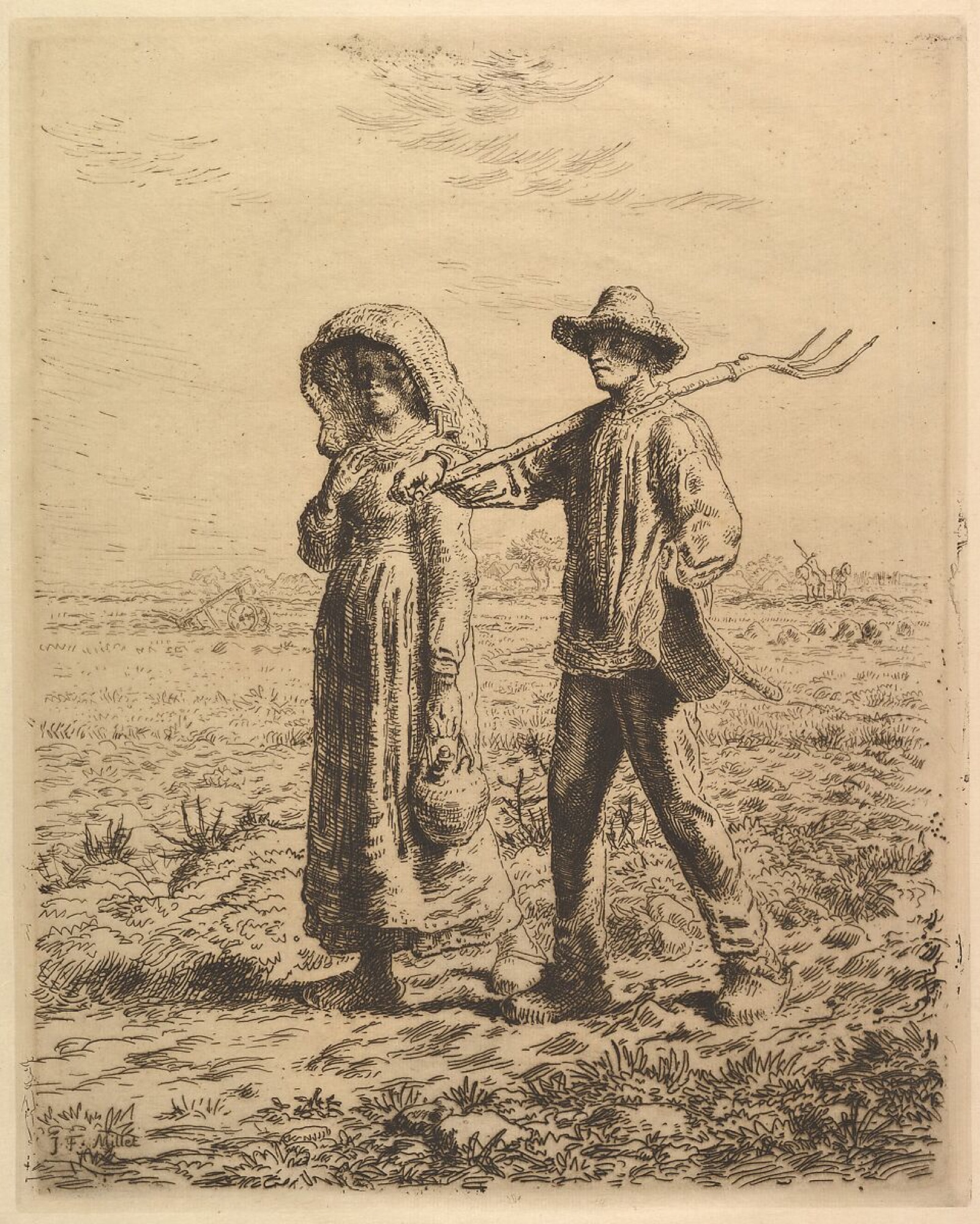
By contrast, the same figures in equivalent drawings or etchings are alive and belong to the moment of drawing which includes all their surroundings.
John Berger, “Millet and the Peasant,” Portraits, class PDF p.206.
Berger immediately gives Going to Work as his example. Look at how the etched marks describe clothing, earth and sky. He thinks graphic work can record a shared visual experience without making the whole scene a finished view for a spectator. His objection is to Millet’s use of oil painting here, rather than to the subject of work itself.
The Met calls this print Peasants Going to Work. Berger refers to the composition as Going to Work. The Met object record.
The inherited language of landscape
I believe that he failed because the language of traditional oil painting could not accommodate the subject he brought with him.
John Berger, “Millet and the Peasant,” Portraits, class PDF p.207.
Berger rejects the easy explanation that Millet simply could not paint well. He argues that much European landscape painting was arranged for a visitor who could enjoy the land as a view. A peasant meets that land through work. Bringing a large worker into the foreground may leave the spectator’s comfortable relationship to the scene intact.
Berger qualifies his historical claim: “Most (not all) European landscape painting” was addressed to this visitor. His account concerns a way of arranging the view. It does not identify the owner of Millet’s field.
Working on the land
the close, harsh, patient physicality of a peasant’s labour on, instead of in front of, the land.
John Berger, “Millet and the Peasant,” Portraits, class PDF p.207.
The distinction is between land offered to our eyes and land met through repeated bodily effort. In The Gleaners, a hand reaches into stubble and a back stays bent. Those contacts can support Berger’s concern. They can also challenge his verdict if we think Millet has made the women’s effort inseparable from this particular field.
This last selection is an excerpt from a sentence beginning “But there was no formula for representing”. The following sentence argues that inventing such a form would require destroying the inherited language of scenic landscape.
What follows, and how we can judge the claim
Berger next argues that Van Gogh joins worker and land through the energy of his brushstrokes. He also sees a cost: the artist’s personal vision becomes dominant. He ends by considering whether Millet’s pastels, half-light and night scenes resist a world made fully available to a privileged viewer.
In The Gleaners, the Orsay finds dignity in the women’s sculptural weight. Berger questions whether monumentality can hold a working body too still. The repeated bends may make the work feel continuous, or they may make the women seem posed. Explain which account fits the painting more convincingly.
Berger’s “cut-out” description gives us something specific to test. The women’s large, clearly bounded forms stand before a broad landscape. Yet their fingers reach into its stubble, and their different bends suggest successive stages of repeated work. I find that repetition a reason to question a complete separation between bodies and field. Their scale may give lasting importance to an action while their gestures keep its effort present. Berger’s account helps us notice the risk of turning workers into symbols; the painting can still give us grounds to dispute how completely that risk is realized.
A comparison with The Milkmaid can carry forward the question of what work lets us know about a person. This essay does not supply Berger’s judgment of Vermeer. Absorption in an action does not establish a lack of personality, and devotion adds a claim about commitment that needs its own evidence. Berger’s wider argument and the relationship between figure and surroundings help us keep those claims separate.
Further reading: the complete “Millet and the Peasant,” class PDF pp.202–208, in the lesson copy of Portraits. The ending connects the difficulty of representing the peasant with Berger’s wider argument about cultural and social hierarchies.
Berger: food and the work that makes it possible
John Berger, “The Eaters and the Eaten,” in Selected Essays, p. 371, three consecutive sentences from the assigned text:
To the peasant all food represents work accomplished. The work may or may not have been his own or that of his family, but if it isn’t, the work represented is nevertheless directly exchangeable with his own work. Because food represents physical work, the eater’s body already ‘knows’ the food it is going to eat.
Reading support: Berger is connecting eating to an embodied understanding of physical work. His peasant/bourgeois comparison is broad and historical. It does not establish that all agricultural workers grow everything they eat, or that food preparation belongs to one social group. Millet shows the work of gathering loose grain. What each woman could make of her handful at home lies beyond the scene.