Creative Intent and Production Design
Media Studies · Opening development guide
At a glance
| Teaching sequence | October 12 concept note; October 14 research/concept consultation; October 19 follow-up; October 30 opening-outline workshop; November 2 survey review and timed-analysis revision; Two Possible Beginnings due November 9; November 11 research clinic; November 13 Course Skills checkpoint; December 23 production gate and January 8 repair. |
| Role | Project guide. The linked dated lessons own the class sessions. |
| Work | Existing direction, design and research entries developed through research and concept revision. |
Objectives
- Connect an intended audience response to a filmable action and technical choice.
- Use relevant research to revise a provisional concept.
- Prepare a practical production plan with access, backup and contingency arrangements.
Learn
Begin with what a viewer will see and hear. Name a person, place and simple action, then explain the response you want. Research a relevant opening and identify a question it helps you explore. You may adopt, adapt or reject a reference choice with a reason. A direction can change as the research clarifies your intention.
Keep useful answers from your existing direction survey or proposal. You do not need to start again. The proposal form is an optional thinking tool; use the dated lesson for the survey instructions. The workshops and your actual evidence guide the plan. Compare two possible beginnings, then use your reasoning and reference research to choose a feasible starting point. Keep that decision in the same research entry that develops toward the November 13 checkpoint.
Develop the six design areas as needed: location, costume, props, lighting, palette and intended meaning. Use your own location photograph where available. Explain what a reference changes in your decision. The board may be revised; it is not a final production lock.
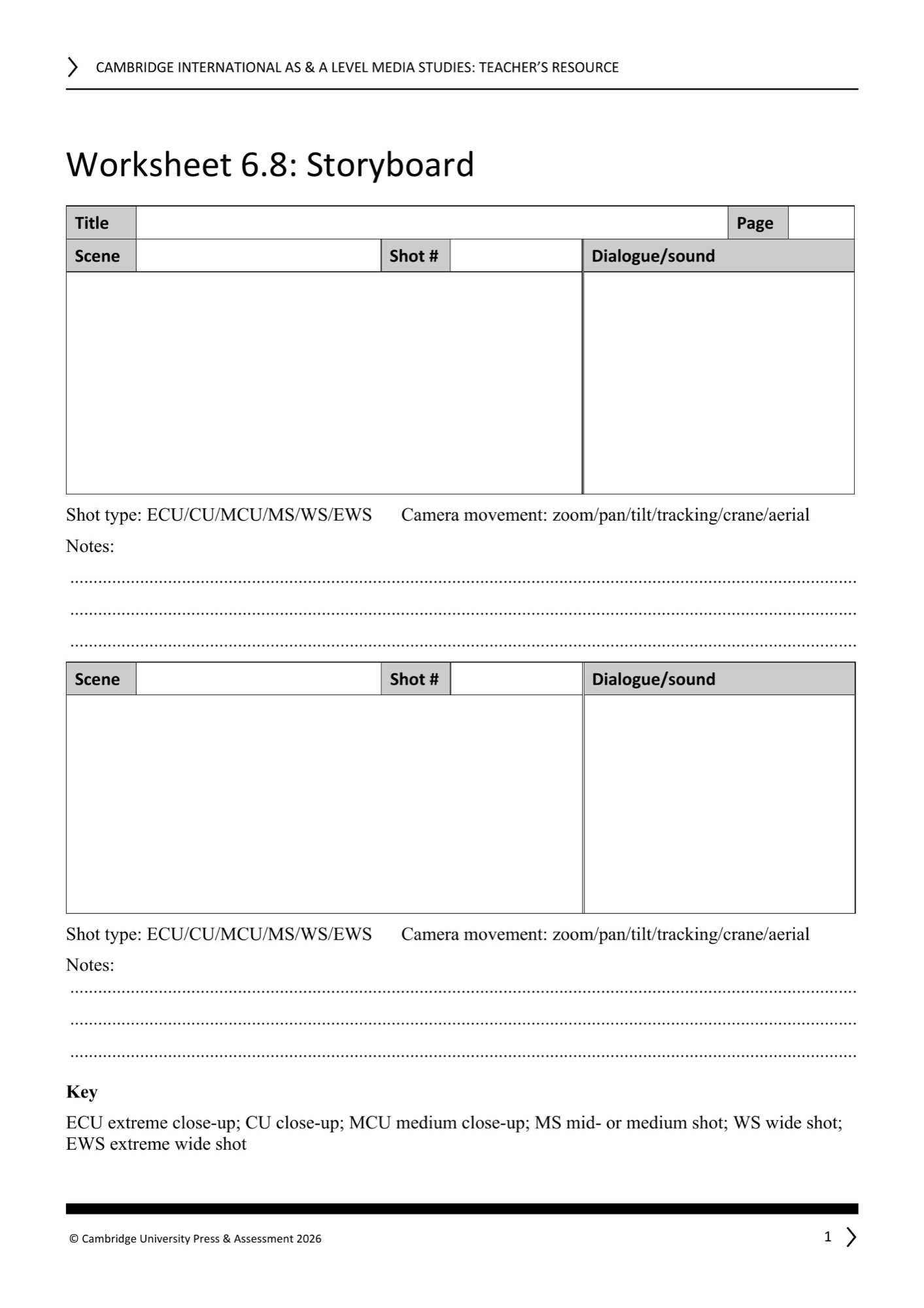
The storyboard should show the action, framing, movement, sound, duration and title/credit placement clearly enough to plan filming. The shot list groups the shots into a workable shooting order. Cast and locations must be available on the proposed dates. A contingency is an alternative for an absent actor, unavailable location, poor weather or failed recording.
Practice
Use your concept note and opening research in the October 30 workshop. The November 2 lesson reviews submitted direction surveys, then revises a passage from the existing timed TV drama analysis. Explain what your research helps you understand and record a choice or research question. Complete Two Possible Beginnings for November 9 at the start of P6. Script/storyboard work comes November 18–19; relevant filming tests follow from November 20.
Before the December gate, read the storyboard beside the location images and call sheets. Can these shots be made with these people and equipment on those dates? Check the sound, permissions, risks and backup arrangements. Use the Shoot Guide for the complete gate and filming pack.
Check your progress
Two Possible Beginnings is the small Course Skills task due November 9 before P6: two beginnings of the same idea and a justified, feasible choice in the existing research entry. Allow about 20 minutes. It is marked out of 10 and recorded as a percentage. The November 13 research checkpoint remains.
Your plan should connect the idea, references, design choices and tests to a feasible sequence. Check the maximum two-minute final duration including titles. Prepare an animatic or equivalent timed storyboard, shot/sound plans, difficult-setup tests, call sheets, cast/location confirmation, equipment access and contingency arrangements.
Principal filming is January 24–February 21. A late-December option can help with school friends or locations. The first two spring weekends are reserved for limited pickups after the footage audit. Final C1 work includes the film, individual blog and individual creative CCR, with the internal completion target March 26.
Source quotation
All video work should use a screenplay, alongside the storyboard, and you may also want to produce a script for your actors to use.
Cambridge International AS & A Level Media Studies coursebook, §6.3, Planning a production, p. 154.
Suggested reading
Coursebook §6.2–6.3 on research and planning; the Blog Map and Shoot Guide. Reuse the existing direction survey or proposal form only where it helps your current decision.