Gender, Voice and Power
Section B materials Campaign evidence sheet (Word) · Case-study notes and paragraph (Word)
Media Studies · Unit progression
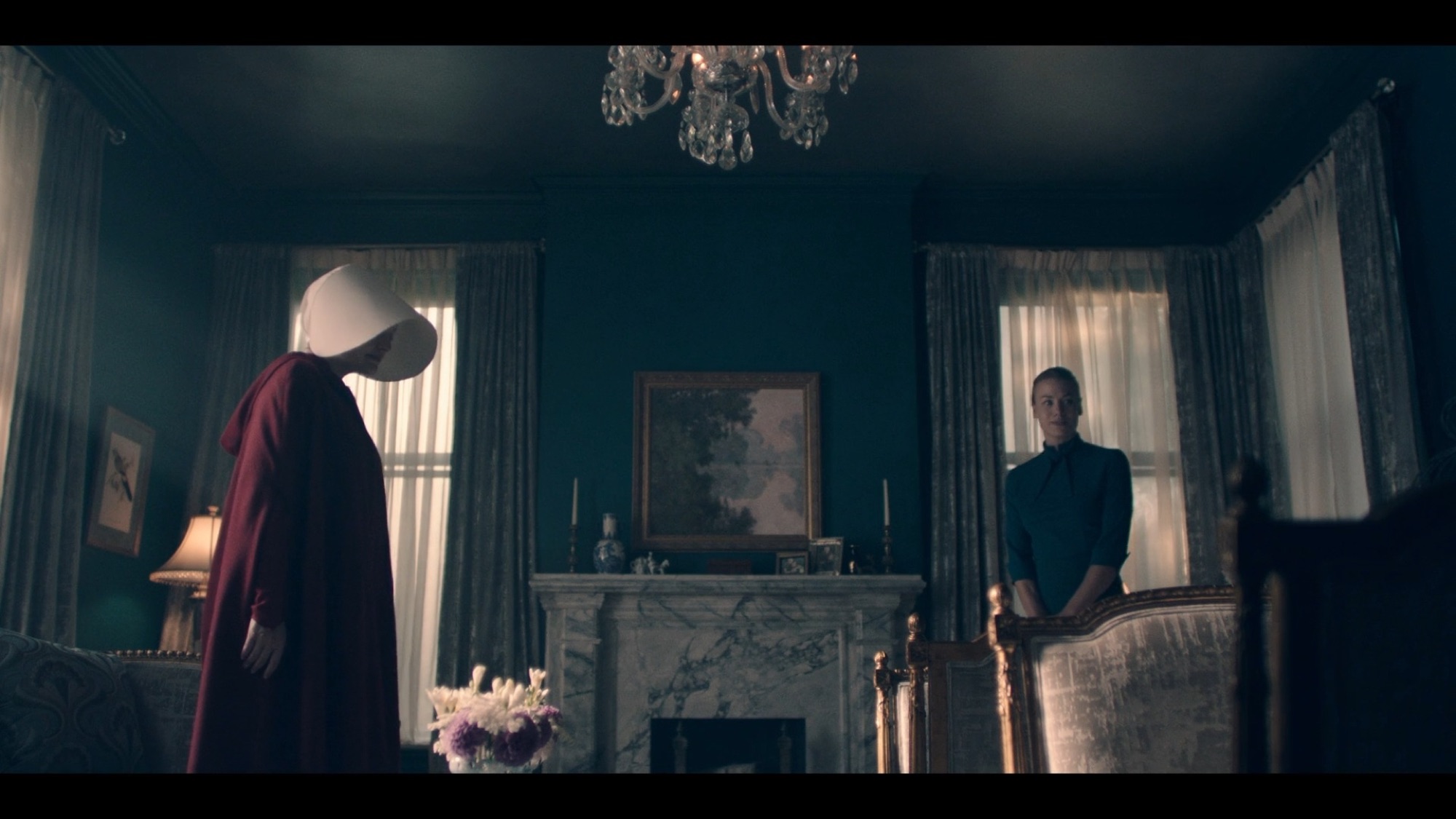
Use a familiar TV example to investigate a Section B question about audience targeting. The Offred clip supplies the recognizable costume. The campaign record shows why the festival, the performers and the audience matter to an argument. For an exam answer, use an eligible case such as the film Rye Lane.
Lesson slides: Download the deck (PowerPoint, 20.2 MB) · image credits
At a glance
| Dates | Mon 16 Nov P6 12:35–13:20 · Wed 18 Nov P6 12:35–13:20 and P7 13:30–14:15 · Thu 19 Nov P1 08:00–08:45 |
| Monday | Completed the Ulman/BEEF worksheet and discussion. |
| Wednesday | Section B practice. Use the Offred clip to identify the costume, then investigate how Hulu used it to promote The Handmaid’s Tale and reach an audience at SXSW. |
| Thursday | Use the street photograph and promotional card to take short case-study notes. Write and revise one Section B paragraph about reaching a specific audience. |
Objectives
- Record short, specific case-study notes on production, distribution, marketing and audience response.
- Explain how Hulu’s use of Offred’s costume in a public promotion could reach and interest a particular audience.
- Select relevant evidence and use it to support a Section B paragraph about targeting.
Learn
Promotion and targeting. Hulu commissioned The Handmaid’s Tale from MGM Television as an adaptation of Margaret Atwood’s novel. The series launched on Hulu in April 2017. At SXSW, attendees could encounter costumed performers while moving through the festival and city. The dress and bonnet made a visual connection to the series and gave people something distinctive to photograph or share. The campaign agency reports a 218% rise in social engagement over three days. This measures interactions during the promotion. A claim about viewing would need separate viewing evidence. Commissioning announcement · Campaign account
Film case application. Consult Southwark Council’s Rye Lane filming-location map. Identify the people it could reach and explain how the named places and the map’s local setting could appeal to them. For a broader audience, consider how the official trailer uses a recognizable romantic comedy premise. Rye Lane sources
Earlier analytical references
Perspective and authority. Perspective concerns whose experience the viewer can access. Authority concerns what a character can require or control within the situation. Hearing a character’s private thoughts may bring us close to their experience while their public actions remain constrained. The earlier extract lesson used Offred’s voiceover, spoken replies and the reactions around Serena’s dialogue to investigate this distinction. The order of the reaction and preceding line helps establish what the close-up means. Earlier extract-analysis worksheet (PDF). See Representation.
Opening research and planning. A working proposal records the current opening choice, its reasons and feasibility, and a question to investigate. The teacher checks that record before the focused study. Research findings can then refine or change the proposal before more detailed planning. Use the blog map to keep the same entry connected to its research and revisions.
Genre creates expectations through recurring settings, characters, images, sounds and story situations. The coursebook uses The Heat (2013) to show variation in the crime-partnership convention. A producer can signal a familiar type while changing an element for an intended audience. Genre hybridity combines types.
Narrative organizes events and information. A goal meets an obstacle; the viewer may know more or less than a character. A cut that reveals a hidden cause can create suspense, while withholding that cause can create an enigma. Linear and nonlinear orders give the same event different positions in the viewer’s experience. Apply these ideas to the specific opening you are making.
Gender representation is constructed through conventions such as pose, gaze direction, framing and setting rather than simply copied from the world. Van Zoonen provides a way to ask how these conventions relate to ideas about gender. Test a claim on the particular text and its context.
Mulvey (1975) describes three looks: the camera’s, the characters’ and the audience’s. Her argument about narrative cinema asks how these can align to present women as spectacle. Follow the camera and the characters before deciding whether a sequence supports that argument. A reverse-gender arrangement may reproduce a similar pattern of looking.
In “The Oppositional Gaze: Black Female Spectators” (1992), bell hooks describes how she and her sisters watched Peola in Imitation of Life. Use the passage on printed pp. 121–122. A spectator’s account gives evidence about how she read the screen. Emerald’s speech in Nope gives us a different source, a fictional crew responding to a question about whose name was preserved. Follow the switch from Emerald speaking to the reply she receives. Peele’s screenplay · Mulvey, §III.A.
For further comparison, the poster walls, the Dior images, Manet and Claude Cahun are visual references. The hooks/Peola and Emerald passages are optional unscheduled extensions after the November 14 repair.
Practice
Thursday, November 19 · Section B audience targeting
Look at the SXSW street photograph and promotional card. In March 2017, people in costumes like Offred’s walked through public areas of Austin to promote The Handmaid’s Tale. Who was likely to come across them? What could someone do after reading the card?


Read the campaign evidence sheet. Jot short phrases under these headings on page 1 of the worksheet.
- Institutions and production. Who commissioned the series? Who made it?
- Distribution and access. When and where could viewers watch?
- Marketing and targeting. Where could people see the performers? What did the card tell them?
- Audience response. What did the campaign agency measure?
Practice question. How can media companies use promotion to reach a specific audience?
On page 2, write one paragraph. Name a specific audience, choose evidence that answers the question and explain how the campaign could reach or interest those people. Underline the audience and circle your evidence. Revise the sentence that connects them.
Check your progress
Name the people the campaign could reach and what put it in front of them. Use the photograph or card to explain what someone might notice or do next. If you include the agency’s figure, specify what it measures.
Assessment and homework
The Section B notes and paragraph are class practice. The Film Opening Proposal is the separate Course Skills task. Work on it Friday, November 20 and submit the Planning entry link by Tuesday, November 24.
Source quotation
Why have they produced the media text?
Cambridge International AS & A Level Media Studies coursebook, §3.3, p. 77.
Suggested reading
Read the SXSW campaign account and compare its audience evidence with the Rye Lane sources. The earlier coursebook readings on representation (pp. 78–79) and storyboard production (p. 153) remain useful references for their respective work.