Work, Status and Respect

Worksheets: Monday · Forks and film audiences (PDF, two pages) · Thursday · Writing about service work (PDF, two pages)
Media Studies · Representation and evidence
Unit introduction, slides 2–9. Open the Monday student deck. How do words and framing shape the way we judge a person? Start with Hall’s object, concept and sign. Compare two captions and two framings of the same photograph of a mill worker. Apply the distinction between an observation and an inference to a shot you could make. Hall’s original reading, §1.1, pp. 2–3. The Monday lesson then introduces Richie, Garrett and Chef Terry. The released Section B question is “Analyse the ways in which local and national audiences are targeted differently.” (Cambridge International AS & A Level Media Studies, June 2025, 9607/21, Section B, Question 3). In The Bear, compare Richie polishing forks with Garrett and preparing mushrooms with Chef Terry. Use framing, performance and sound to explain your reading. Use the FX/Stella television campaign as a bridge to explain how two appeals differ, then transfer the question to the eligible Rye Lane film case for Section B. Return to the question on November 26.
Related ideas: Representation · Framing · Visual Evidence.
Lesson slides: Download the deck (PowerPoint, 20.2 MB) · image credits
At a glance
| Dates | Mon 9 Nov P6 12:35–13:20 · Thu 12 Nov P1 08:00–08:45 |
| Time | Two 45-minute sessions |
| Work | A targeting exercise using a Section B question, a close reading of service work in The Bear and a revised Section A paragraph. |
| Next use | An opening-design decision, later Section A writing and the November 26 Section B paragraph. |
Objectives
- Explain how age, rank and the division of labour shape Richie’s idea of service. Support a reading with two visual or sound details, then test what another viewer might infer.
- Test an alternative reading against the same moment, using Hall where his idea helps.
- Write and revise one Section A paragraph and carry one choice about framing, costume or sound into your opening.
- Distinguish an interpretation from evidence of audience targeting. Identify one fact about a film company, campaign or release that you would need for Section B.
Learn
Representation constructs a version of the world through selection and combination. A media text shows some people, details and events while leaving others outside the frame. Examine what is present before claiming why a maker selected it. An absence can be worth investigating, but it does not prove an intention by itself.

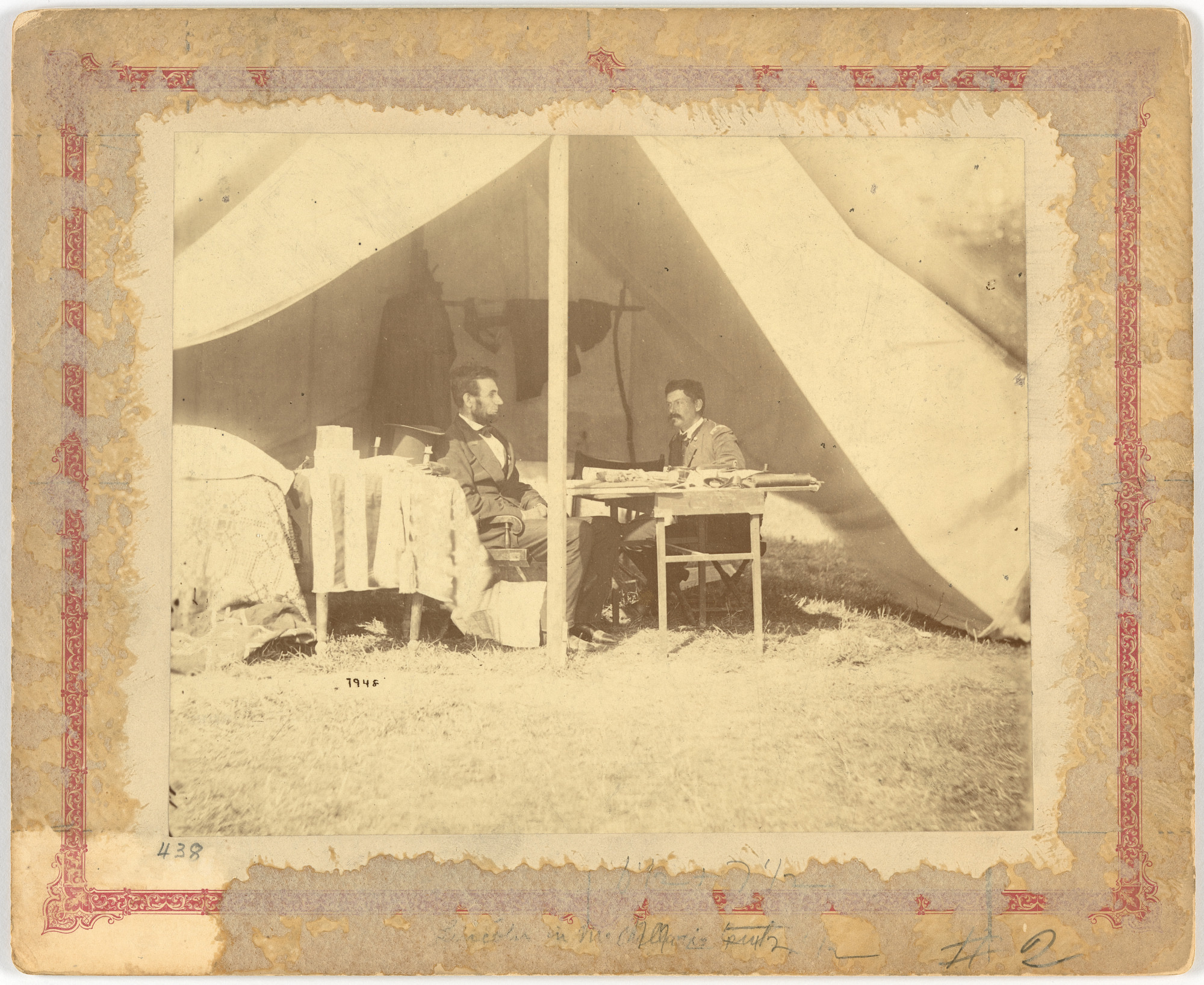
Optional historical photograph. Lincoln and McClellan posed in a tent at Antietam in 1862. The tent, table and arrangement of figures offer a historical example of constructed photographic appearances. Compare the evidence with your interpretation. A modern media text also organizes what viewers can see and hear.
Stuart Hall writes, “Representation connects meaning and language to culture.” A fork carries different meanings for Richie and Garrett because each connects the work to a different idea of status. Which reaction or sound makes one meaning easier to accept? Hall, The Work of Representation, p. 15
Hall’s encoding/decoding model distinguishes a preferred meaning from the meanings audiences make. A dominant reading accepts the preferred meaning; a negotiated reading accepts part and modifies part; an oppositional reading understands but resists it. Explain a possible reading through evidence instead of deciding a viewer’s position from their identity.
Compare class in Parasite through the two houses and the movement between upper and lower spaces. Use the street-level window, the lawn, the descent or a sound relationship to support a claim. A stereotype simplifies a person or group through familiar features. Ask what the shortcut helps a text communicate, who it favors and what it overlooks. Test an interpretation rather than require everyone to share it.
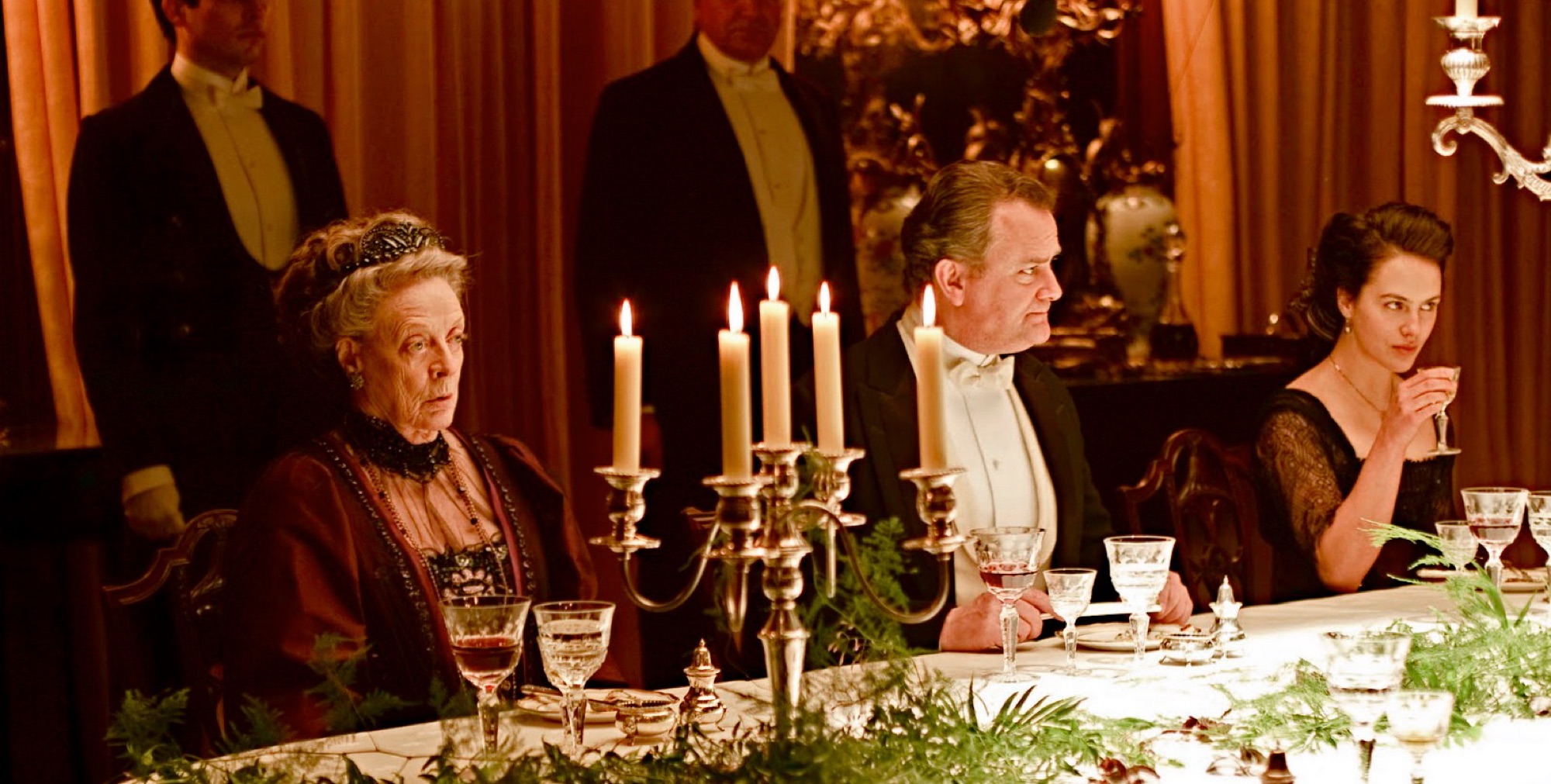
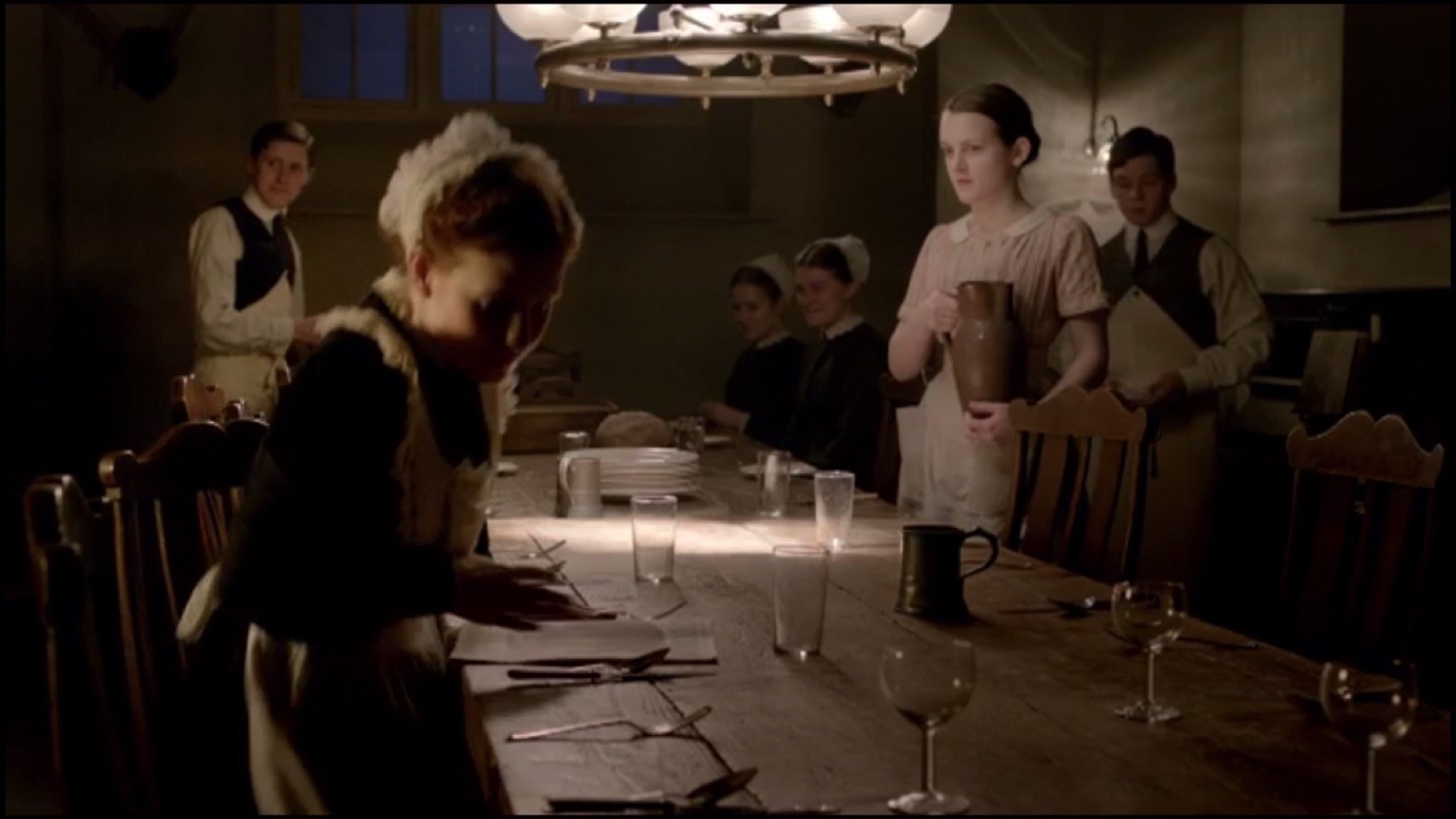
Compare the displayed Downton Abbey dining room, servants and village frames as a further reference: identify whose spaces and activities are selected, then explain the version of social life these selections construct.
Practice
Open the November slides by dated section
For your first written response, use the Section B question as a targeting exercise. The Bear is a television teaching example, outside the listed Section B media areas. Use the film cases for full Section B answers. “Analyse the ways in which local and national audiences are targeted differently.” (Cambridge International AS & A Level Media Studies, June 2025, 9607/21, Section B, Question 3). Read the Chicago arcade and Hulu chef-spot evidence printed on page 1 of the viewing worksheet. In “Your first answer,” compare what each invitation offers and whom it might interest. Underline one claim to test. Keep the sheet for November 23 and 26.
In class, watch Richie and Garrett polishing forks. For review, use the FX link in the student PowerPoint. How does the extract shape our judgment of the people who do service work? Record what you see and hear in the Garrett and Terry exchanges on worksheet pp. 1–2. Why does Richie mention being 45? Compare the way Garrett speaks about collective labour with Richie asking Chef Terry, the woman in charge, for another mushroom. Where can “respect” mean either pride in service or acceptance of rank? Use a gesture or sound for each claim. The published screenplay, PDF page 34 gives the written Terry exchange. Read §3.3, pp. 76–77, and explain selection in your own words. Replay Garrett and compare Richie’s listening face with the cut back to the speaker. At the end of Monday’s lesson, revisit your page 1 answer on page 2. Compare the two promotional choices and underline the explanation you can now support. On Thursday, write and revise an independent paragraph using the first clip.
Thursday, November 12 · Section A paragraph. Start with §4.2, pp. 90–91. Retrieve the note you marked on Monday’s worksheet and replay Richie and Garrett polishing forks. Record one detail you can see or hear and the technical term that describes it. Use the dated Thursday slides and the Writing about service work worksheet.
How does the extract shape our judgment of the people who do service work? Write one analytical paragraph independently for 25 minutes. Use two precise details from the Richie and Garrett exchange. Show where each occurs. Explain what the choices imply about skilled labour, age or rank and whose point of view the extract gives you. Keep the first draft on page 1. During the eight-minute partner exchange, underline a detail, circle its explanation and ask the writer one question. Use the final seven minutes to revise the relevant sentences on page 2 and underline the change. Keep both versions together.
For your own opening, state who appears, what the audience may infer from their presentation, and which choice creates that impression. Revisit that choice in the rough sequence. Add a brief note to existing planning rather than create another graded task.
For this teaching exercise, use the Chicago arcade placement and Hulu chef-spot evidence printed on worksheet page 1. Explain why the action, tone or platform might appeal to each intended audience. Revisit your first answer before leaving.
Check your progress
Underline the two details that support your representation claim. If they only describe what happens, explain how framing, design, sound or editing guides the reading. Keep one question to test in your own production.
Assessment and homework
Monday’s audit and Thursday’s paragraph are formative C2 AO1/AO2. Application to an opening is C1 AO3 research/planning. The former November 13 separately graded Representation Close Reading is replaced by feedback-led practice; that date now carries the Opening Research Checkpoint in L10.
Use the weekly assignment route. Each normal teaching week has one Course Skills assignment or an attainment. Use existing classwork where the brief allows it. Every task produces material for the student’s own C1 portfolio or practices a C2 response. Other class exercises receive feedback without another submission.
Source quotation
Who has produced the media text?
Cambridge International AS & A Level Media Studies coursebook, §3.3, p. 77.
Suggested reading
Assigned reading · printed coursebook pages
Monday, November 9 · in class. After viewing both exchanges from The Bear, open the Marshall, Naisbett and Stoklosa coursebook, §3.3, pp. 76–77. Read the coursebook authors’ paragraph about selection on p. 77. In Hall’s own chapter, §1.1, pp. 2–3, use Activity 1 or the paragraph about the glass to distinguish the object from the meaning a viewer gives it. On the worksheet, explain selection in your own words. On the replay, mark one image or sound the makers selected. How does it affect your judgment of service work?
For Wednesday, November 11. Read §6.2, pp. 148–149, on textual research, codes and conventions. Bring one convention from an opening you have already studied and the shot, title or sound that shows it. You will use the example to revise that research entry.
Thursday, November 12 · in class. Open §4.2, pp. 90–91. Use the detail you marked on Monday’s viewing sheet to start your Section A paragraph on the Thursday worksheet. At the end of class, read the assignment for Friday: §3.2, pp. 67–68. Bring one moment from your own opening that changes what the viewer knows.
For further reading, continue §3.3 through p. 81. Use the Hall reading-position reference and the Exam Answer Guide.