Case Study Evidence and Argument
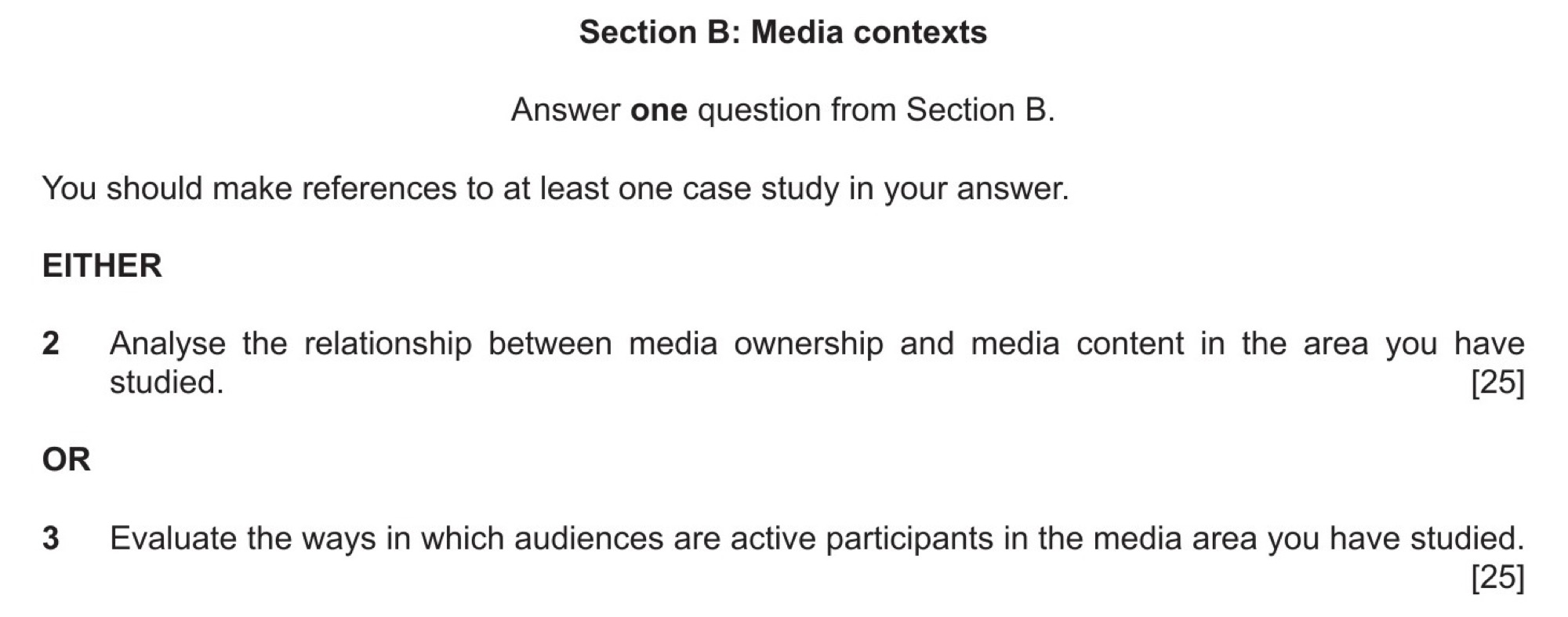
Section B case-study pack: Barbie and La Chimera: complete printable pack
Lesson slides: Download the deck (PowerPoint, 2.0 MB) · image credits
At a glance
| Days | 2: Monday and Wednesday double. The trio activity uses three short rotations within its existing 15 minutes. |
| Dates | Mon 21 Dec · Wed 23 Dec |
| Band/Unit | U6 Revision (Analytical Synthesis) |
| AO focus | A4 review at AO level; Section B institutions/audiences coverage audit |
| Deliverable | The pre-production plan checked (animatic, a call sheet per shoot day, cast and locations confirmed, equipment booked, window confirmed) in the first half of the double; the case-study evidence matrix completed in the second; one production document completed/checked for Course Skills; the existing case file audited (LB5 observation; A4 feedback) |
| Feeds | End of Term Exam |
| Homework | No new weekly assignment or separate revision-pack submission during December 24–January 3. Keep existing case notes for January 4. Any approved late-December filming follows the agreed production plan and uses concise records and two backups. |
Objectives
By the end of this lesson, students should be able to:
- Self-assess the A4 script against band descriptors and name the AO gap in one sentence
- Complete a coverage matrix and identify the weakest Section B coverage row with evidence
- Identify one C2 evidence gap and a useful revision action in the existing notes
- Rehearse one Section B argument aloud that survives a peer counter in Monday’s argument trios. W18 remains winter break; no LB6 is added.
Goal
Students identify revision needs by comparing marked A4 scripts with their Thursday self-assessments, testing arguments aloud before writing, and auditing case evidence in a coverage matrix. A separate Section A check covers technical language and representation. Each student selects an uncovered area for the class revision plan. The historical comparison is a pair of astronomers who photographed the entire moon, plate by plate, a century ago. Their systematic coverage provides an example for this audit.
How it runs
D1 · Mon 21 Dec: the A4 review, then arguments aloud
The return (15 min):
A4 scripts back with per-criterion AO splits (recorded at marking, per the register), met by Thursday’s sealed self-band: the conversation is the gap between the prediction and the mark.
The target thread (10 min):
One target logged from the splits and the December 18 formative Section B feedback, connected in writing to the L14 target: same thread, or a new gap? Two data points now exist per student; the Forecast Grade conversation has evidence. Revisit the missing-criterion note from L15: did the A4 response address it?
The shape (5 min):
A Section B argument’s four moves on the board: claim → evidence → counter → response. Students use this structure to present and defend an argument aloud before planning an essay.
Trios (15 min):
Moved from the cancelled W18 pair: trios discuss one pack case-study question in three four-minute rounds. Rotate speaker, counterarguer and evidence referee so everyone takes each role. Counter from the same case study and verify evidence with B/L source IDs. Use the final three minutes for each student’s independent claim and qualification.
D2 · Wed 23 Dec (double): the pre-production gate, then the matrix and the revision plan
First half (45 min): the pre-production gate.
The production checks (35 min):
Each student at the desk in turn with the shoot guide’s gate sheet: the complete storyboard/animatic and shot/sound plans; difficult-setup tests; a call sheet for each shoot day; cast and locations confirmed with permissions where needed; equipment access; actual shooting dates, backups and a contingency for an absent actor or failed location.
Check duration against the maximum two-minute final brief.
Principal filming is January 24–February 21.
Approve a workable plan, or issue specific repairs for January 8.
A failed check requires a revised feasible plan, not an automatic transfer of all filming into spring.
During independent waiting time, students spend 10–15 minutes completing or checking one real production document for Production Constraints and Creative Decisions.
They record the decision it supports.
This uses the existing clinic time; a student with complete plans checks an existing document rather than manufacturing new work.
Save and verify (10 min):
Link the reviewed production document in the existing planning entry and check the recorded dates, permissions and unresolved items. Submit that document or link at lesson end. Keep the gate record with it; no duplicate polished post is needed.
Second half (45 min): the matrix and the revision plan.
Written skeleton (5 min):
Monday’s argued case captured as a skeleton plan, deliberately after the talk and a night’s sleep: use the discussion and counterargument to revise the plan.
The matrix (15 min) · consolidation Jeopardy
(per the activity layer): rows = every case study in the room’s documents; columns = the ten industry/audience areas in the pack Coverage audit.
Teams claim a cell by producing the evidence from their documents; the room verifies, and the cell is scored honestly on the board: evidenced, thin, or empty.
An honestly called “empty” scores too: the game rewards the audit, not the bluff.
Every student leaves with their weakest cell named in writing; that cell is their class revision target.
One Section B answer, read as a marker (10 min)
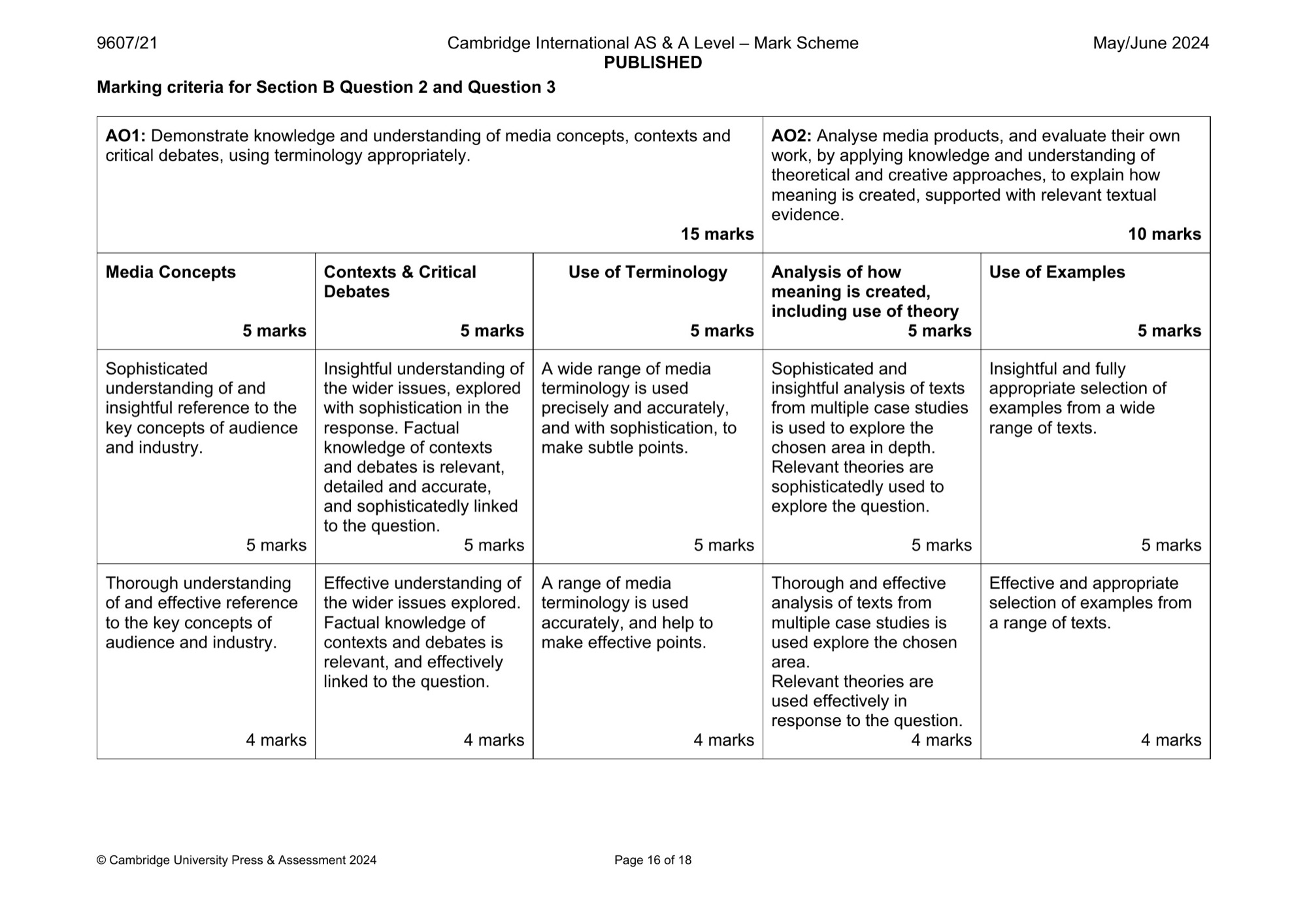
The model read after the December 18 formative rehearsal and before January’s timed Section B: a single Section B answer from Cambridge’s from-2021 Example Candidate Responses booklet for Paper 2, read against the Section B criteria one at a time (concepts of audience and industry, contexts, terminology, analysis across case studies, examples).
Pairs band it before the examiner’s mark is revealed; the class identifies the criterion the answer addresses most fully and the one it addresses least.
Targeted revision plan (5 min):
Use the weakest matrix cell to outline one Section B argument in the existing case file. Keep the notes for January 4. There is no break-pack upload or new holiday assignment.
EoT announced (5 min):
The full two-hour Component 2, in the exam window from Mon 11 Jan. Format stated plainly: it is A4’s format plus Section B: nothing they have not now done.
Close (5 min):
Break housekeeping: the revision-card deck and the case-study document travel home, and so does the equipment booked for window A, by sign-out slip. Record each shoot date and useful evidence in the existing production diary; a new polished post for every small action is unnecessary.
Use the pack Coverage audit for the matrix: ownership/funding, production, distribution/exhibition, marketing, synergy/convergence, technology, targeting, consumption/participation, regulation and personal consumption. Retrieve before checking; a fact without an explanation remains developing. Use the pack’s worked argument as a separate authored model alongside the original Cambridge commentary, not as an officially graded response. The existing five-minute revision plan names one weak connection and its repair.
Assessment
| Item | Date | What |
|---|---|---|
| The pre-production gate | Wed 23 Dec | Animatic, a call sheet per shoot day, cast, locations, equipment, window: pass, or a list and one more chance Fri 8 Jan. Checked, not graded; principal photography needs an approved plan; preliminary tests remain part of teaching |
| LB5 | Wed 23 Dec | Case-study document contributions |
| Production Constraints and Creative Decisions | Wed 23 Dec, end of P7 | Course Skills: one real production document completed or checked, with a reason; 10 local marks |
| 🚫 Cancelled, W18 confirmed as winter break, Sun 19 Jul |
A4 returned Mon 21 Dec; EoT announced Wed 23 Dec. See the full register.
Practice
Use Barbie and La Chimera pack for the film-industry work in this lesson. Select source cards that answer the question, explain the institutional or audience consequence, and state the limit of the evidence. Keep the work in the existing case file.
Use these prompts selectively in class to check the coverage matrix. They are reference practice, not an additional holiday task.
1. Name the four moves of a Section B argument, and say why the third one is there.
Answer: Claim, evidence, counter, response. The counter is there because an argument that has never met one goes stale on the page. A plan that survived a real counter aloud writes itself under time. That is why the talking comes before the writing.
2. Describe the coverage matrix: its rows, its columns, its three cell scores, and why an honest “empty” scores.
Answer: Rows are your case studies. Columns are the ten areas in the pack Coverage audit. Each cell is scored secure, developing, or gap. An honest empty scores because the matrix rewards the audit, not the bluff: the named empty cell is exactly what the class revision plan should address.
3. Why do you band your own A4 script before you see the mark?
Answer: Calibration. The conversation that matters is the gap between your band and the marker’s, per criterion. With the L14 target you now have two data points on yourself. The gaps shrink when you track them, and the Forecast Grade conversation runs on that evidence.
4. What is the End of Term Exam, in format terms?
Answer: The full two-hour Component 2: A4’s format plus Section B. Thirty minutes of viewing and notes, then the two written sections. Nothing in it is something you have not now done.
5. Use the pack Coverage audit for both cases. Retrieve a fact, explain its relevance and qualify it before checking the source. Mark each row secure, developing or gap. Name one explanation to repair in your existing revision plan.
6. Rehearse one argument aloud before you write anything. Argue one Section B question to someone from your case study. Have them counter from the same case study. Only then write the skeleton plan. Plans written cold go stale. Plans that survived a counter do not.
Break work and preparation
December 24–January 3 adds no new weekly task. Keep the existing case file and agreed production arrangements available. Late-December filming requires prior approval where school-dependent resources need it; the main filming window remains January 24–February 21.
The later January 24–February 21 filming period follows each student’s approved plan: shoot dates, coverage checks, sound, two footage copies, concise evidence and short C2 practice within the agreed workload. The full month is planned around 9–12 hours of subject work as a starting point, adjusted to the actual production. No weekly teacher contact is assumed.
Source quotation
How did your research lead you to develop conclusions?
Cambridge International AS & A Level Media Studies coursebook, §5.4, “Developing case studies”.
Suggested reading
Use the coursebook section cited above and the linked current task brief. For timed writing, consult the Exam Answer Guide; for production, use the Shoot Guide.