Lesson 12: Institutions and Section A Craft
Media Studies · Unit 5 · Lesson 12 of 16 · ← L11 | L13 →
At a glance
| Days | 4 — Mon single, Tue single, Wed double (CS8), Fri single |
| Dates | Mon 2026-12-07 · Tue 12-08 · Wed 12-09 · Fri 12-11 |
| Band/Unit | U5 Media Contexts (S1 Unit 5) |
| AO focus | AO1 + AO2 |
| Deliverable | CS8 guided Section A script; C2 case-study document opened and structured |
| Feeds | A4 |
| Homework | First case-study entries (30-min cap) |
Goal
This week connects to Component 2. Morley explains why the same text reads differently; ownership explains why texts say what they say — funding follows content. The Wednesday double takes you through Section A with the mark scheme open on the desk. Friday opens the case-study file that A4, the End of Term Exam and Paper 2 will all draw from.
How it runs
D1 — Mon 12-07: Morley in miniature
- Input (15 min) — Morley’s Nationwide study: real audiences, in groups, produce systematically different readings of the same broadcast — and the differences track their situations, not their intelligence.
- The replication (25 min) — the class replicates it in miniature: one short text screened; readings gathered anonymously on cards; grouped on the board; the groupings explained.
- Close (5 min) — theory card: Morley. If readings differ by situation, who makes the text matters even more — tomorrow, ownership.
D2 — Tue 12-08: ownership — funding follows content
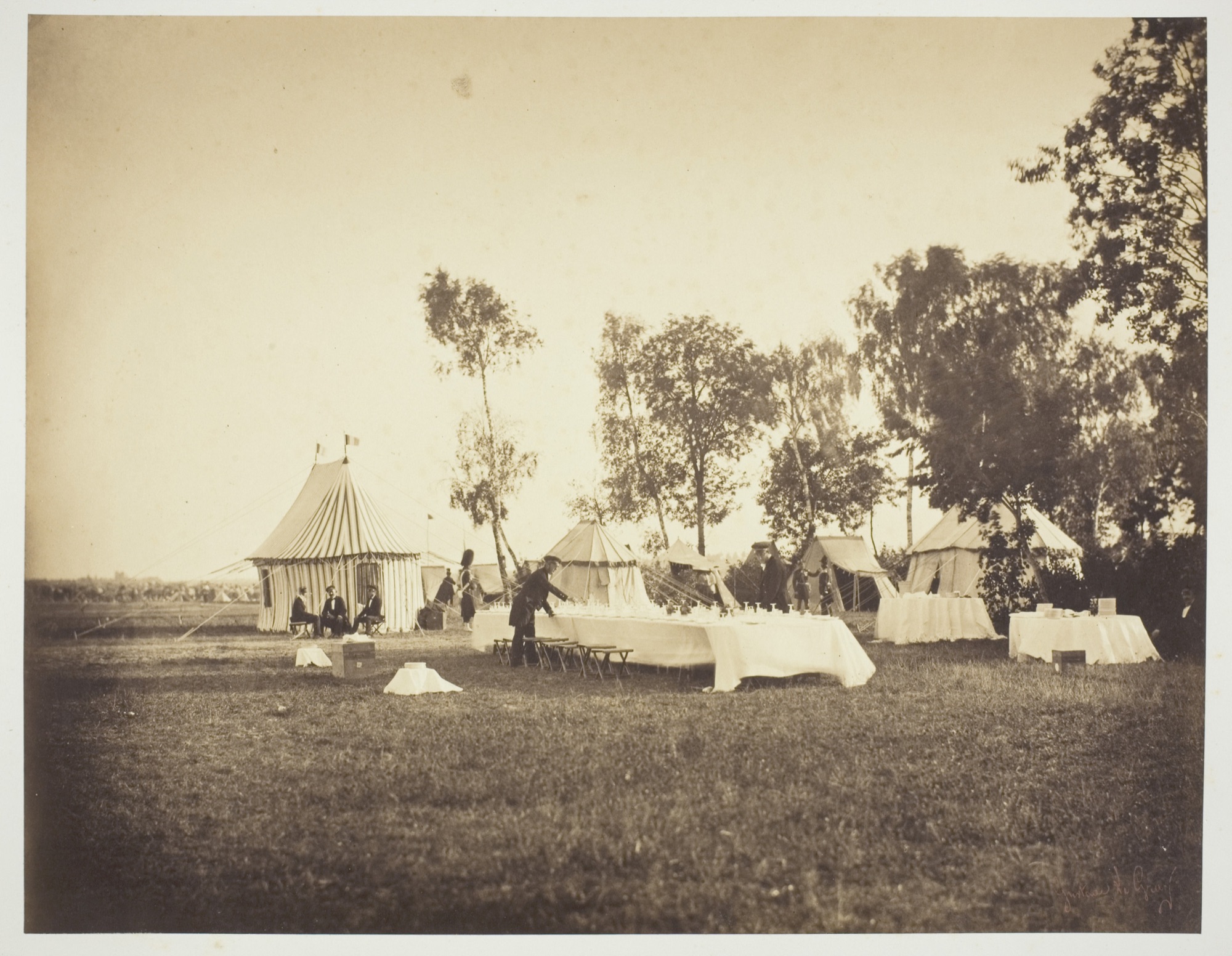
- Input (15 min) — PSB vs commercial: who pays (license, advertisers, subscribers, the state), and what each payer buys. Curran & Seaton’s claim: ownership concentration narrows the stories that get told. The historical proof in one image: Le Gray photographed the Emperor’s camp on commission — the frame belonged to the payer, in 1857 as now.
- The trace (20 min) — in pairs, take one text and trace one visible decision back to who pays for it: the ad break’s placement, the family-friendly cut, the product in shot, the story not covered. Write out the chain: decision ← incentive ← payer.
- Close (10 min) — theory card: Curran & Seaton. Who funds what you actually watch (CCTV, Tencent, bilibili’s model) — same chain, local links.
D3 — Wed 12-09 (double): CS8 — Section A with the answers open
- The demystification (15 min) — the official five-criteria rubric is on every desk (concepts / contexts / terminology / analysis / examples, 0–5 each) and read aloud. Deck U5.2’s context-terms quiz is the warm-up.
- CS8 (50 min) — you write a Section A response with the mark scheme visible and consultable. Draft paragraphs on your own, but you may stop at any point, check the band language, and annotate your own margin (“this sentence is my terminology evidence”).
- The mapping (20 min) — label which criterion each of your paragraphs was earning, and find the criterion you never fed. That gap is next week’s target — the scaffold is removed at A4.
D4 — Fri 12-11: the May document
This session may be affected by Foreign Culture Day; whether it runs will be confirmed in class.
- The pitch (10 min) — start a case study you will still be using in May: one institution, tracked from now to Paper 2. Use the media area your group committed to in L02.
- The build (30 min) — open the C2 case-study document from the template (identity and ownership; production patterns; distribution and marketing; audience and consumption; regulation; technology; dated key facts; a final row mapping coverage against the four Key Concepts). Build the structure and make your first entries, dated — the ≤5-year contemporaneity rule starts mattering today.
- Close (5 min) — homework: two entries a week, 30-minute cap, using public sources you can read. WS 5.3’s National Geographic sheet is the model of what good entries become.
Assessment
| Item | Date | What | AO |
|---|---|---|---|
| CS8 | Wed 2026-12-09 | Guided Section A script, mark scheme open; direct practice for A4 — same format family, scaffold removed next week | AO1+AO2 |
See the full register.