Origins and Ancestral Memory
What survives when an image passes from one person to another?
Unit plan
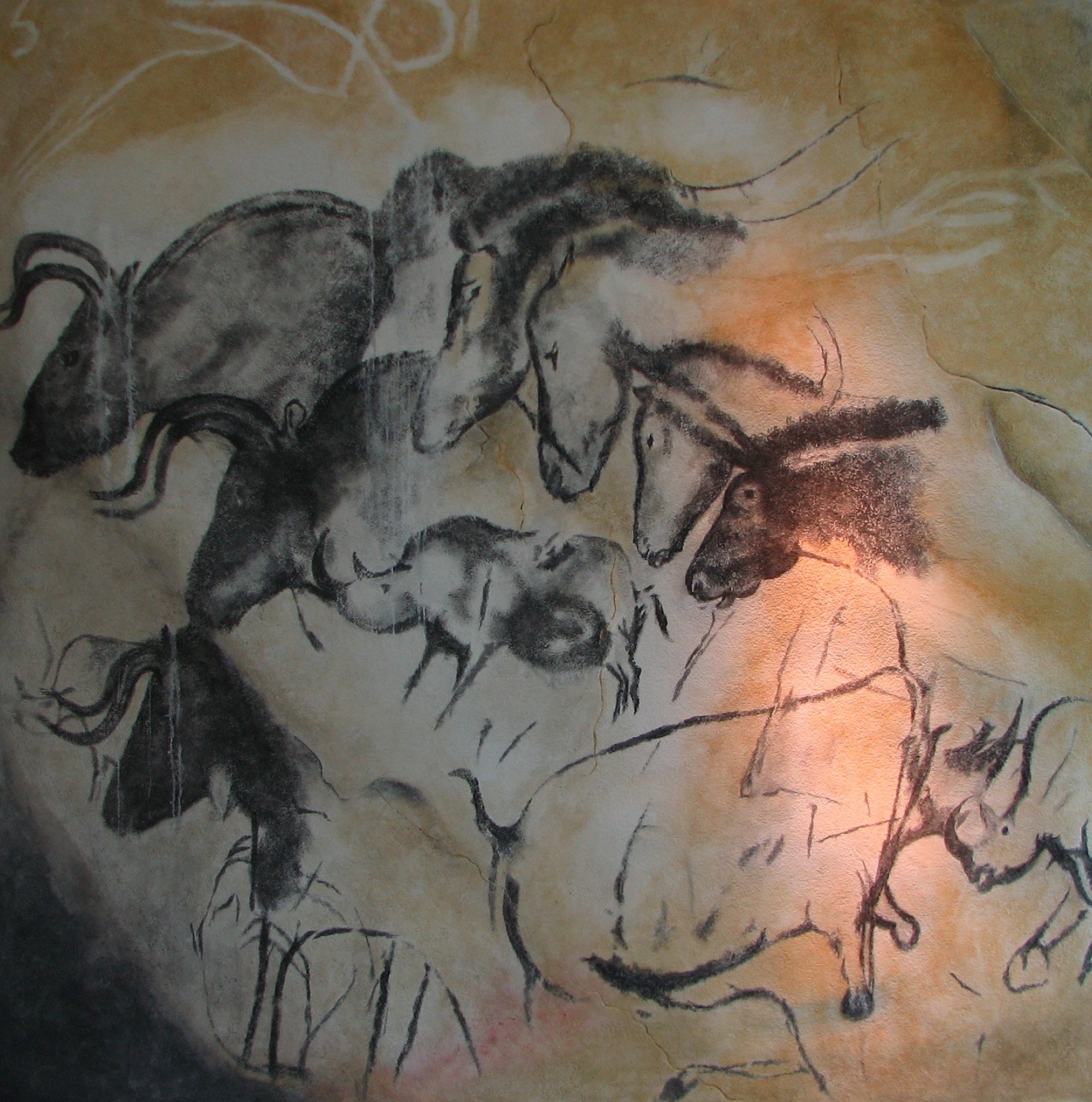
Begin with Warburg’s atlas method, play Afterlife, and compare cave paintings at Lascaux and Chauvet. Practice looking closely and defending a connection between images.
Read the complete unit plan
Art Appreciation · Semester 1 Plan · next: Narrative, Myth and Allegory
What this unit does
You begin with Aby Warburg’s atlas, which connects images through themes and visual resemblance rather than chronological order. The unit asks you to consider what an object does, not only what it depicts.
The Afterlife game begins on Fri 4 Sep and ends on Mon 7 Sep. You choose images and explain what carries over between them. In Drawing From Memory on Mon 7 Sep, you pass an image between people in silence. Each person changes it. This experience supports your study of cave imagery at Chauvet and Lascaux.
The unit also examines the figurines on the seminar board and ritual objects, including the Etruscan grave goods in La Chimera. The first board introduces a method you will use at greater scale in the Food and Ethics Board and the End-of-Term retrospective.
Dates and span
- Weeks 1–2: Tue 1 Sep to Fri 11 Sep. The unit ends with the Fri 11 Sep seminar. There are no holidays.
- The week of 09-14 belongs to Unit 2, although its lesson page uses the L03 name and the
U1·L10–L14codes. - A1 is Unit 2’s narrative board. It is announced on Mon 14 Sep and is due Wed 23 Sep at 8:00.
Lessons
| Date and period | Lesson | What students do |
|---|---|---|
| Sep 1 | Opening the Atlas | Study Warburg’s panels as an introduction to the course. Meet the group, consider why images from different periods might belong together, and take home the introduction survey. |
| Sep 2 · P1 | Looking before Interpretation | Spend ten minutes with one untitled image. Describe a visible detail in writing, then find something a classmate saw that you missed. |
| Sep 4 · P2 Sep 7 · opening | The Afterlife of Images | Work in teams to choose the next image and defend what carries over. Finish the game on September 7 by reading the whole chain as a panel. |
| Sep 7 · P4 After the game | Drawing From Memory | Pass a drawing through several hands and look for the mark that survives. The written response is due September 8. |
| Sep 8 · P6/P7 Sep 9 · P1 | Reading the Cave Wall at Chauvet and Lascaux | Study the material wall, its animals, and its marks. Then examine the position of one image beside another. Continue this panel reading across both days. |
| Sep 11 · P2 | The First Images: A Seminar at the Class Board | Support an argument with evidence from the board. The discussion developed three positions: changed meanings, myth and original use, and the ideal body. |
Assessment
This unit has no attainment assessment. A1 The Narrative Board belongs to Unit 2. You can still use the Unit 1 images for A1. The seminar is this unit’s graded close.
| Item | Date | What |
|---|---|---|
| Drawing From Memory | Mon 7 Sep drawn · Tue 8 Sep due | Complete the chain drawing in class. Answer one written question on ManageBac. |
| Unit 1 Seminar | Fri 11 Sep | Take a position and develop it through discussion. The seminar ran in three groups, all using evidence from the board: time and changed meaning, with a Rothko added; mythologizing and original use; and the ideal body and its standards. See the brief. |
| A1 The Narrative Board, Unit 2 | Wed 23 Sep, 8:00, before class | See Narrative, Myth and Allegory. |
Full detail is in the full register.
Lessons
Unit gallery