Interview Preparation
Unit plan
This ungraded course continued last spring’s fourteen-week course into Grade 12 in autumn 2026. Regular Oxbridge classes are now over.
Read the complete unit plan
Oxbridge · Individual official mock interviews
Regular classes ended on October 24, 2026
There are no more Thursday classes. Individual official mock interviews replace the regular course. The October 29 discussion and November–December Thursday mock schedule are canceled.
What this is
This ungraded course continued last spring’s fourteen-week course into Grade 12 in autumn 2026. Regular Oxbridge classes are now over. Preparation continues through individual official mock interviews.
The spring the Seminar Plan supplies material for interview practice. Practice interviews revisit its fourteen questions, cases and follow-up questions.
Past autumn class schedule
This was the autumn schedule through October 22. It does not show whether every session took place as listed.
| Date | Phase | Notes |
|---|---|---|
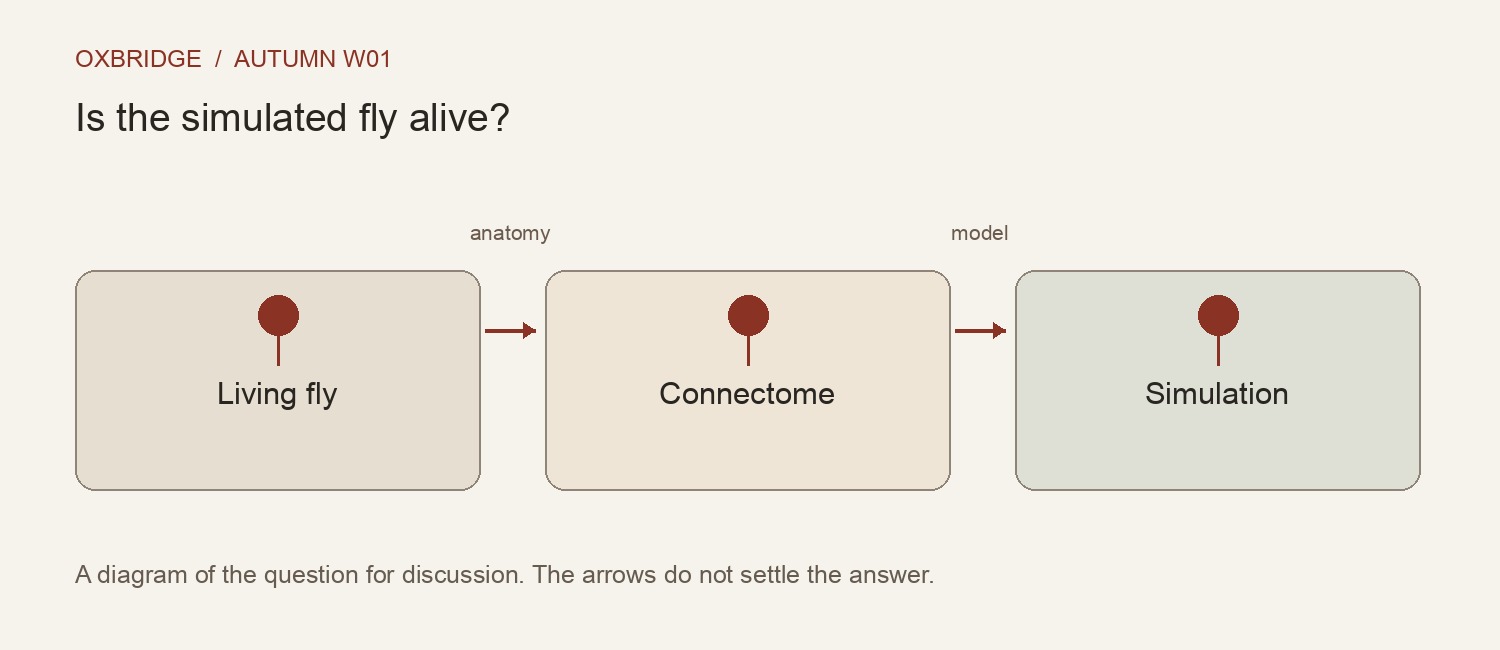
| Thu 10 Sep | Discussion 1 | Life and Simulation: the survey, then Is the fly alive? on the fruit-fly connectome running in Minecraft |
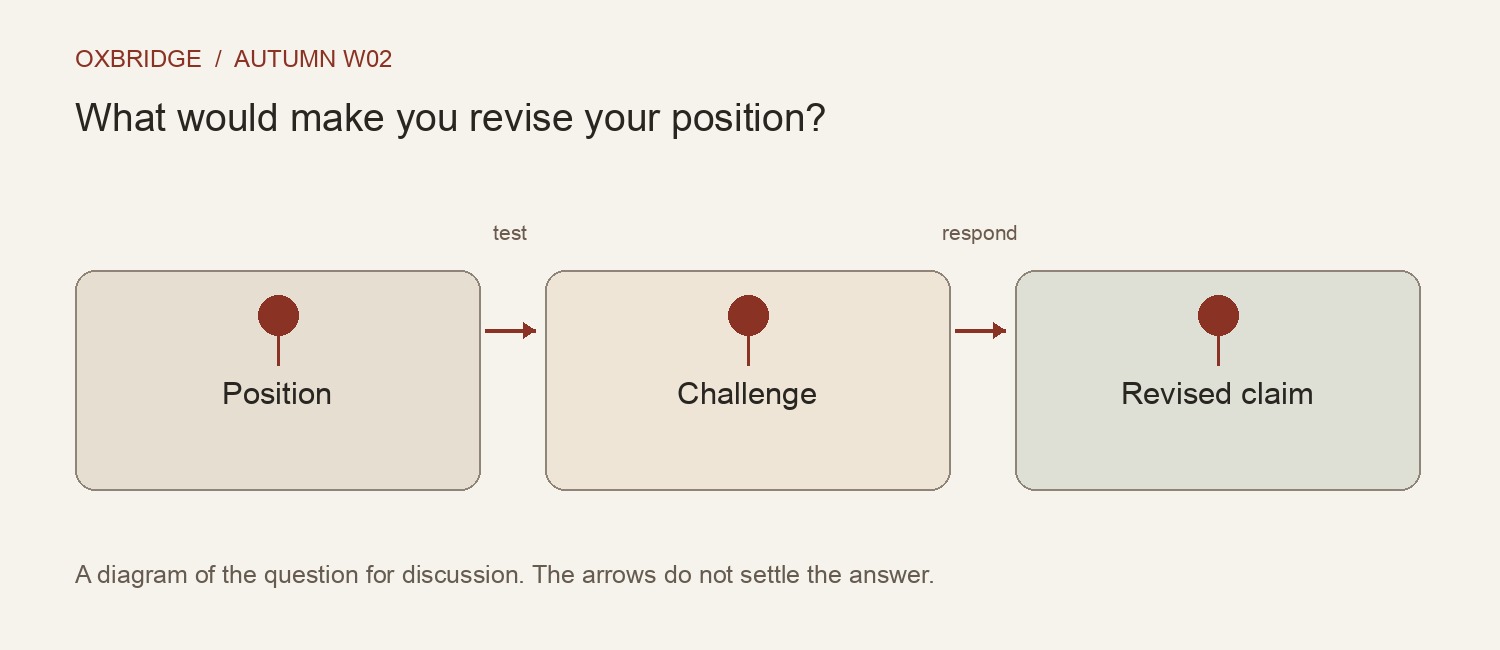
| Thu 17 Sep | Discussion 2 | Argument and Counterargument: the survey closed, the individual sessions were announced, the question each student would least like to be asked, and the preparation contract |
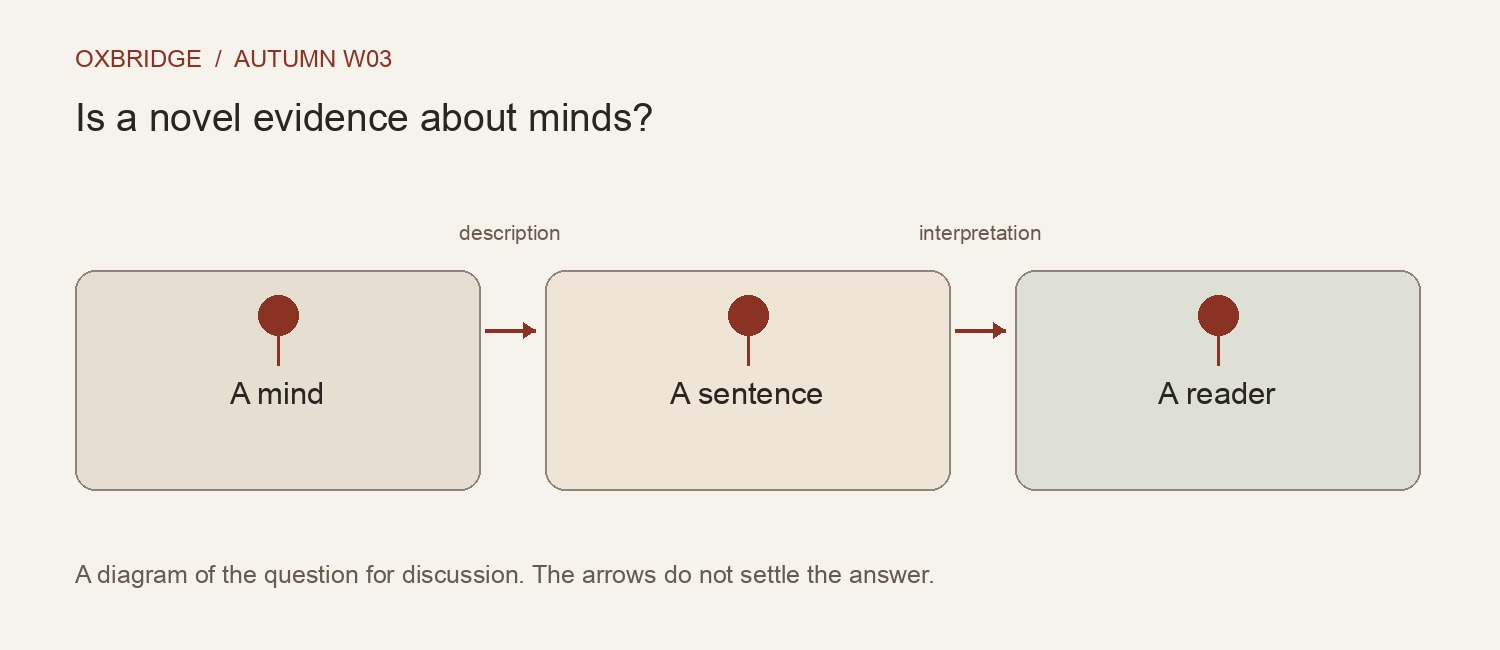
| Thu 24 Sep | Individual 1 | English: is a novel evidence about minds?, one to one. Mid-Autumn Festival was on Friday; Thursday remained a teaching day |
| No class | National Day holiday, 10-01 to 10-07 | |
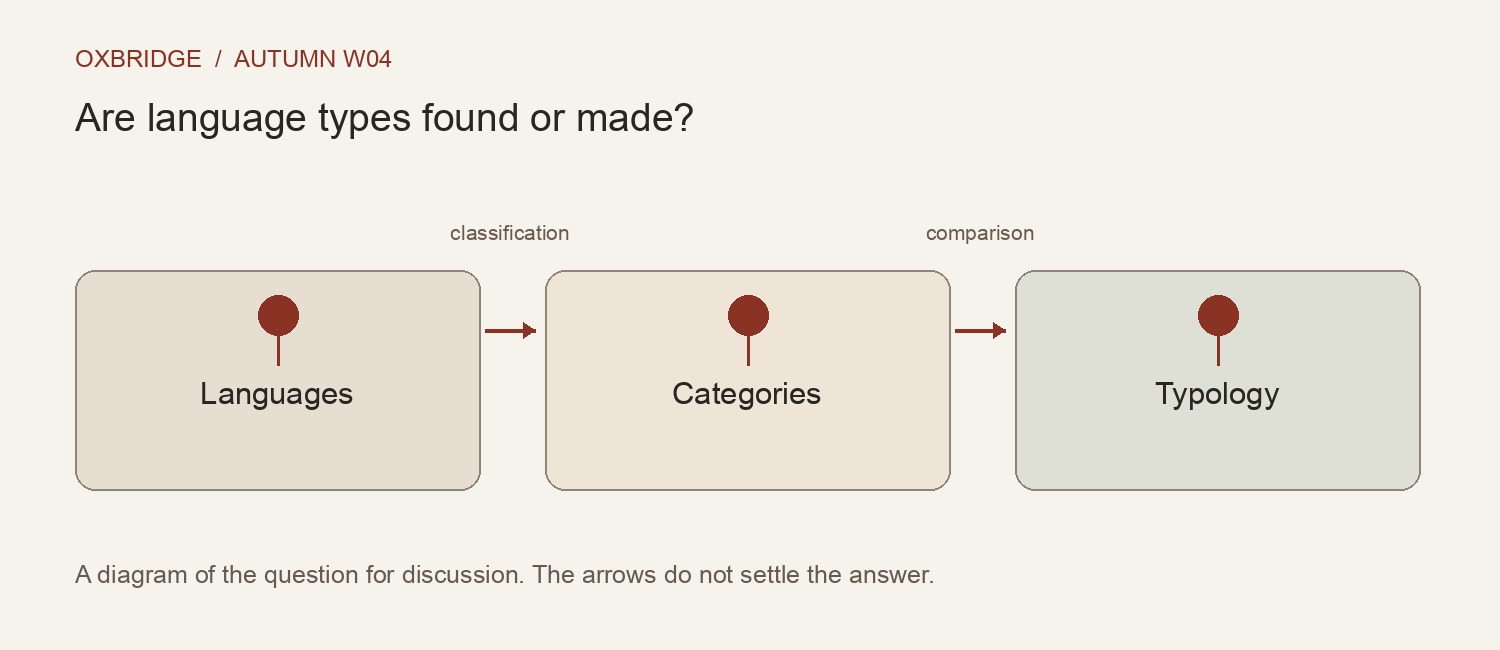
| Thu 8 Oct | Individual 2 | Linguistics: is a grammar a map or a territory?, one to one. First day back |
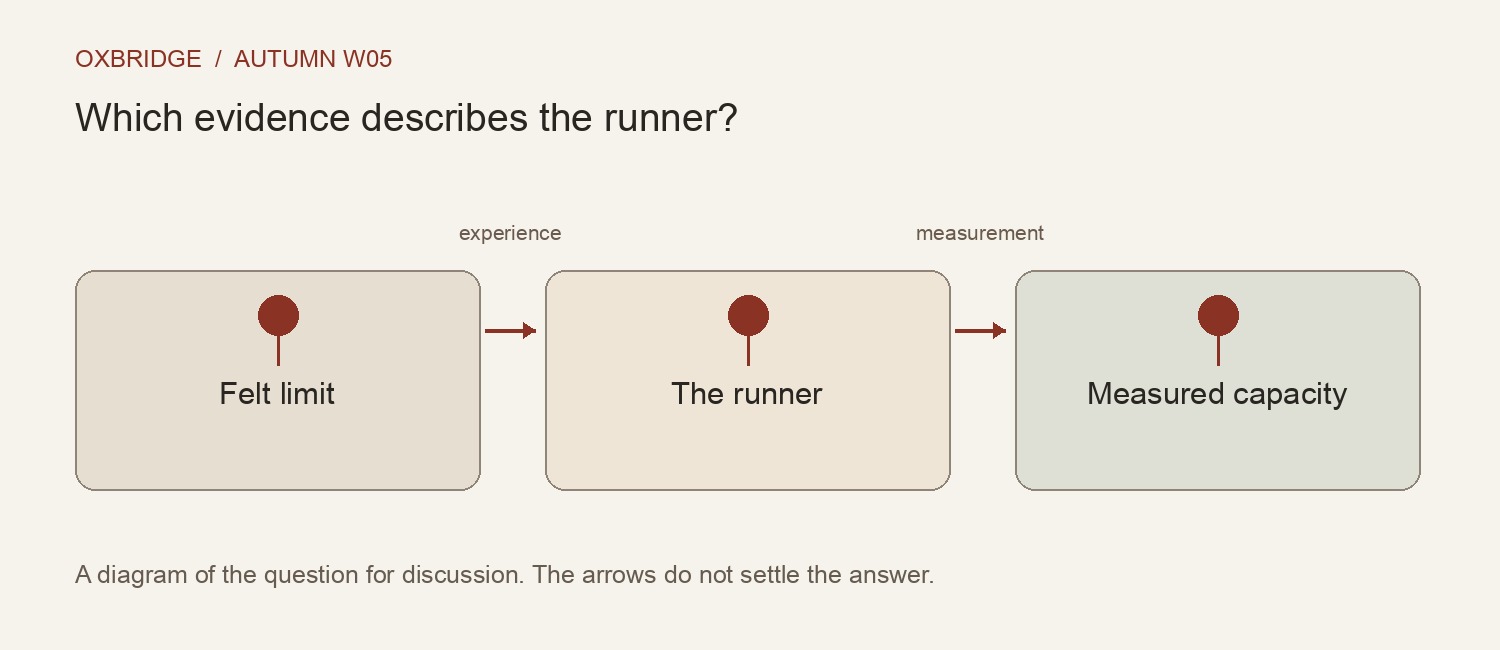
| Thu 15 Oct | Individual 3 | Biochemistry: does the measurement make the athlete?, one to one. Oxbridge application deadline, this day (calendar) |
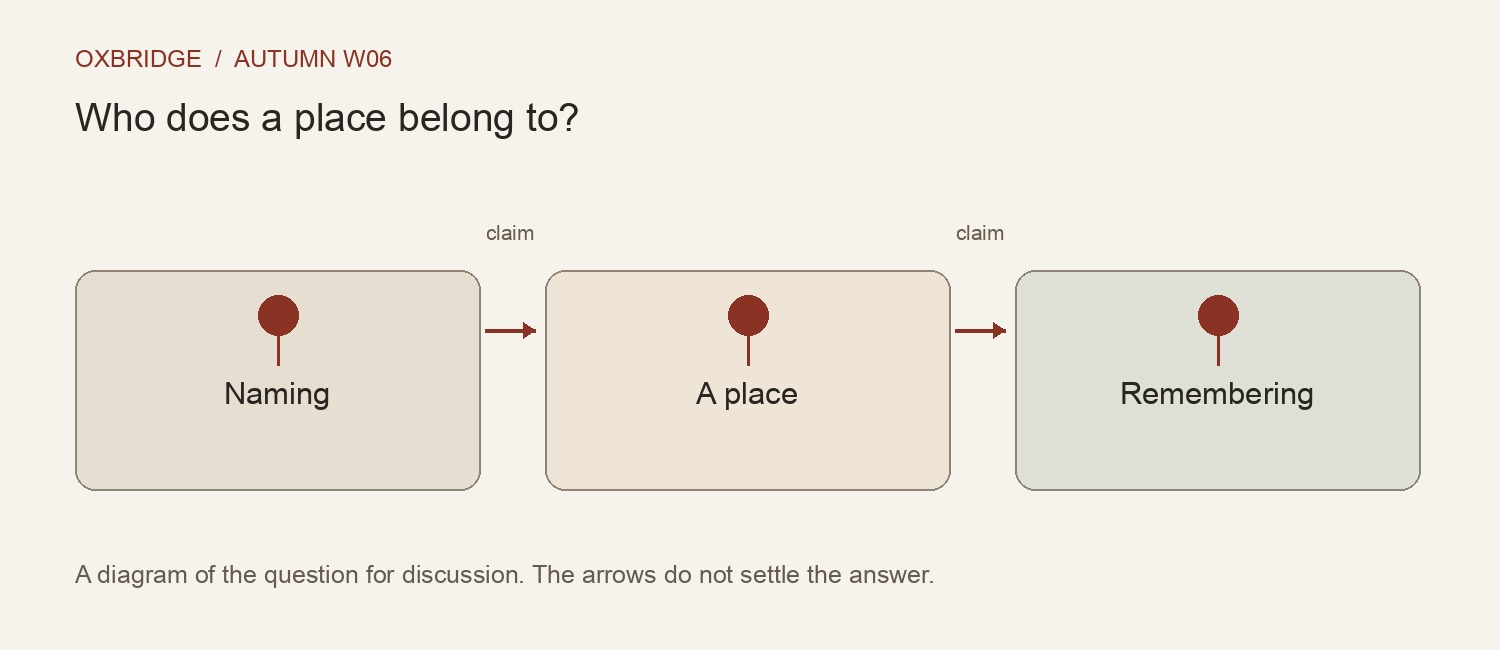
| Thu 22 Oct | Individual 4 | Indigenous and environmental studies: who does a place belong to?, one to one. The fourth student was not an applicant and practiced interviews on her interests |
The autumn plan assigned four individual interviews in this order: English, Linguistics, Biochemistry, then indigenous and environmental studies. Students were asked to review a proposed-question handout and keep the question, choose an alternative or write their own. The other students were to attend as a panel with one question each. The lesson pages contain the preparation and discussion tasks. No later group discussion or recurring mock date remains scheduled.
Earlier discussion format (reference)
This was the planned method for the regular class series. It does not schedule further group sessions.
The five-part structure used the template. It emphasized three moves from Interview Preparation: take a position quickly, absorb the push without abandoning the claim, and follow the consequence.
The chair was an individual practice interview within the group session. One student received an opening question from the question bank, followed by three challenges. The group then added one challenge. The debrief asked: “At which push did you stop thinking and start defending?” The plan allowed two chairs per session where numbers permitted. Alongside three individual sessions, the aim was for every applicant to sit alone once and in the group at least once before the end of October.
The discussions revisited the spring’s lines of inquiry: the image and evidence, the gap and measurement, appearances, frameworks and their edges, the body and the machine, memory, agreement and power, and the view from nowhere. From session 2, questions were intended to relate more closely to students’ application subjects.
Individual official mock interviews
Each mock is arranged individually.
Earlier short practice format (reference)
You can use this earlier practice format for preparation. It does not establish the duration or format of the individual official mocks.
The format allowed twelve minutes per student, with one opening question, no preparation time and three follow-up questions. A three-minute debrief followed, using the question about when thinking became defending. A 45-minute session could accommodate three students, or two with longer debriefs.
Questions were subject-specific and based on survey answers. Fine Art and History of Art interviews need different questions from Philosophy.
College interview dates
You receive college interview dates from your colleges. This page does not assign them.
Lessons
Unit gallery