Embodiment and Machine Cognition
Where does the thinking thing end?
Unit plan
Both sessions ask whether a boundary is essential, a real difference in kind, or contingent, a result of current conditions.
Read the complete unit plan
Oxbridge · Seminar Plan · Weeks 8–9 · Historical Frameworks of Knowledge | Memory and Forgetting
Unit question
Where does the thinking thing end?
Why these two sessions belong together
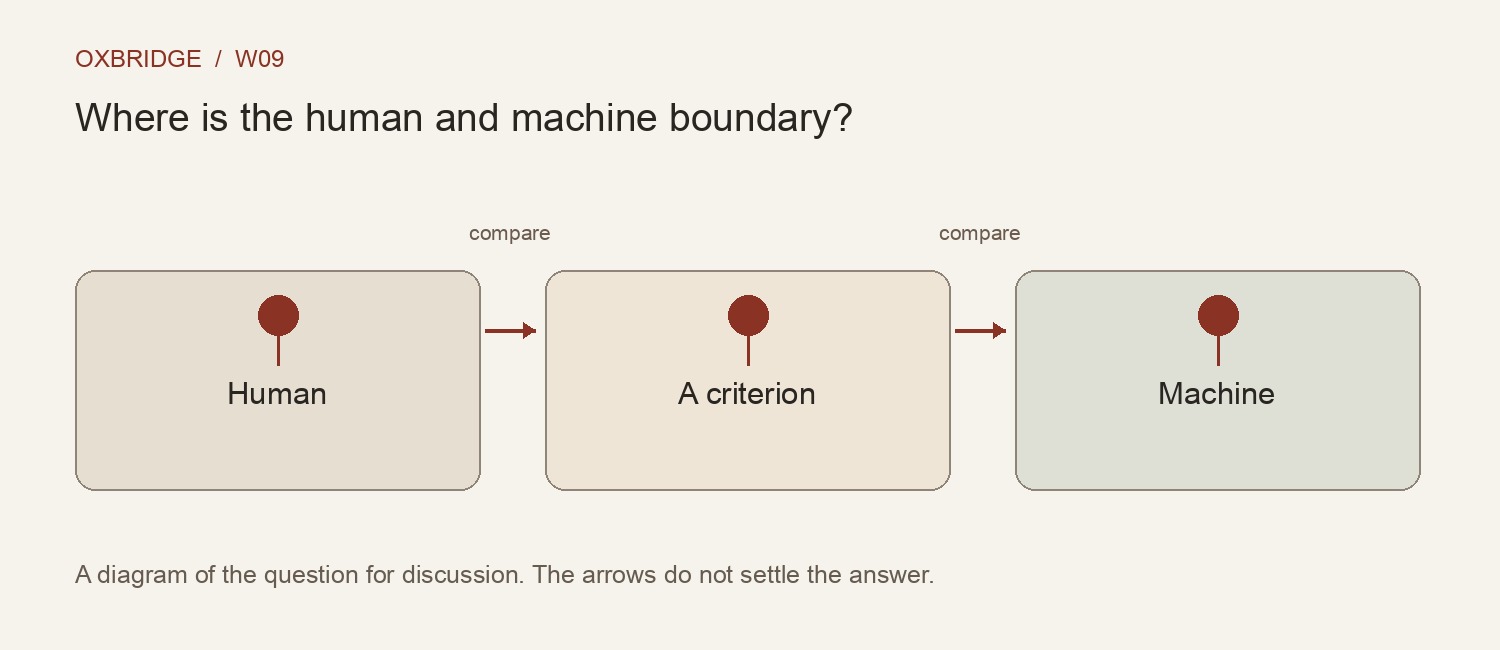
Both sessions ask whether a boundary is essential, a real difference in kind, or contingent, a result of current conditions. Week 8 asks whether the body is a reliable instrument or a framework like any other. Week 9 asks whether the line between human and machine is a real difference in kind or a description of where technology currently stands.
The connection is a question about capacities. You ask what a body and a machine can do, rather than only what each one is.
Week 8: the body
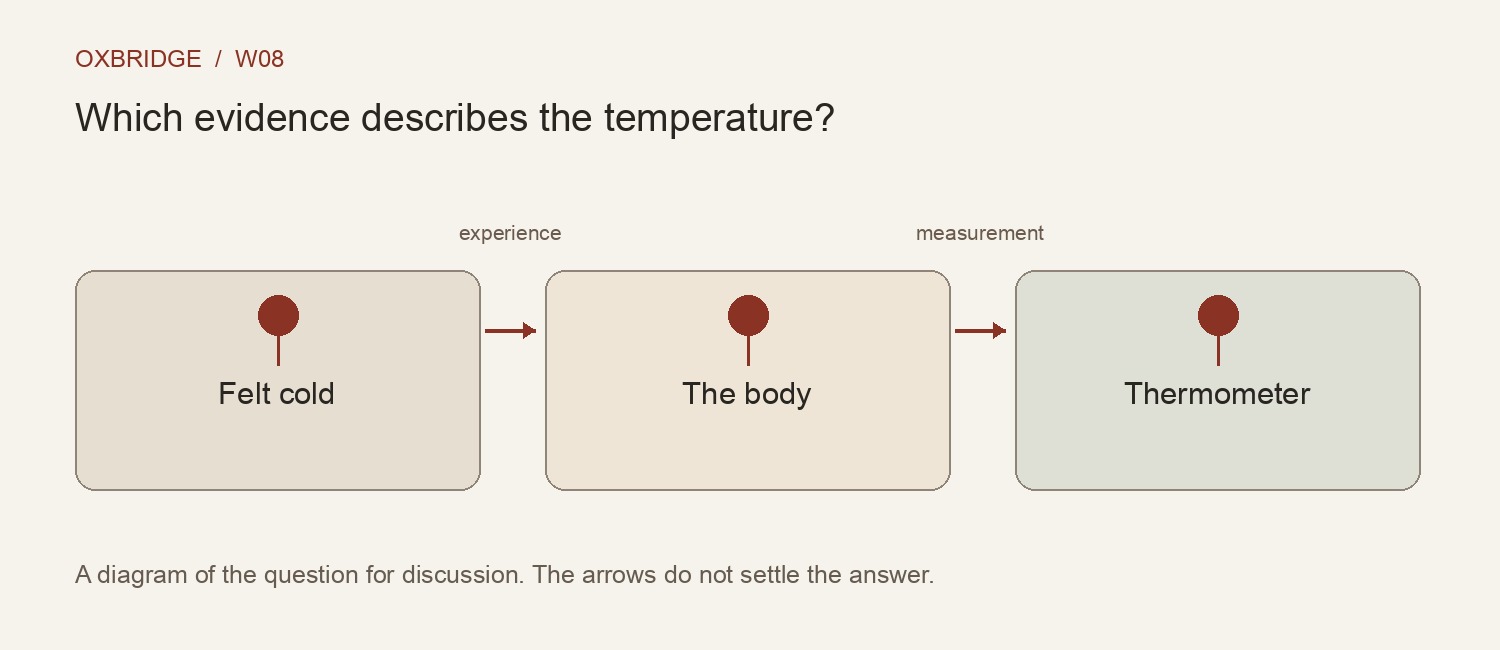
Maurice Merleau-Ponty provides the starting claim: the body is our general medium for having a world. You consider what happens when that medium is wrong.
Test your answers against four cases: phantom limb, chronic pain without injury, synaesthesia, thermal adaptation. The session ends with Spinoza’s question about what a body can do, rather than only what a body is.
Week 9: the machine
Tobias Rees argues that AI defies concepts that have defined the modern period. He argues that deep learning systems have qualities previously thought possible only for living things. A system, on his account, can have agency, creativity, knowledge, language and understanding without being alive or human.
Henri Bergson and Sigmund Freud offer two objections. A system without a history cannot have duration or the unconscious in the senses they describe. Donna Haraway and Benjamin Bratton extend the argument for groups that want to continue.
Sessions
- Can the Body Be Trusted?: You describe being cold without using the word cold or a number. You then discuss the four cases and Spinoza.
- Is the Human and Machine Line Essential or Contingent?: You write a list in the first two minutes. The whole session works with that list.
Concepts introduced
Preparation
You receive W08’s quotation before class. W08 is the only session without an assigned reading that still provides a passage in advance.
For W09, you receive the Rees essay with three guiding questions. The third asks, “where does his argument go too far?” You can disagree with his argument from the start.
There are no written submissions. The course is discussion only.
Discussion notes
- W09 returns to W04’s question: is a difference essential, or does it reflect where we currently stand? This question returns a third time in the second question of Is a View from Nowhere Possible?.
- W08 begins with the description task so you can consider the problem before arguing about it.
- In W09, you commit to a position and test it. If you argue that the boundary is essential, name the property that makes it essential. If you argue that it is contingent, explain whether any distinction could ever be essential on your view. Consider whether your answer leaves “essential” with any meaning.
- Carsten Höller’s laboratory of doubt is an optional visual example for W08.
Bridge to Unit 5
W09 closes with a possible distinction: human memory is sedimented and repainted, while machine memory is a clean record. This is a claim to examine, not a settled conclusion.
Memory and Forgetting takes up that question in a single session.
Lessons
Unit gallery